

Hydrotreating Unit
Innovative Hydrotreating Units for Base Oil, Diesel, Naphtha & More
Delivering high-efficiency Hydrotreating Unit solutions to transform API Group II base oil, desulfurize diesel & naphtha to Euro 5 standards, and upgrade Gasoline and Naphtha with reforming, isomerization and aromatization technologies.
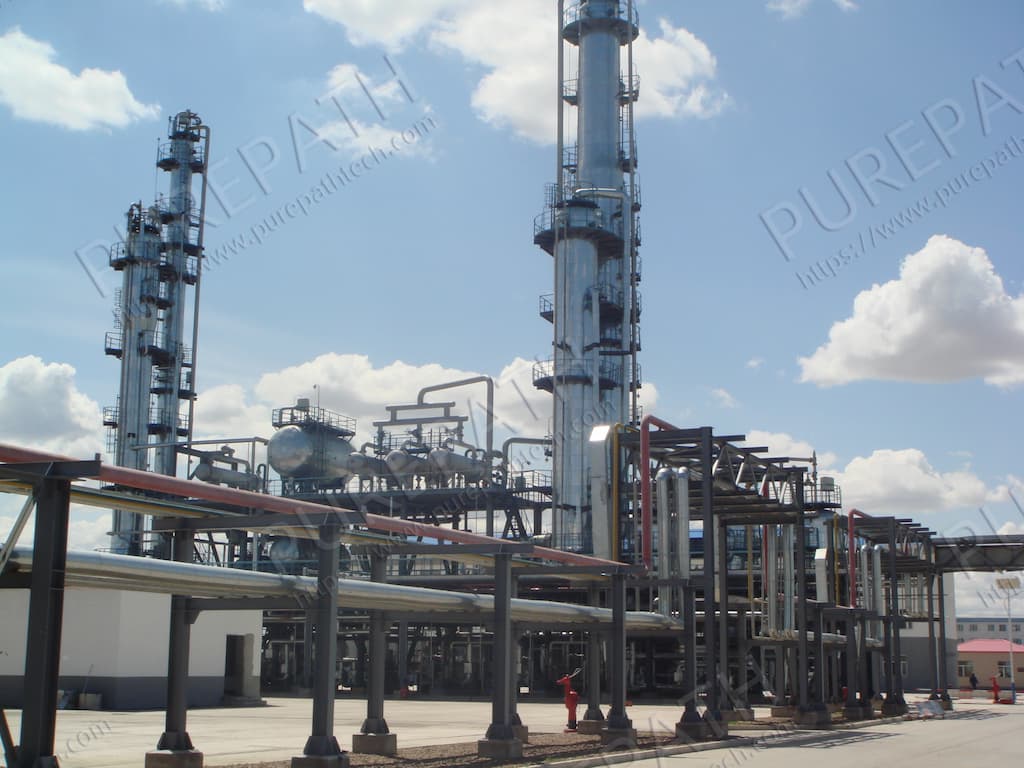
What is a Hydrotreating Unit and How Does It Benefit You?
Hydrotreating/Hydrofinishing is a critical process in the refining of various products, ensuring higher quality and compliance with environmental standards. Our state-of-the-art Hydrotreating Plants are designed to support the following key applications:
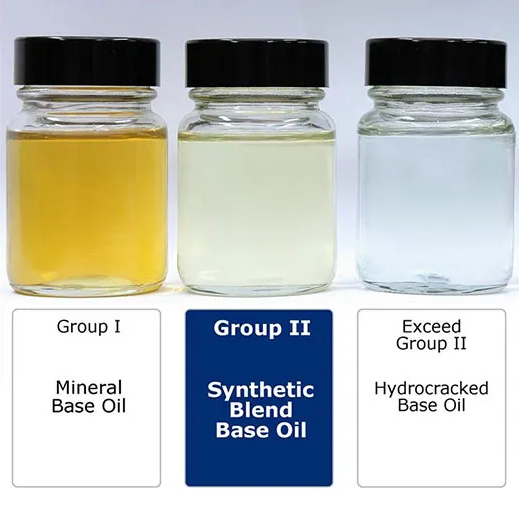
Our hydrotreating technology upgrades API Group 1 base oil to high-quality Group 2 base oil, improving performance and extending the life cycle of lubricants.
We offer HDS hydrodesulfurization to reduce sulfur content in diesel and naphtha, meeting the stringent Euro 5 emission standards.
We provide highly efficient and reliable integrated solutions for catalytic reforming and hydro-reforming technologies and equipment, covering complete process solutions for naphtha reforming and gasoline reforming upgrading.
Our hydrotreater units in refinery supports efficient isomerization processes to improve the octane rating of naphtha, turning it into high-value products like high-octane gasoline.
With our hydrotreating technology, we enable the aromatization of paraffinic feedstocks to produce valuable aromatic compounds used in petrochemical applications.
Our Hydrotreating Units Technologies
Our hydrotreating units are designed to provide high-quality solutions across multiple refining processes. These processes enhance product value, meet stringent environmental standards, and improve fuel performance. Below is a detailed overview of the core technologies:
The upgrading of base oil hydrotreating is a crucial stage in the production of high-quality lubricants. Our hydrotreating units enhance group 1 base oil to group 2 base oil, thus fortifying its functionality and prolonging the life of lubricants. This method eliminates the impurity components like sulfur, nitrogen, and oxygen from the oils and thus the oils get stability through the removal of these impurities.
- Heating Oil: The base oil that is upgraded has the excellent qualities of low-temperature fluidity and better viscosity index (VI), which makes it effective for the lubrication of auto, industrial, and high-performance applications.
- Durability: The oil breakdown at high temperatures is less due to increased oxidation stability, and, in this way, the oil, as well as the machinery it lubricates, gets a longer life.
- Complies with Industry Norms: The base oil that has undergone upgrading meets the quality standards of modern lubricants, thus it is high in performance and has longer oil change intervals.
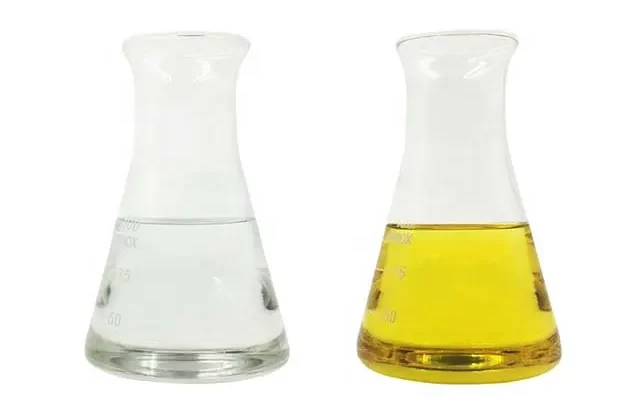
Our Hydrotreating Units employ cutting-edge Hydrodesulfurization (HDS) technique for sulfur removal from diesel and naphtha, thus leading to full compliance with the strictest environmental regulations like Euro 5 standards.
- Sulfur Removal Efficiency: The HDS method employs hydrogen and a catalyst for converting the sulfur compounds present in diesel and naphtha to hydrogen sulfide (H₂S), and the hydrogen sulfide is then isolated. It leads to the very low sulfur quantity, usually beneath 50 ppm, which is very important for the reduction of the harmful emissions.
- Meeting the Euro 5 Standards: The HDS system achieves the top production of eco-fuels meeting the Euro 5 emission standards. The modern engines and vehicles thus help in winning the battle against sulfur oxide (SOx) emissions and air pollution.
- Quality of Fuel Improved: HDS does the job of draining sulfur, thus enhancing the combustion efficiency of the diesel and naphtha, leading to cleaner exhaust emissions and better engine performance. Besides, it lessens the formation of particulate matter, thus increasing the engine’s life and reducing the costs for maintenance.
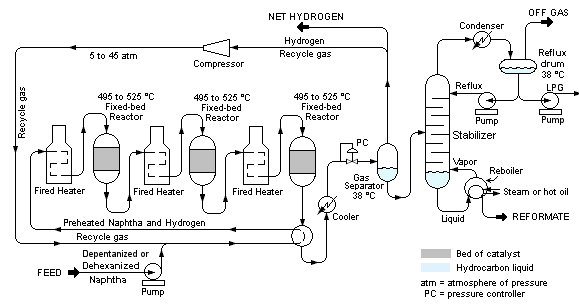
Hydro reforming, also known as hydrocatalytic reforming or hydroprocessing reforming, is a chemical process in which hydrocarbons (typically in the form of petroleum fractions) are treated with hydrogen at high temperature and pressure in the presence of a catalyst. The main purpose of hydro reforming is to convert heavier, less valuable hydrocarbons into lighter, more valuable products, such as high-quality gasoline, jet fuel, and diesel.
- Converts low-octane gasoline, naphtha or heavy hydrocarbons into high-octane reformate.
- Removes impurities like sulfur, nitrogen, and metals.
- Produces hydrogen as a byproduct.
Isomerization is a catalytic process that converts straight-chain hydrocarbons into branched-chain isomers, significantly improving the octane rating of naphtha. This technology is essential for producing high-quality gasoline and valuable chemical feedstocks.
- Boosts Octane Rating: The process increases the octane number of naphtha, making it an excellent component for high-performance gasoline production.
- Improves Fuel Efficiency: By producing higher-octane fuel, isomerization helps prevent engine knocking and ensures smoother operation.
- Valuable Chemical Feedstocks: The isomerization process also produces valuable hydrocarbons that are used in various chemical applications, including the production of polymers and synthetic fuels.
Aromatization converts paraffins (straight-chain hydrocarbons) into aromatic hydrocarbons, such as benzene, toluene, and xylene. This process increases the value of feedstocks by producing high-demand chemicals used in a wide range of industries.
- Produces High-Value Chemicals: Aromatic hydrocarbons are essential raw materials for the production of plastics, synthetic fibers, solvents, and other chemicals.
- Increases Energy Density: Aromatic hydrocarbons have higher energy density compared to paraffins, making them valuable as fuel additives or high-energy fuels.
- Supports Petrochemical Production: Aromatization provides essential feedstocks for the petrochemical industry, enabling the production of a wide array of chemical products.

Why Choose Our Hydrotreating Plants?
At China PurePath Group, we use cutting-edge technology and a proven design to deliver highly efficient Hydrotreating Plants. Our system features:
Our hydrotreating units are designed with cutting-edge technology to minimize energy consumption, ensuring cost-effective operations while maintaining high performance and reliability.
We prioritize sustainability, ensuring that all our hydrotreating processes comply with the latest global environmental standards, including cleaner fuels and minimal ecological impact.
We offer flexible design configurations tailored to your specific needs. Our plants can be customized to optimize your production goals and operational preferences.
With a strong track record of successful installations across diverse global markets, our hydrotreating solutions are known for their exceptional reliability, longevity, and consistent performance.
If you want to learn more about how our hydrotreating plants can optimize your production, contact us today for a customized quote!