
How to Make Diesel Fuel from Used Motor Oil?
Written By: Mr.Ran
Senior Petrochemical & Waste Oil Recycling Engineer
Deeply involved in the design, manufacturing, and optimization of various waste oil recycling and petrochemical equipment, delivering practical and efficient solutions for clients worldwide.
In today’s unpredictable oil market and growing international push towards ESG compliance, waste oil recycling has evolved from an ecological duty to an extremely profitable industrial business. Among different waste types, refining used motor oil into premium-grade diesel fuel can be considered one of the most profitable industries.
There are huge discrepancies between the science behind waste oil recycling technology and its industrial profitability. Though there are thousands of online searches for “how to produce diesel fuel from used engine oil at home,” home-based projects are extremely dangerous, very pollutant-producing, and cannot yield any usable fuel product. The only way forward for investors, logistics fleet operators, and waste oil companies is to establish a full-fledged industrial-scale oil refining plant.
Being a top global EPC services provider specializing in building industrial oil waste refineries, PurePath has developed this unique comprehensive guide that explains to you in detail the science behind diesel extraction from used oil at an industrial level.
Can You Make Diesel from Used Motor Oil Safely at Home?
As we delve into the discussion of the industrial process, there are certain myths that need to be debunked. The first one concerns the do-it-yourself approach towards distilling waste oil in the backyard.
Although it is theoretically possible to obtain flammable distillates by this method, there are three major flaws to it:
- Dangerous safety factors: Waste motor oils consist of highly volatile light distillates and harmful heavy metals. Distilling such materials under extremely high temperatures and without proper pressure release systems is highly dangerous and may result in an explosion.
- Quality of Unusable Product: The “black diesel” produced from cooking oil contains a lot of ash, sulfur, carbon deposits, and acids. If this product is poured into contemporary common rail diesel engines (like Euro V and Euro VI engines), it will immediately clog fuel injectors, foul pistons, and ruin the engine block.
- Environmental Pollution and Legal Responsibilities: Distillation done without any control produces hazardous gases, toxic gases, and acidic sludge. In nearly all countries, running an unlicensed distillation unit is a punishable offense and also attracts hefty environmental charges.
Therefore, to get usable fuel from waste oil, you should consider high vacuum distillation along with catalyst treatment processes.
How Is Used Motor Oil Industrially Converted to Diesel?
This method doesn’t alter the lubricant properties of the motor oil; it just makes the oil highly contaminated with additives, dirt, metal, water, and fuel contamination. As for an industrial approach, the idea is to chemically break down and restructure the long-chain molecules of the oil to obtain the hydrocarbons that form the diesel fuel composition, ranging from C10 to C21.
A thermal cracking technique called pyrolysis has been used in the past by some refining companies. Unfortunately, thermal cracking at temperatures ranging from 400 to 600 degrees centigrade requires vacuum pressure control to prevent severe carbon formation and oil quality inconsistency.
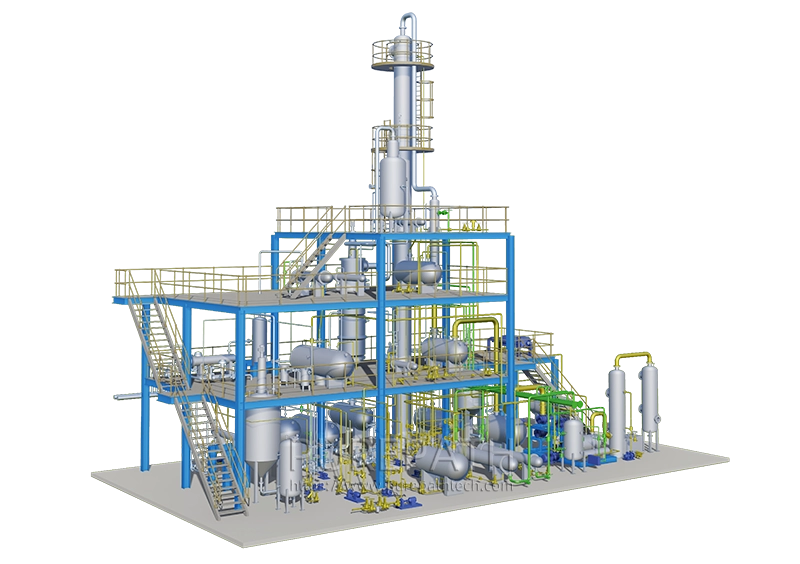
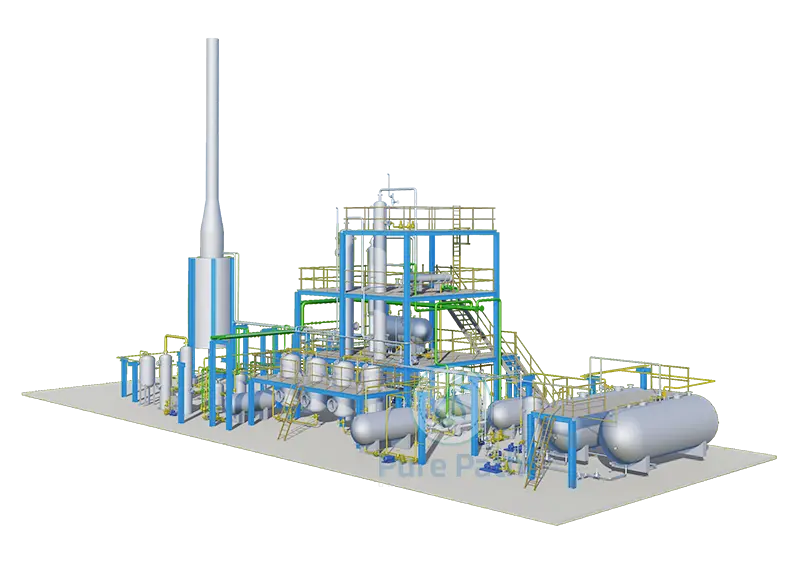
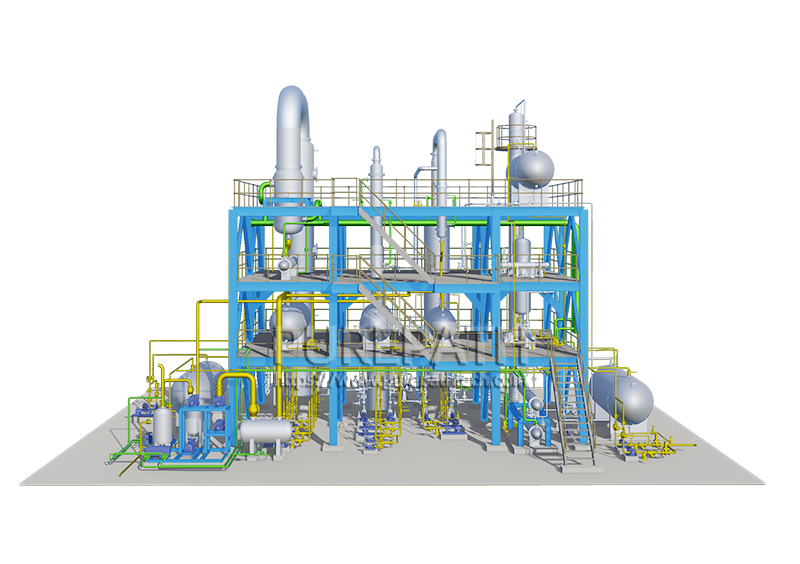
The advanced industrial facilities, like those developed by PurePath, apply an enhanced technique of Continuous Vacuum Distillation in tandem with Catalytic Refining / Hydrotreating. The atmospheric pressure within the distillation unit is greatly reduced, making the boiling points of heavy oil fractions much lower. This makes it possible to prevent the thermal destruction of oil into unusable light gases and extract high-quality diesel fractions under optimal conditions.
Step-by-Step Industrial Conversion Process
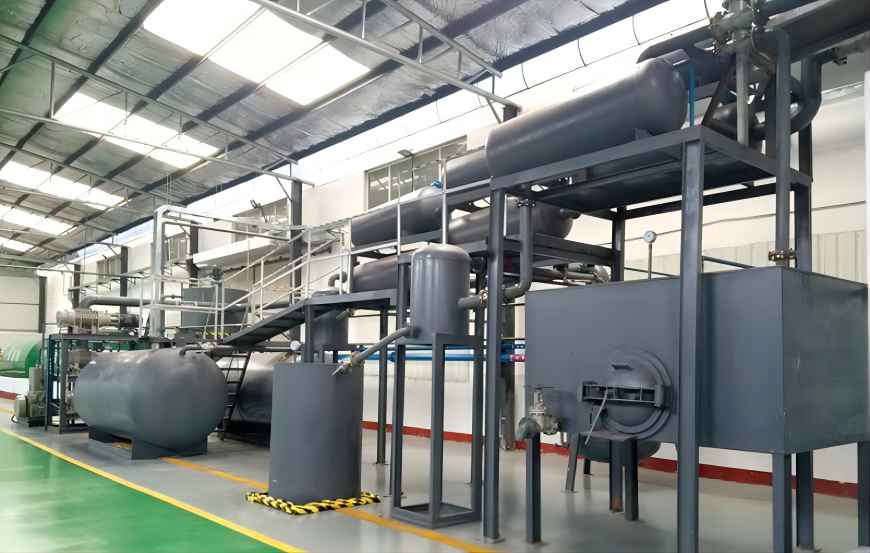
The Waste Oil to Diesel Distillation Plant follows an automation-based, continuous, or semi-continuous process that involves several steps in order to provide safety, efficiency, and high-quality oil that has excellent color and odor properties.
Step 1: Pre-Treatment and Flash Dehydration
Unrefined used motor oil taken from automobile workshops comes with various amounts of moisture, gasoline dilution, and solid matter suspended in the mixture. Waste oil is initially subjected to automatic mechanical filtration where it is stripped of any larger particulate matter. Then, the oil enters a flash dehydration column where, under slight heating and pressure conditions, moisture and other volatiles like gasoline fractions are removed.
Stage 2: High Vacuum Thin Film Distillation
The dried oil is then brought to the center of the refinery for further processing. The PurePath facilities mostly employ Thin Film Evaporators (TFE). The oil becomes a thin layer on the inside wall of the equipment under ultrahigh vacuum pressure. This ensures that there is little contact between the heated surface and the oil, thus preventing carbon deposition. This helps to separate heavy gas oils from the asphalt/bitumen base.
Stage 3: Catalytic Cracking & Fractionation
The vaporized petroleum oil passes through a catalytic cracking bed. The catalyst separates any large chains present in the petroleum and produces hydrocarbons in the desired diesel range. The vapor stream is further subjected to fractionation, wherein the fractions are separated at various temperatures inside the fractionating column. The major fraction obtained during this stage is light gas oil/diesel oil fraction.
Stage 4: Deep Refining, Desulfurization & Deodorizing
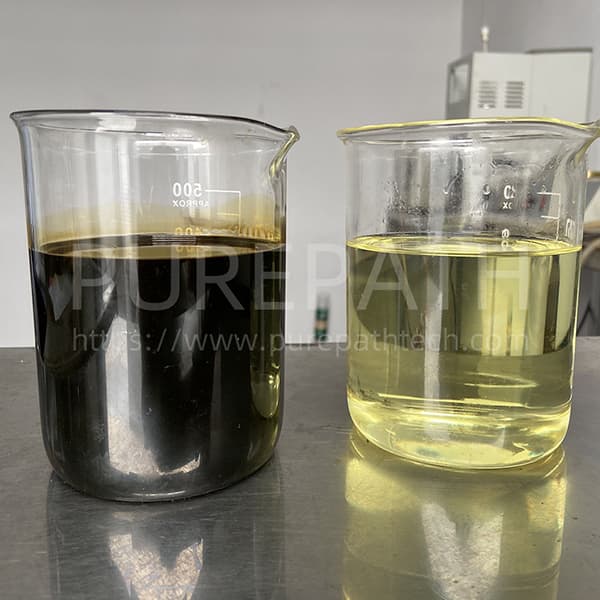
Distilled diesel from straight-run is normally yellow to dark in color and has an unpleasant smell because of the active nitrogen and sulfur content. In order to convert this product into one that is commercially useful, deep refining is required. The process could be by chemical/liquid extraction or through a hydrotreatment process, wherein hydrogen is introduced in a pressurized state with a catalyst.
Why Commercial-Scale Investment Outperforms Small Batch Systems
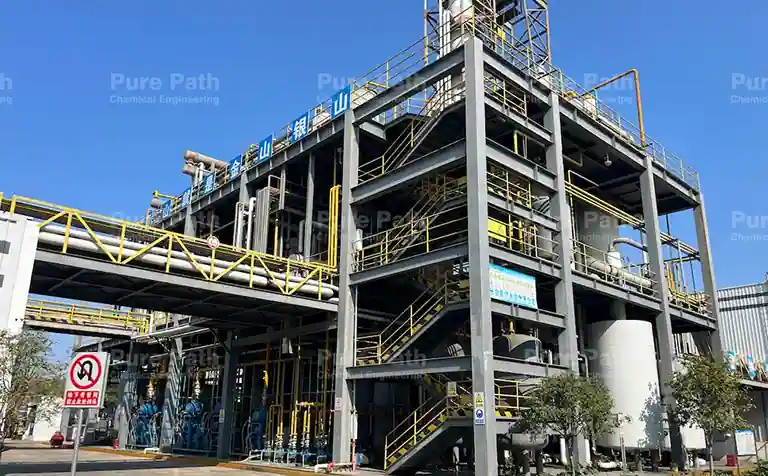
Though small batch systems look appealing because of their lower initial CAPEX investment, they lack commercial success in contemporary industrial market conditions:
- Inconsistent Quality: Since batch reactors heat all the oil in one go, there is no consistency in the quality and coloring of the fuel. In an industrial continuous reactor, a constant vacuum gradient makes the feed of oil regular and of identical quality.
- Coking and Maintenance Problems: Because heavy residue remains in the reactor throughout the batch cycle, coking becomes a severe issue and requires regular shutdowns for cleaning. An industrial continuous system releases residues continuously without interruption.
- Higher OPEX: Labor costs for manual operations such as loading and unloading are higher in batch systems. Industrial continuous systems are enclosed and have automatic PLC technology, making energy usage more efficient – around 40% less because of tail-gas recycling.
Industrial Plant Technical & Yield Specifications
For project investors evaluating economic feasibility, understanding the inputs, outputs, and mass balance is critical. Below is a standard technical summary of a medium-to-large scale PurePath Waste Oil to Diesel Plant:
| Parameter / Metric | Industrial Standard Specification (PurePath Plant) |
| Plant Scale Capacity | 10 TPD (Tons Per Day) up to 200+ TPD (Continuous Processing) |
| Total Diesel Yield Rate | 80% – 85% (Depending on raw oil water/gasoline content) |
| By-product (Asphalt Residue) | 10% – 12% (Can be sold directly as road bitumen or waterproofing material) |
| By-product (Light Fuel/Water) | 3% – 5% (Light gas can be routed back to fuel the plant’s own burners) |
| Final Product Fuel Color | ≤ 1.5 (Water-white to pale yellow, completely transparent) |
| Cetane Number | 45 – 55 (Meets high-performance diesel engine requirements) |
| Emission Control Compliance | Equipped with advanced gas scrubbing, desulfurization, and tail gas treatment systems meeting strict regional environmental laws. |
Note: Actual metrics vary based on the specific composition of local feedstock and selected plant configurations. Contact PurePath for a custom feedstock analysis.
Choosing an EPC Partner
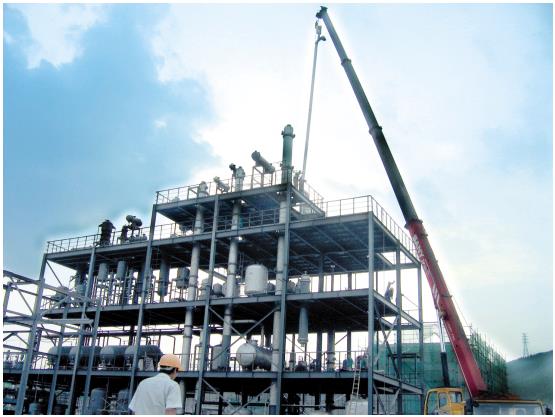
Building a successful, safe, and profitable waste oil refinery requires a fully integrated engineering approach that complies with complex environmental safety (HAZOP) and industrial manufacturing codes.
As an experienced, turnkey EPC delivery specialist, PurePath designs, fabricates, and delivers robust, medium-to-large-scale industrial refinery plants customized to your exact market demands. Our comprehensive services include:
- Pre-project Feasibility Studies & Feedstock Chemical Lab Testing
- Complete Process Engineering Design (PFD, P&ID, 3D Plot Layouts)
- Advanced Safety Instrumentation and Automation Systems (PLC/DCS)
- Equipment Fabrication, Global Logistics, and Installation Supervision
Ready to monetize industrial waste? Skip the limitations of small batch plants.
Contact the PurePath Engineering Team today to schedule a professional project consultation, request an ROI evaluation model, or get detailed equipment specifications for your market.