
How to Upgrade an Existing Crude Unit for Higher Throughput
Written By: Mr.Ran
Senior Petrochemical & Waste Oil Recycling Engineer
Deeply involved in the design, manufacturing, and optimization of various waste oil recycling and petrochemical equipment, delivering practical and efficient solutions for clients worldwide.
The global energy market is experiencing increasingly volatile fluctuations, and the profit margins of refineries are constantly changing. For medium-sized and local refineries to survive, they must either increase their daily processing capacity (BPD) or switch to processing cheaper heavy oils. However, building new traditional refineries often involves huge investments, cumbersome approval processes, and lengthy construction periods, making them extremely uneconomical in terms of economics.
At this point, renovating and upgrading existing facilities and eliminating production capacity bottlenecks have become a more realistic option.
The capacity limit of traditional crude oil distillation units (CDUs) is usually not due to insufficient space, but rather is constrained by specific mechanical or thermal bottlenecks. Through precise local modifications, the capacity of the existing equipment can be significantly increased. This engineering guide will provide you with the practical steps to upgrade the existing CDU without replacing the entire unit.
Step 1: Evaluating Column Internals and Hydraulic Capacity
When the load of the equipment is high, the atmospheric distillation tower often encounters the bottleneck first. As the crude oil feed rate increases, the gas phase flow rate in the tower surges dramatically. In old tower equipment, this is very likely to cause flooding and mist entrainment, resulting in a sharp decline in separation efficiency. Once the high-value gasoline and diesel fractions are mixed with the reforming components, it will directly damage the product quality.
Solving this problem does not necessarily require the construction of a new tower structure on-site. Instead, the focus should be on the renovation of the tower internals. Many old oil refineries are still using traditional bubble cap or standard float valve trays with extremely low operational flexibility. By upgrading these outdated tower internals, the hydrodynamic performance within the tower can be fundamentally optimized.
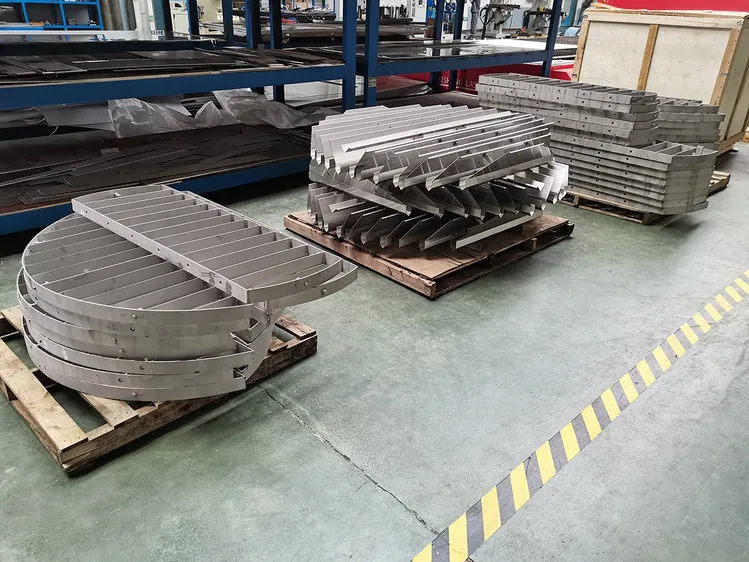
The core benefits of upgrading the internal components of the tower:
- Optimize gas-liquid contact: Significantly enhance the mass transfer efficiency per unit volume.
- Reduce system pressure drop: Decrease operating resistance, increase gas velocity, and prevent premature flooding.
- Enhance operational flexibility: Easily handle fluctuations in feed load over a wide range.
Regularized packing can achieve both high mass transfer surface area and low pressure drop. With precise engineering design, PurePath enables the patented tray and efficient internals to perfectly match and adjust the gas-liquid phase distribution. Through detailed analysis of the hydraulic characteristics of the target oil product, we customize the geometric structure inside the tower for you. Within the existing tower size, it can easily accommodate a larger gas-liquid load and immediately release production capacity.
Step 2: Overcoming Pre-Heat and Fired Heater Constraints
Increasing the processing capacity of crude oil cannot be simply achieved by increasing the feed rate. The key lies in breaking the original thermal balance. An increase in production capacity means that a large amount of heat must be supplied before the raw materials enter the atmospheric distillation tower. If the old gas-fired furnaces are forced to operate at full capacity, it will not only lead to a sharp increase in energy consumption and carbon emissions, but also cause serious coking of the furnace tubes due to the overheating of the furnace walls.
The key to breaking through lies in eliminating the situation where we waste the residual heat while having to pay for the new energy.
| Refinery Pre-Heat Feature | Conventional Pre-Heat Train | PurePath Optimized Network |
| Fuel Gas Consumption | Exceptionally high, leading to soaring utility costs | Up to 30% reduction in energy load |
| Operational Risks | Frequent heater tube coking and skin temperature spikes | Balanced thermal profiles with minimized fouling |
| Throughput Capacity | Suffers severe thermal bottlenecks at high BPD | Maximized waste heat recovery for scalable growth |
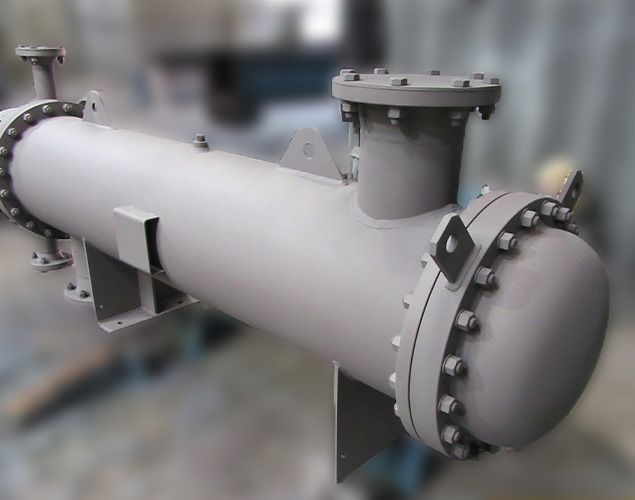
The upgrading and renovation must optimize the heat exchange network of the atmospheric and vacuum distillation units, and fully recover the residual heat from the high-temperature products such as naphtha, kerosene, diesel, and heavy oil. Through rigorous pinch point analysis, process engineers can accurately identify the nodes where high-grade thermal energy is wasted. By redesigning the shell-and-tube heat exchanger network, the crude oil can absorb the maximum amount of heat from each circuit before entering the heating furnace.
PurePath integrates cutting-edge process simulation technology into every refinery renovation project. The thermal integration system we design not only helps expand the capacity of the facilities but also significantly reduces fuel consumption, directly enhancing your refining profit margins.
Step 3:Upgrading Fired Heaters and Condensing Systems
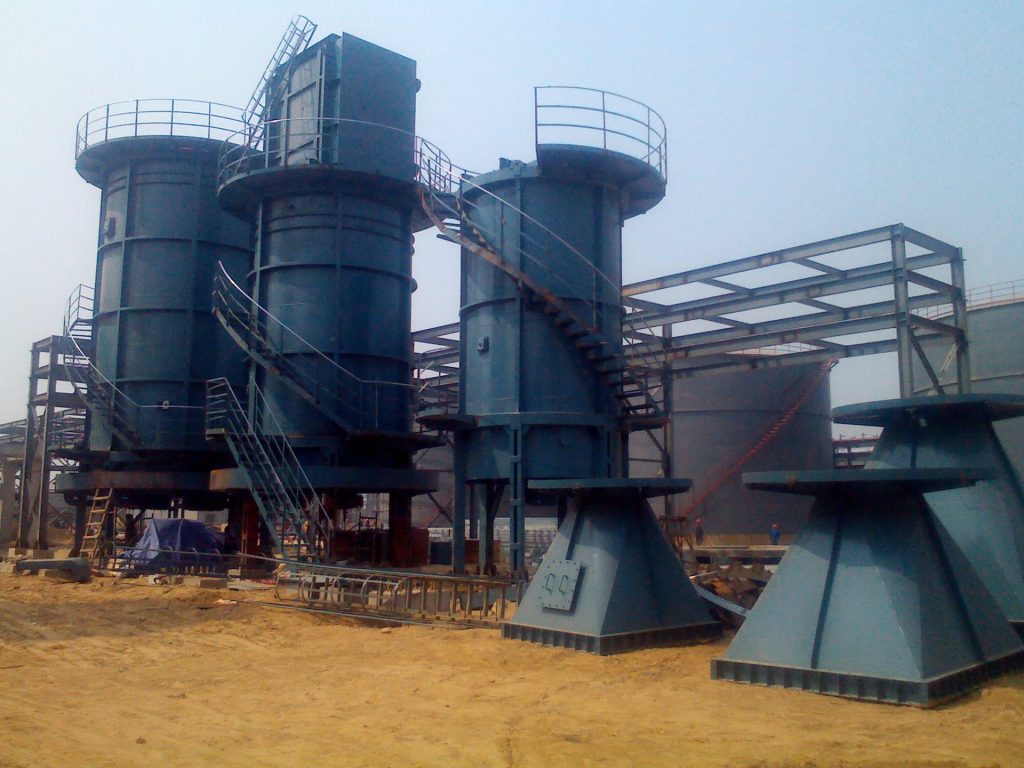
After optimizing the internals and the heat exchange network, the process bottleneck has moved downward. The combustion limit of the heating furnace and the condensation capacity at the top of the tower are two key constraints that are most easily overlooked.
An increase in processing capacity will lead to a sharp increase in the gas-phase load at the top of the tower. If the capacity of the air-cooled or water-cooled condenser is insufficient, the back pressure generated will directly cause the separation to stall. At this point, upgrading the condensation system by using high-flow pipes or expanding the heat exchange area is the core to maintaining the stability of the top pressure of the tower.
Systematic assessment and renovation should focus on the following three points:
- Condensation heat load: Enhances the cooling capacity of the top air cooler and eliminates the risk of back pressure.
- Combustion furnace efficiency: Utilize low-nitrogen, high-efficiency burners or optimize the convective section of the furnace to safely handle additional loads.
- Material corrosion prevention: Assess the corrosion risk under high-flow erosion conditions and upgrade the material if necessary.
As a professional EPC engineering service provider, PurePath‘s produced pressure vessels, heavy reactors, heat exchangers and heating furnaces all comply with ASME/API standards. They are specially designed for harsh working conditions and ensure seamless integration of the replacement hardware with the existing pipelines and control loops.
Step 4: Moving Toward Modular Add-ons for Rapid Expansion
The bottleneck in an oil refinery is often not the transportation capacity of the atmospheric pressure pipelines, but the handling of heavy residues. If the existing equipment is unable to process the reformed components after the high throughput, then a vacuum distillation unit (VDU) needs to be added to extract the high-value vacuum gas oil (VGO) from the deep processing.
However, in the face of tight land availability and strict downtime requirements at the site, the traditional expansion plan is prone to being blocked, while the modern modular technology demonstrates unique advantages.
For projects with a capacity of 500 barrels or more, deploying “plug-and-play” modular skid-mounted equipment is a shortcut for rapid expansion. The equipment is fully manufactured, equipped with pipelines, wiring, and pre-tested in the factory. Once delivered to the site, it can be directly connected to the existing system. Eliminating a large number of on-site welding operations, it enables smooth capacity upgrades while ensuring production continuity.
Conclusion
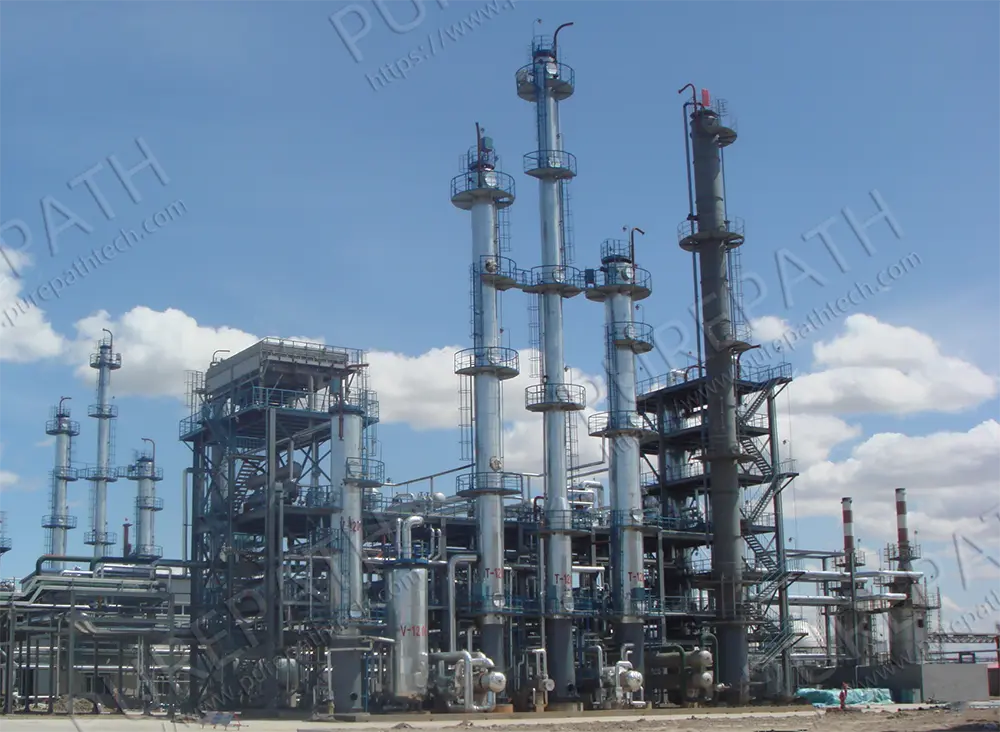
The renovation and optimization of the crude oil distillation unit to eliminate bottlenecks is an extremely meticulous and complex project. It requires a precise balance of the hydraulic conditions within the tower, a complex heat exchange network, and hardware limitations to ensure that when addressing the current bottleneck, no chain reaction occurs in the subsequent processes.
Expanding production capacity and increasing output do not require blindly expanding the land area or adding a huge budget. The key lies in conducting precise and meticulous engineering calculations for the existing equipment.
With over 30 years of experience in the distillation field and having successfully delivered 150 projects worldwide, PurePath can offer you precise engineering insights, advanced process simulations, and high-performance equipment manufacturing. Whether it’s upgrading local tower internals or end-to-end EPC modernization of an oil refinery, we can handle it flawlessly.
Desire to unlock the potential production capacity of the oil refinery? Contact PurePath immediately and have a deep connection with the process engineers to obtain a tailor-made technical proposal and quotation.