

Modern Oil Solvent Extraction Methods for Superior Base Oil Polishing Results
Written By: Mr.Ran
Senior Petrochemical & Waste Oil Recycling Engineer
Deeply involved in the design, manufacturing, and optimization of various waste oil recycling and petrochemical equipment, delivering practical and efficient solutions for clients worldwide.
In the waste oil recycling industry, vacuum distillation has long been the standard method for recovering the base oil from waste lubricants. However, as the market demand for higher-quality lubricants gradually increases, distillation alone is no longer sufficient to meet the oil requirements. Although distillation equipment can effectively remove heavy metals and cracked light fractions, the resulting distillate oil usually still has some pungent odors and a dark yellow color (ASTM 2.0 or higher grades). To meet API Class I or II standards, a “refining” or refining process must be carried out.
Previously, refining was achieved through acid washing or clay filtration. However, with the stricter modern environmental regulations and the pursuit of higher yields, these methods became outdated. Modern solvent extraction technology began to emerge and has become the ultimate technical solution for obtaining “water-white” base oils with excellent oxidation stability.
Comparative Analysis: Clay Treatment vs. Solvent Extraction
For decades, due to the low initial capital investment required for clay treatment, it has been the preferred solution for small and medium-sized refineries. However, after a thorough analysis of operational data, it was discovered that clay treatment has high hidden costs and technical limitations.
Limitations of Clay Treatment
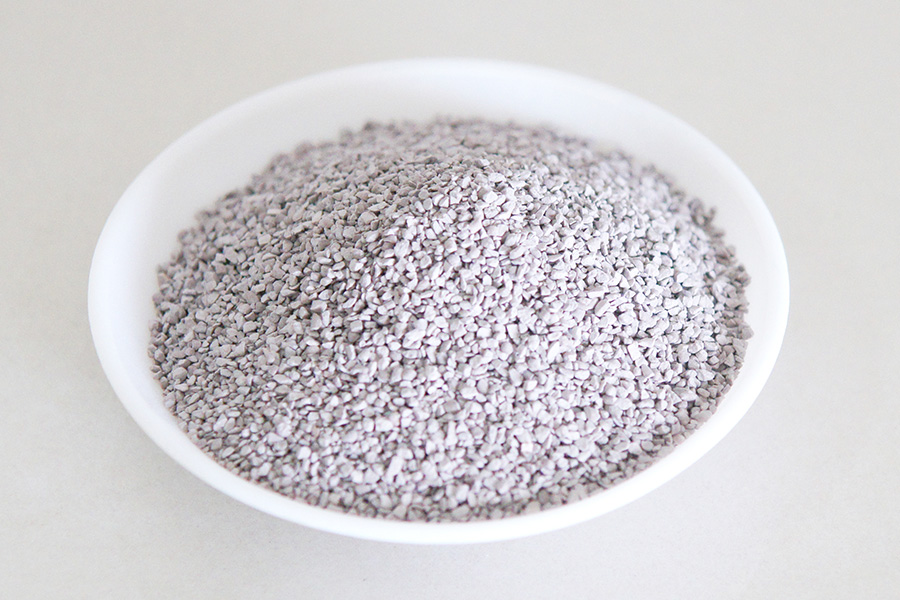
- Yield Loss (The Oil-in-the-Cake Problem): Clay is porous. As it is filtered, it contains a substantial amount of the very oil you intend to sell. Typically, for each ton of clay processed, around 20-30% of its weight is left behind as oil. The total percentage lost is estimated to be around 3-7%, making this an extremely costly annual ROI problem.
- Disposal Costs: Spent clay qualifies as hazardous waste. You don’t only pay for the cost of the clay, but you also pay for its transportation and disposal into landfills. With tightening ESG regulations expected in 2026, the cost of waste disposal may increase by 15% each year.
- Performance Limits: Clay operates based on adsorption. Though highly efficient in filtering pigments, it does nothing to remove the source of such contamination, namely sulfur and nitrogen compounds. This results in “color reversion,” whereby the filtered oil seems perfectly fine right after processing but changes color significantly after being stored for two weeks.
The Oil Solvent Extraction Advantage
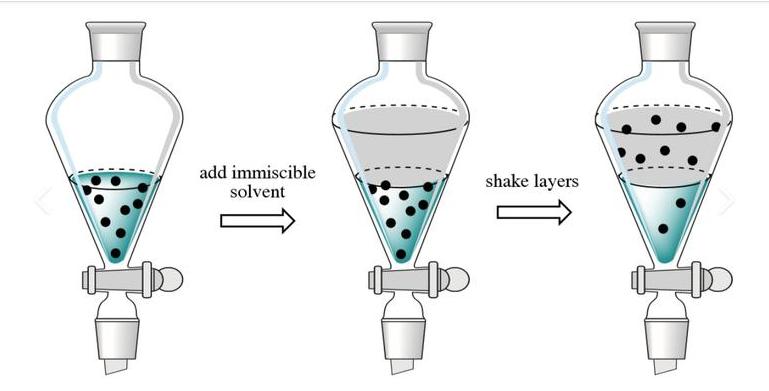
The solvent extraction technique relies on the selectivity of solubility, not absorption.
- Molecular Precision: As a result of the use of a particular solvent, such as furfural and N-Methyl-2-pyrrolidone, this method selectively extracts aromatics, polynuclears, and polar contaminants from the oil without touching the paraffin matrix.
- Efficient Oil Recovery: Since this process is solvent-based and not a solid-to-solid technique, there is nothing to retain any distilled oil during the removal process. The recovery rate through this process is usually up to 98%.
Engineering “Water-White” Quality: Key Technical Parameters
For reaching an ASTM Color Number below 0.5 – often called “water white” – the chemistry used in the extraction process must be tightly controlled. At PurePath, our engineers concentrate on three key parameters.
Ratio of Solvent to Oil
Ratio of solvent to oil significantly influences the performance of the polishing step; the higher the ratio, the better the color removal, but the greater the energy consumption by the solvent recovery section. Our advanced systems use multiple countercurrent towers in the extraction step, enabling maximum contact of the solvent with the oil with minimum solvent usage.
Closed Loop Recovery Process
Perhaps the biggest fallacy associated with solvent extraction is its expensive nature as a result of solvent usage. This claim can be debunked since our engineering processes use a closed-loop vacuum stripping system. Following the removal of impurities from the oil by the solvent, the solvent is stripped off through a flash evaporation process and reused. The recovery rate is over 99.5%, and thus, the costs incurred to replenish the solvent are insignificant.
Improvement in Indicators Apart from Color
Although the desired result is “water-white,” the internal chemical changes are of greater significance to the consumer:
- Improvement of Viscosity Index (VI): The removal of low VI aromatic components automatically improves the Viscosity Index of the base oil, thereby increasing its stability.
- Stability Against Oxidation: Solvent extraction gets rid of the catalysts for oxidation, such as nitrogen and sulfur. The oil will be stable for months.
Operational Economics (OpEx) and ROI
When evaluating the refining system, not only the initial purchase price (capital expenditure) needs to be considered, but also the cost per ton of the finished oil.
| Feature | Clay Treatment | PurePath Solvent Extraction |
| Recurring Consumables | High (Continuous purchase of clay) | Low (Minor solvent top-offs) |
| Waste Management | Expensive (Hazardous waste disposal) | Zero (By-products can be sold as fuel/bitumen) |
| Labor Requirement | High (Manual filter press cleaning) | Low (Fully automated PLC control) |
| Product Value | Lower (Standard grade) | Premium (API Group I/II compatible) |
The “Hidden” ROI of By-products
During clay purification, the impurities remain in the clay and are thus lost. For solvent purification, the aromatics and impurities (extract) from crude oil are recovered. The resulting “extract” has a high density of energy and thus becomes a good additive for fuel oil as well as a modifier for bitumen/asphalt. Thus, a “disposal challenge” becomes an additional revenue source.
Automation and Manpower Requirement
Modern oil solvent extraction plants are made to run continuously all day long. Unlike clay purification facilities, where shutting down is needed to clean filter presses, a very dirty and manpower intensive job, a solvent plant uses PLC control systems. This ensures that the output quality remains the same regardless of who runs the system.
To Summary
Since the demand for more stable base oils increases, polishing becomes an essential process that drives profitability. Solvent extraction is an excellent choice due to its high yield, zero waste generation, and preparation for future regulatory compliance. When you want to engage in producing premium-quality lubricant feedstock, oil solvent extraction technology is your best option.