
Top 5 Costly Mistakes to Avoid When Investing in a Waste Oil Recycling Plant
Written By: Mr.Ran
Senior Petrochemical & Waste Oil Recycling Engineer
Deeply involved in the design, manufacturing, and optimization of various waste oil recycling and petrochemical equipment, delivering practical and efficient solutions for clients worldwide.
The waste oil recycling plant can yield excellent profits. However, five key pitfalls kill off most businesses even before they begin operations. These include inadequate feedstock assessment, miscalculated capacity, pursuit of the lowest prices, overlooking supplier histories, and failing to conduct market research and regulatory compliance assessments. All five pitfalls are easily preventable.
Skipping Feedstock Analysis Before Investment
Many people buy a waste oil recycling plant without testing their oil first.
Used oil is not a fixed product. One batch might have 5% water. Another batch might contain 2% sulfur or trace amounts of heavy metals. A third batch could be mixed with coolant or brake fluid.
Each of these requires different pre-treatment equipment. If your plant isn’t built for your specific feedstock, here’s what happens:
- Filters clog within days
- Heaters corrode faster
- The final oil fails quality specs
- You spend more on maintenance than you planned
How to avoid?
Before you talk to any supplier, send a sample of your actual used oil to an independent lab. Pay for a full analysis. Get numbers on water content, sulfur, chlorine, metals, and solids.
Then share that report with your equipment supplier. Ask them: “Is your standard configuration designed for this feedstock? If not, what needs to change?” A good supplier will adjust the design.
Getting Capacity Planning Wrong
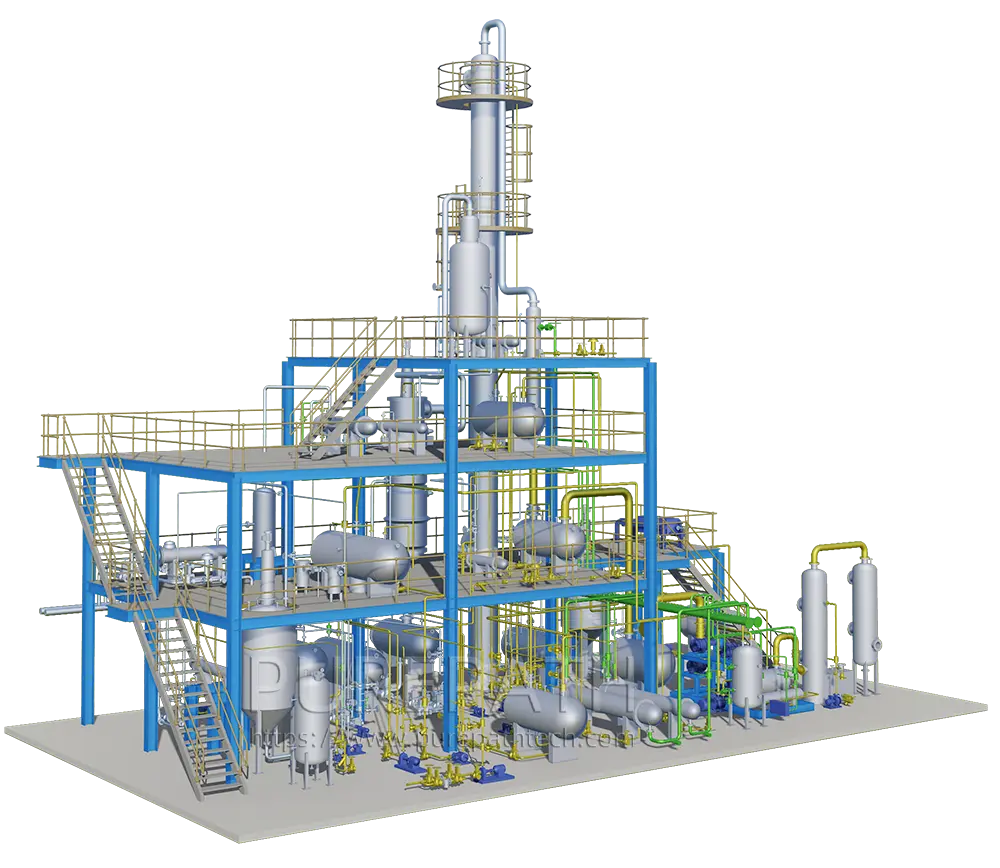
There are two types of capacity errors. They are costly.
Undersizing
You purchase equipment with a capacity of 10 tons per day. However, your daily average is 14 tons of materials. You operate the machine at 140% of its capacity.
This goes well for a month, but then mechanical failure occurs. Motor overheating and bearing wear cause problems. Cleaning intervals increase. After a year, you replace all equipment, which normally lasts five years.
Oversizing
You buy a machine that processes 30 tons per day. However, you only have 8 tons available on average per day. The equipment operates on an intermittent basis and experiences many starts. There is great energy consumption during each start-up. The distillation column does not have enough time to reach a constant temperature, thus producing low-quality oil.
How to prevent it?
- Firstly, find out your dependable feedstock volume per month, not your wished or next year’s volume but today’s.
- Secondly, calculate a growth margin, which should be 15-20%, and that will give you your capacity in tons per day.
- Lastly, get a heat and mass balance list from the supplier. If he can’t give it to you, you have the answer already.
Chasing the Lowest Price Tag
Cheaper equipment is expensive in five years. It always has been.
Every penny you save up front will be paid back in:
- Higher energy expenses
- More frequent maintenance
- Shorter life expectancy of consumables (filters, gaskets, heating elements)
I’ve done TCO calculations on hundreds of jobs. The lowest initial cost bid never wins the 5-year competition. Never.
How to prevent this: Do a quick 5-year cost analysis before making your decision.
Here is an example from an actual comparison:
| Cost Item | Cheap Option | Better Option |
| Initial price | $500k | $650k |
| Energy per year | $120k | $80k |
| Maintenance per year | $50k | $20k |
| Downtime loss per year | $40k | $5k |
| 5-year total | $1.25M | $975k |
The better option saves $275k over five years. That is the real math.
Ask every supplier for their estimated energy consumption per ton and expected spare parts cost per year. Compare the numbers side by side.
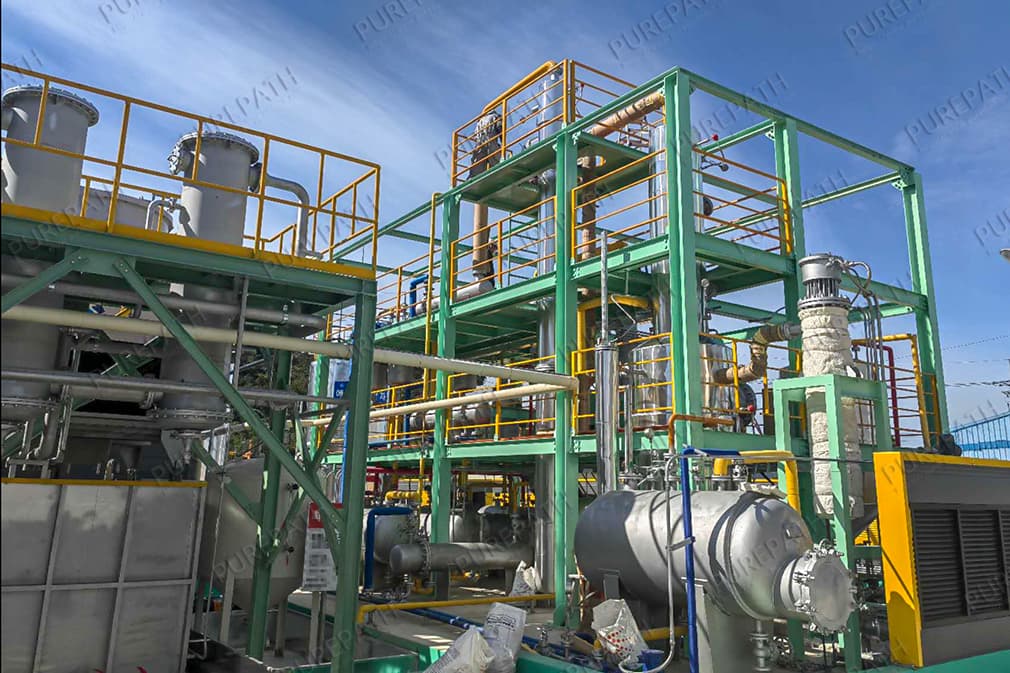
Ignoring Your Supplier’s Track Record
You make a deal with a cheap vendor. Six months later, something breaks. You reach out to them. Nobody answers. Or they answer but can’t provide spares. Or they offer spares but lack a technician to deliver them. Your plant stands idle for weeks.
Before making the decision, confirm three points:
- Client references – Request a list. Contact three owners. Inquire, “What malfunctioned? What was their response?”
- Availability of spare parts – Do they carry essential spares nearby? Or do you have to wait six weeks for delivery?
- In writing performance guarantee – Production capacity. Kilowatt per ton. Quality of oil. Also penalties for non-compliance.
If any vendor shows reluctance in the above, avoid them. Low prices mean little when your plant isn’t operational and earning. Start by confirming the client references. It takes two hours and prevents months of misery.
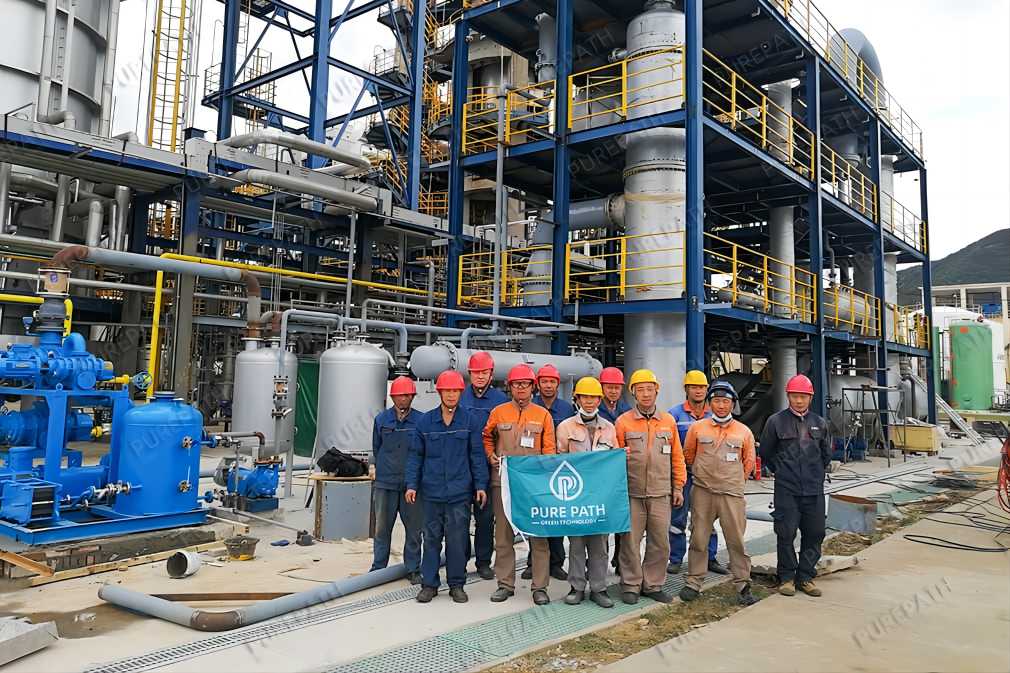
Forgetting Market and Regulation Checks
You build the plant. It works perfectly. Then you realize no one wants to buy your recycled oil because your specs don’t match local buyers’ requirements. Or your emissions fail the environmental inspection. Or your feedstock supplier just raised prices because you have no contract.
I have seen plants sit idle for all three reasons. Each one is 100% avoidable.
Do these three checks before you spend a dollar on equipment.
- First, identify who buys recycled oil in your area. Get their quality specs in writing. Design your plant to meet those specs, not generic ones.
- Second, hire a local environmental consultant. Ask them: “Will my planned facility pass inspection?” Do this early.
- Third, secure a feedstock agreement. Sign a contract with a used oil collector before you commit to the plant.
To Conclude
A waste oil recycling plant is a solid investment if you avoid these five mistakes.
- Skip feedstock analysis → you pay in corrosion and downtime.
- Guess wrong on capacity → you burn cash on energy or idle equipment.
- Chase the lowest price → your 5-year total will be higher.
- Ignore supplier track record → good luck getting spare parts.
- Forget market and regulation → you may build a plant you cannot operate.
Do the homework upfront. It takes a few weeks. It saves years of headaches.
Ready to spec the right plant for your oil?
Get in touch! Send us your feedstock report. We’ll give you a clear recommendation.