
How to Refine Waste Lube Oil into API Group II/III Base Oil
Written By: Mr.Ran
Senior Petrochemical & Waste Oil Recycling Engineer
Deeply involved in the design, manufacturing, and optimization of various waste oil recycling and petrochemical equipment, delivering practical and efficient solutions for clients worldwide.
The traditional perception of used lubricant management—often viewed merely as a hazardous waste disposal hurdle—is rapidly obsolescing. Driven by global mandates for Extended Producer Responsibility (EPR) and the imperative of decarbonization, the industrial sector is witnessing a paradigm shift. Waste oil is no longer a liability; it is “liquid gold.” This content explores the technical imperatives and commercial advantages of transitioning from legacy, low-efficiency recycling methods to advanced circular economy refining. We specifically examine how modern hydrotreating technology and sophisticated solvent extraction enable the conversion of used motor oil into high-value API Group II and Group III base oils, achieving near-virgin quality standards.
The Bottleneck of Legacy Methods: Why Group I is No Longer Enough
Historically, simple distillation and crude clay treatment were the standards for used oil recycling. These methods typically yield a Group I base oil—a product characterized by high sulfur content, high aromatics, and limited oxidative stability.
While Group I oils have historically dominated the market, they are increasingly ill-suited for modern, high-performance machinery. As engine and industrial equipment technologies evolve, the demand for lubricant quality has spiked, requiring oils with better viscosity indices, lower volatility, and superior shear stability.
For waste oil re-refineries, relying on simple distillation is a business risk. The market is consolidating around high-quality output. The API Group II Base Oil manufacturing process represents the current standard for competitiveness. This can only be attained through not merely getting rid of moisture and fuel dilution but by reconfiguring the hydrocarbon molecule.
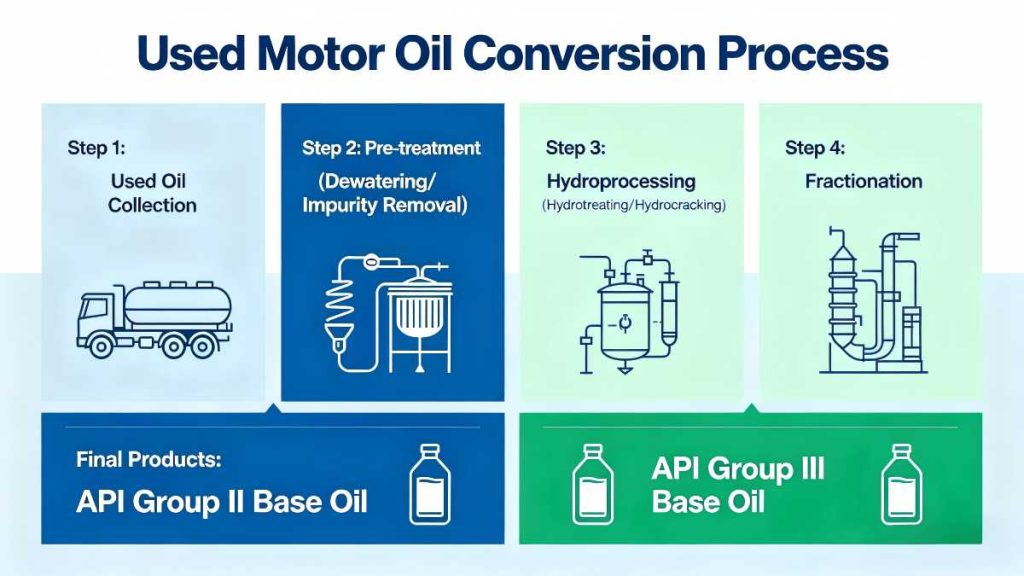
Core Technologies of the Refining Process of Waste Oil to Group II/III Base Oil
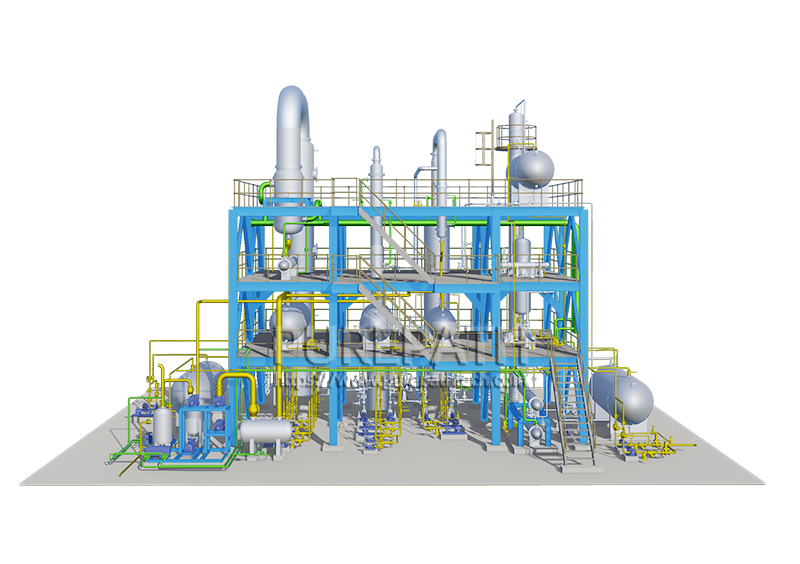
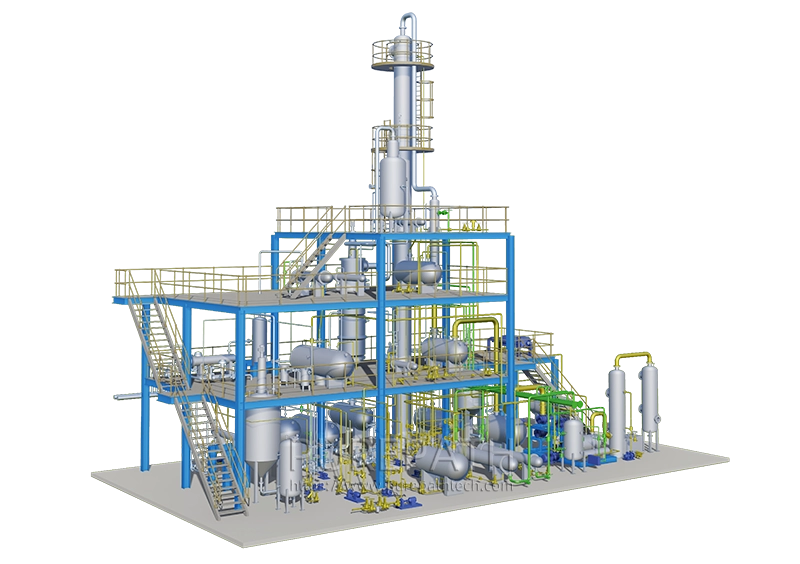
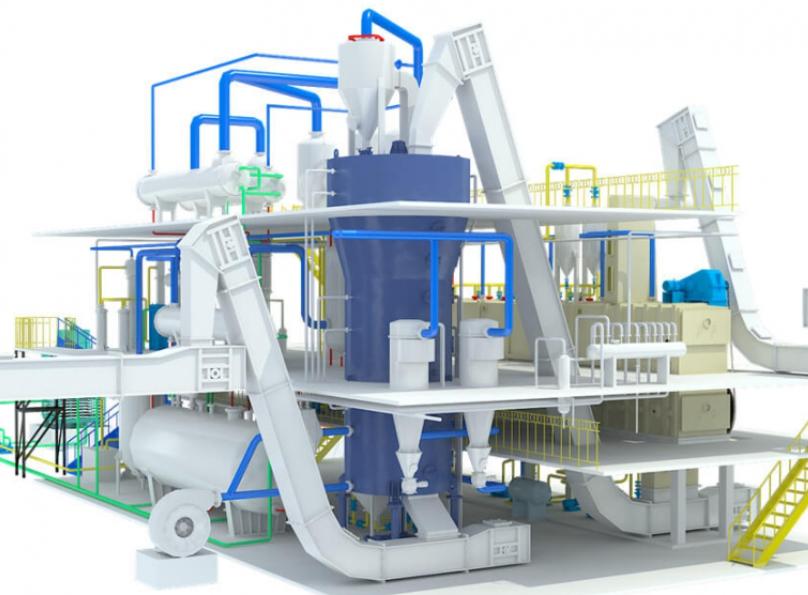
In order to move from being a commodity-quality manufacturer to a premium supplier, refineries have to invest in an integrated refining system. There are two key pieces of technology used for moving towards higher grades: solvent extraction and deep hydrotreating.
1. Solvent Extraction: Precision Removal of Impurities
Solvent extraction is the first step in deep refining. Traditional methods involving acid clay treatment leave behind significant amounts of hazardous waste material (acid sludge). By contrast, solvent extraction uses selective chemicals (for example, NMP or Furfural) to separate the good hydrocarbons from bad aromatics and polar compounds. As a result, the process decreases sulfur and nitrogen content, producing feedstock for high-quality base oils.
2. Hydrotreating: Technology of the Molecule
The key aspect of being Group II and Group III compliant is hydrotreating technology. During this process, feedstock is treated with hydrogen under pressure in the presence of catalysts.
The chemical reaction is transformative:
- Saturation: The hydrogen saturates unsaturated hydrocarbons (olefins), significantly improving the oil’s oxidative stability.
- Hydrodesulfurization/Hydrodenitrogenation: The process strips away sulfur, nitrogen, and oxygen impurities, converting them into benign byproducts (H2S and NH3).
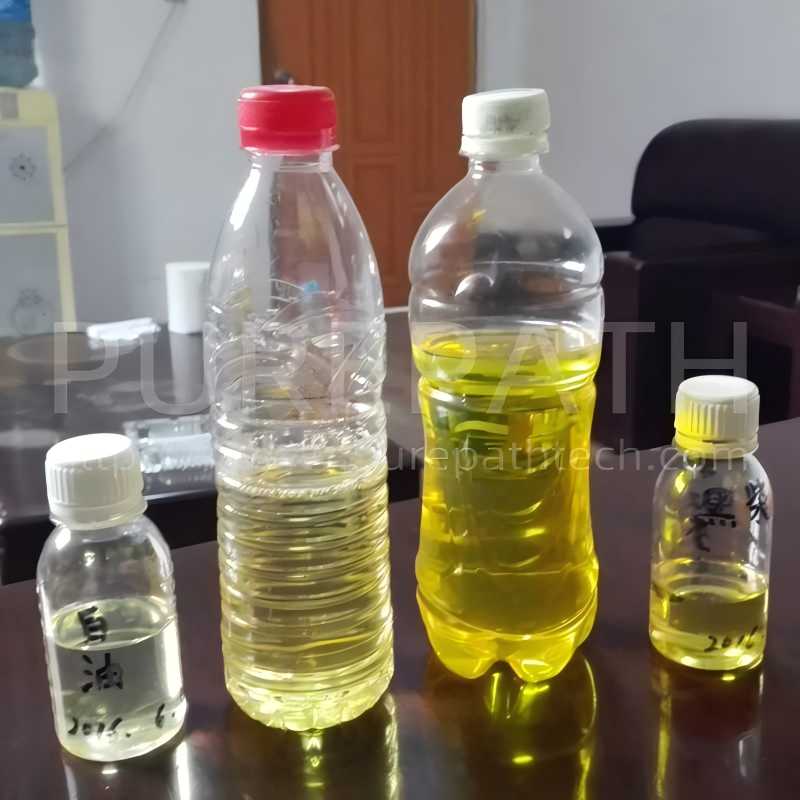
- Color Restoration: By removing unstable impurities, the hydrotreated product achieves a water-white clarity, indistinguishable from virgin oil derived from crude petroleum.
Commercial Benefits and ESG Integration
Investing in advanced waste oil to base oil plant is not solely a technical decision; it is a strategic business move.
1. The “Near-Virgin” Quality Advantage
The negative image of “recycled oil” is fast becoming a thing of the past. Oils that have been properly hydro-processed have a physical and chemical makeup that is often better than that of virgin oils. By achieving Group II/III API classification, producers can sell their goods at premium prices, leaving behind fuel oil markets in favor of lubricants.
2. Meeting the Circular Economy Imperative
The third scope emission of carbon is crucial as a key performance indicator (KPI) for multinational manufacturers in the industrial sector. Using or manufacturing base oil through re-refining makes it possible for such industries to show a tangible decrease in their carbon footprint compared to using virgin base oil extracted from crude oil. This approach creates opportunities for the adoption of sustainable operations that guarantee supply chain agreements.
3. Return on Investment (ROI)
The capital expenditure costs for hydrotreating units outperform those of simple distillation plants, yet these costs generate a better return on investment. The payback period becomes attractive to institutional and private equity investors because Group II/III products generate higher product yields and eliminate hazardous waste disposal costs, which are linked to clay treatment.
Strategic Implementation: Why EPC Capability Matters
It is hard to underestimate the intricacy of constructing a refinery plant in today’s world. Such facilities require chemical and metallurgical know-how, along with high regard for safety regulations. That is why the trend is shifting towards fully integrated EPC solutions in the industry.
When selecting a technology partner for a waste oil to base oil project, plant operators must look for:
- Integrated EPC Design: A partner that provides seamless integration from the initial feasibility study to the final on-site commissioning. This prevents the “silo effect” where engineering and equipment manufacturing are disconnected.
- Modular Flexibility: The trend towards modularity is becoming more prevalent in modern refineries. Modularity offers flexibility, fast installation, low-cost on-site labor, and scalability of production as per market demands.
- Expertise in Process Integration: As described above, the integration of solvent extraction with hydrotreating is extremely important. A well-qualified EPC company makes sure that both processes are integrated without any hindrance and that neither process becomes a bottleneck for the other.
The path from waste to high-performance base oil is built on precise engineering and a commitment to quality. For organizations that are prepared to advance their operations, they will obtain an opportunity to transform their position within the value chain.
Are you ready to evaluate the feasibility of your own refining upgrade? Contact us for a comprehensive, site-specific feasibility study. We specialize in turning waste into high-value assets through bespoke EPC solutions.