
Waste Oil & Pyrolysis Oil Co-Refining: A High-Value Solution
Written By: Mr.Ran
Senior Petrochemical & Waste Oil Recycling Engineer
Deeply involved in the design, manufacturing, and optimization of various waste oil recycling and petrochemical equipment, delivering practical and efficient solutions for clients worldwide.
As the global circular economy grows, carbon neutrality goals are set, and waste plastic and waste oil recycling grows quickly, waste oil and pyrolysis oil co-refining has become one of the most useful and valuable technical paths in the modern waste-to-energy and waste oil regeneration industry. Single-feedstock refining plants that have been around for a long time often have problems like an unreliable supply of raw materials, low product quality, and high operational risks. In contrast, multi-feedstock synergistic refining combines used engine oil, plastic pyrolysis oil, coal tar, and other low-quality feedstocks into one production line that makes Euro VI standard diesel and API Group I/II base oils quickly and efficiently.
At PurePath Technology, we design and deliver complete co-refining solutions that give you the most flexibility with your feedstock, increase your product yield, and follow global environmental and low-carbon policies. This article looks at the market drivers, core technologies, process advantages, and economic and environmental value of waste oil/pyrolysis oil synergistic refining, using the most recent industry data and engineering practices as support.
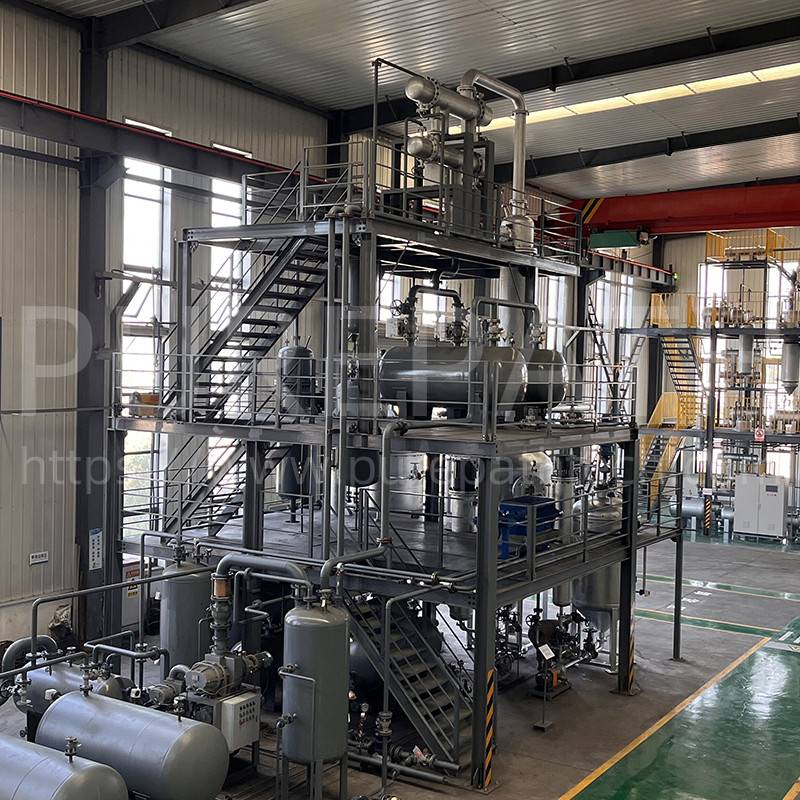
The Surge of Co-Refining: Market & Policy Drivers (2026–2030)
The need to rely less on virgin crude oil, stricter environmental rules, and rules about how to deal with plastic waste are all driving up global demand for sustainable fuel and lubricant base oil. TechSci Research, Mordor Intelligence, and Fortune Business Insights all say that the global co-refining market was worth $206.4 billion in 2024 and will be worth $256.7 billion by 2030, growing at a rate of 3.55% per year.
The plastic pyrolysis oil market is growing even faster, with a CAGR of 16.04% from 2026 to 2031. At the same time, the global market for recycling waste oil keeps growing. By 2026, China alone is expected to have a market size of $3.25 billion, with over 70% of new waste oil treatment projects using multi-feedstock co-refining technology.
Policy & Carbon Reduction Mandates
Multiple global policies are directly driving the adoption of co-refining technology:
- EU RED III, CBAM, and carbon tax policies encourage refineries to reduce carbon emissions by processing waste-derived oils.
- China’s dual-carbon strategy and hazardous waste reduction policies support the high-value utilization of waste oil, waste plastic pyrolysis oil, and coal tar.
- US RFS (Renewable Fuel Standard) and global circular economy regulations prioritize waste-to-fuel pathways over landfilling or incineration.
Together, these factors make multi-feedstock co-refining not only an environmentally responsible choice but also a highly economical and future-proof investment for waste recycling enterprises.
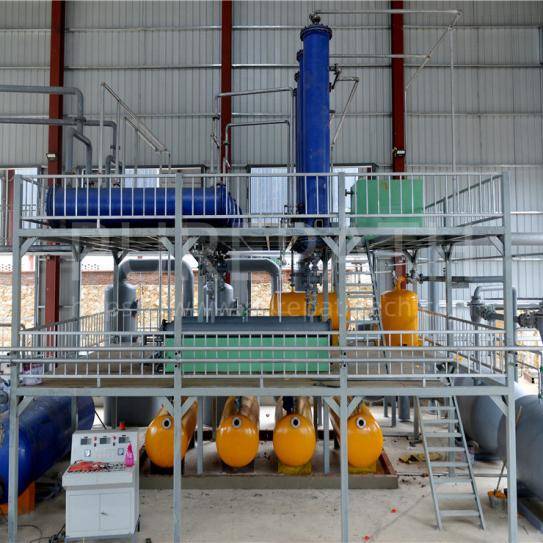
What Is Waste Oil & Pyrolysis Oil Synergistic Refining?
Synergistic refining, or co-refining, refers to the integrated processing of multiple inferior hydrocarbon feedstocks in a single production system to produce high-quality petroleum products. Unlike traditional waste oil regeneration plants that only process used motor oil or hydraulic oil, co-refining systems are designed to accept a wide range of challenging feedstocks.
Compatible Feedstocks
PurePath’s co-refining technology supports the following materials:
- Waste mineral oil: used engine oil, gear oil, hydraulic oil, cutting oil
- Plastic pyrolysis oil: waste plastic thermolysis oil, waste tire pyrolysis oil
- Coal chemical byproducts: coal tar, coal tar distillates
- Other refinery residues: slop oil, shale oil, oil slurry
The optimal blending ratio of waste oil to pyrolysis oil typically ranges from 7:3 to 6:4, balancing stability, conversion efficiency, and product performance.
Core Advantages Over Single-Feedstock Systems
- Greater feedstock flexibility: Reduces reliance on a single raw material and resists market price fluctuations.
- Higher total oil yield: Achieves 88%–94% yield, compared to 75%–85% in traditional units.
- One plant, multiple high-value products: Simultaneously produces diesel and base oils.
- Lower investment cost: Reuses core refining equipment, cutting capital expenditure by over 50% compared to building new dedicated refineries.
- Longer operational cycles: Advanced anti-coking and impurity removal systems extend continuous operation.
PurePath’s Co-Refining Process & Core Technologies
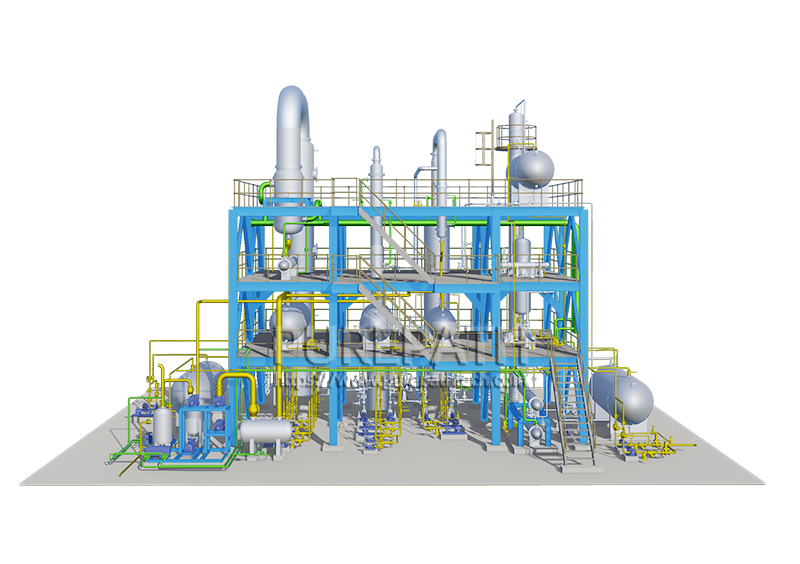
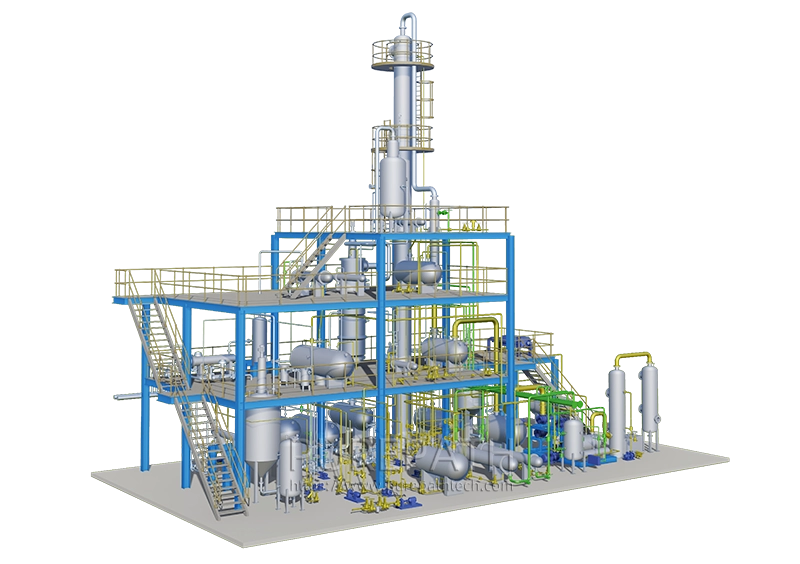
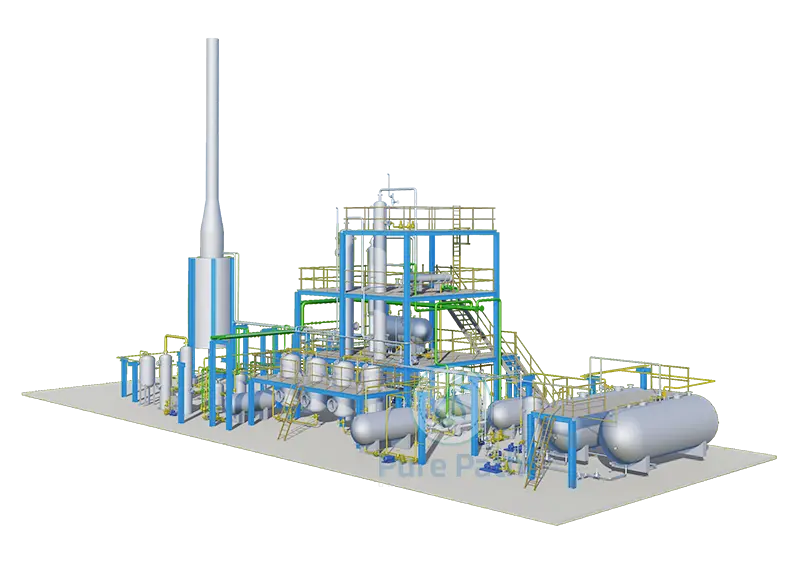
The waste oil and pyrolysis oil co-refining system from PurePath uses a fully continuous, closed-loop process that is stable, efficient, and meets international emission standards. The process has three main steps: deep pre-treatment, synergistic hydrotreating, and molecular distillation for precision fractionation.
Step 1: Deep Pre-Treatment
Pyrolysis oil and coal tar have a lot of chlorine, heavy metals, water, and olefins in them. These can poison catalysts and corrode equipment. PurePath’s pre-treatment module gets rid of these harmful parts by dehydrating, degumming, dechlorinating, and filtering them. This makes sure that processing downstream stays stable.
Step 2: Synergistic Cracking & Hydrotreating
The blend feed is processed in our highly efficient cracking and hydrotreating plant to remove sulfur, nitrogen, and unsaturated hydrocarbons. Using our patented ultrasonic desulfurization and hydrogenation catalysts, we ensure that the sulfur levels are less than 10 ppm, fully complying with Euro VI and China VI b diesel fuel specifications.
Step 3: Fractionation & Molecular Distillation
After hydrotreating, the oil is separated into different fractions through precision distillation and short-path molecular distillation. This step produces:
- Light distillates: naphtha and solvent oil
- Middle distillates: Euro VI diesel
- Heavy distillates: API Group I and Group II base oils (SN80 to SN500)
The entire system is controlled by an automated PLC and SCADA system, enabling real-time monitoring, remote operation, and intelligent optimization of energy consumption.
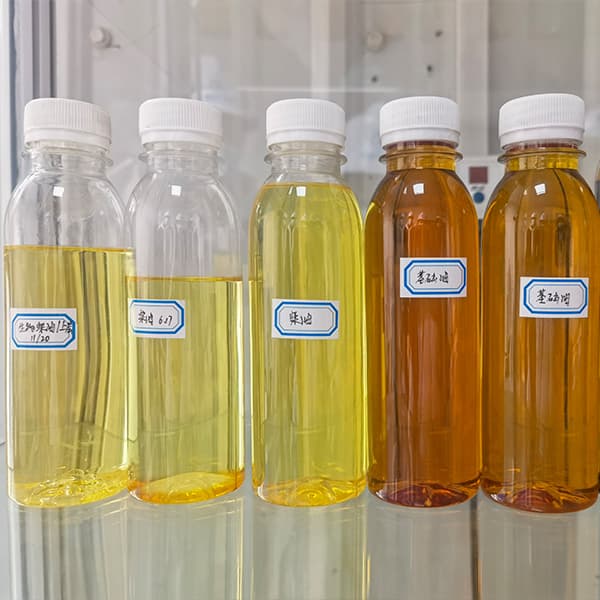
Product Performance: Diesel & Base Oils of Virgin Quality
One of the most significant benefits of co-refining is its ability to produce commercially competitive fuels and base oils that match or approach the performance of virgin petroleum products.
High-Grade Diesel Output
- Sulfur content: <10ppm
- Cetane number: ≥51
- Excellent low-temperature fluidity and stability
- Fully compatible with automotive, marine, and industrial engines
High-Quality Lubricant Base Oils
- API Group I / Group II classification
- High viscosity index
- Low carbon residue and low impurity content
- Suitable for blending engine oils, industrial lubricants, greases, and hydraulic oils
These high-value products command strong market demand and significantly improve project profitability compared to low-grade fuel oil outputs.
Economic & Environmental Benefits of Co-Refining
According to 2026 industry analysis reports, multi-feedstock co-refining delivers outstanding economic returns and substantial environmental benefits, making it a top choice for investors and operators worldwide.
Economic Value
- Increased product yield: 9%–15% higher than single-feedstock recycling lines
- Diversified revenue streams: Diesel and base oil sales reduce market risk
- Shorter payback period: Typically reduced by 1.5–2 years
- Lower operational costs: Self-sufficient energy use from byproduct fuel gas
Environmental & Carbon Benefits
- Lowering carbon emissions: 60%–70% less than refining crude oil for the first time.
- Hazardous waste diversion: Keeps a lot of plastic and oil waste out of landfills and incinerators.
- Low emissions: SOₓ, NOₓ, and VOC emissions are all within the limits set by international environmental standards.
- Circular economy alignment: Turns waste from factories into resources that can be used again
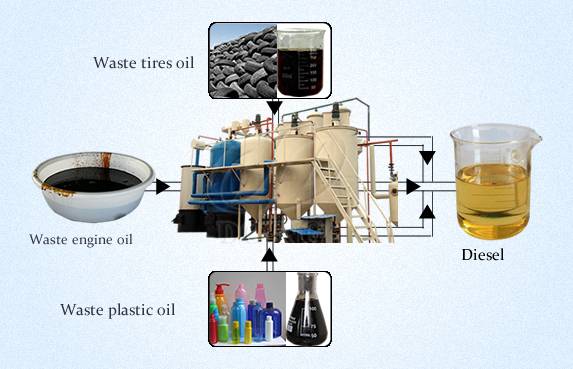
Why Co-Refining Is the Future of Waste Oil Recycling
From 2026 to 2030, the global waste oil and plastic pyrolysis industry will continue to shift toward large-scale, intelligent, and multi-feedstock integrated solutions. Key industry trends include:
- Multi-feedstock co-processing is becoming mainstream, accounting for over 65% of new capacity
- Increased integration with existing refineries to share hydrogen and distillation infrastructure
- Advanced catalyst technology is improving efficiency and reducing energy consumption
- Digitalization and intelligent control are enhancing operational stability
PurePath Technology is still leading the way in this change. We offer personalized co-refining solutions to clients all over the world. We have years of experience in petrochemical engineering, EPC turnkey services, and waste oil regeneration. Our modular skid-mounted design cuts installation time on-site to 6–10 months, and our after-sales service makes sure that the system works well for a long time.
We at PurePath Technology are dedicated to improving synergistic refining technology so that our clients can turn waste into wealth, achieve profitable sustainability, and lead the world in moving to a low-carbon economy.
If you want to learn more about our waste oil and pyrolysis oil treatment solutions or are interested in starting a multi-feedstock co-refining project, please visit our official website or get in touch with our technical sales team.