
Waste Oil Recycling ROI: How Profitable is the Business?
Written By: Mr.Ran
Senior Petrochemical & Waste Oil Recycling Engineer
Deeply involved in the design, manufacturing, and optimization of various waste oil recycling and petrochemical equipment, delivering practical and efficient solutions for clients worldwide.
The global volume of industrial and automotive waste oil represents a significant environmental liability and a distinct economic opportunity. Waste oil recycling is an important part of the hazardous waste management and industrial circular economy by converting degraded lubricants into reusable base oils or fuel fractions. The return on investment (ROI) for this industry can be judged only on the basis of an analytical assessment of the raw material supply chains, processing efficiencies, capital allocations and market mechanisms. This report provides a quantitative and technical framework to evaluate the financial viability and operational risks of industrial waste oil recycling systems.
What Determines Waste Oil Recycling Profit?
The net profitability of a waste oil recycling plant is dictated by three primary technical and market variables: feedstock acquisition dynamics, finalized product market valuation, and the thermochemical efficiency of the processing infrastructure.
1. Feedstock Sourcing and Procurement Dynamics
Feedstock costs represent the largest ongoing operational expenditure. Sourcing economics vary by region and are determined by local environmental enforcement. In regulatory frameworks with strict tracking mandates (such as the European Union’s Waste Framework Directive or US EPA RCRA standards), generators of waste oil must pay qualified handlers for collection, creating a negative feedstock cost or ‘tipping fee’ revenue stream for the recycler. Conversely, in markets lacking rigid enforcement, competition among informal collectors inflates the acquisition price of raw waste oil. Also, the physical composition influences the profitability. Raw feedstock has different levels of water contamination (5% to 20%), light solvents, and solid particulates. The net volumetric yield decreases and the thermal energy for dewatering increases with increasing contamination.
2. Finalized Product Valuation Matrix
The revenue ceiling is determined by the quality and grading of the output products. If the waste oil refinery produces low-tier industrial fuel oil or marine gas oil (MGO), pricing is closely tied to global crude benchmarks (such as Brent or WTI) and exhibits high volatility. If the facility utilizes advanced refining stages to yield Group I or Group II base oils, the output commands a pricing premium dictated by lubricant manufacturing demand. Group II base oils command significantly higher market prices than unrefined fuel options due to their low sulfur content, improved viscosity index, and high oxidative stability.
3. Process Engineering and Thermal Efficiency
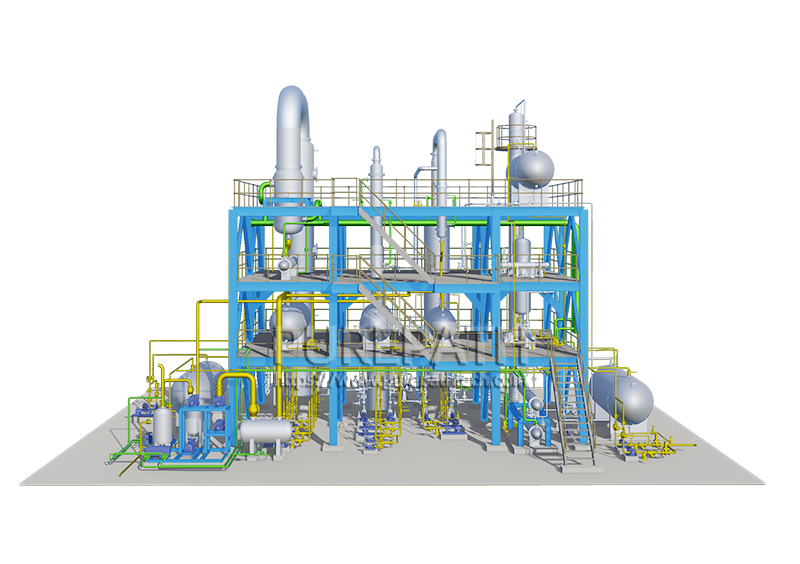
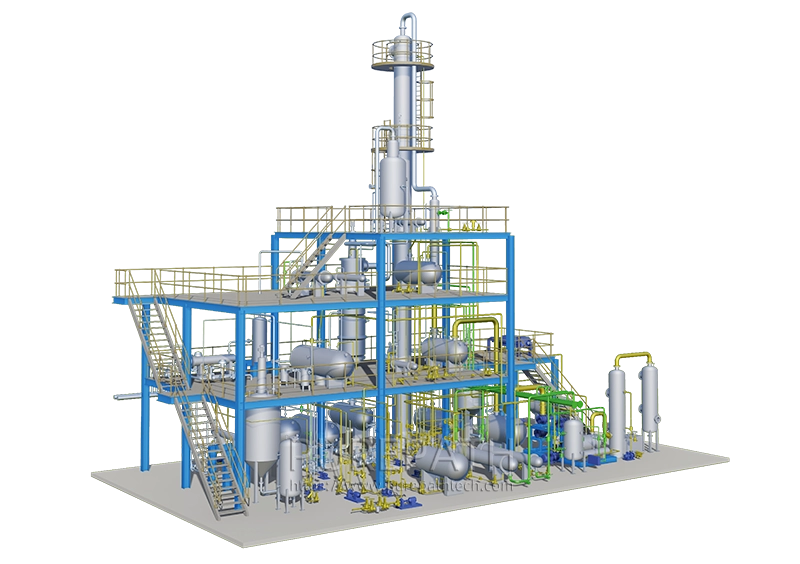
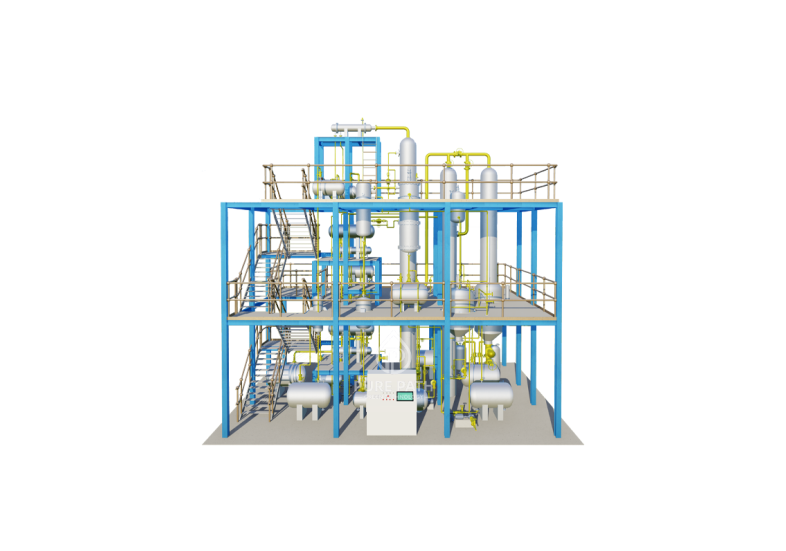
The chemical conversion efficiency of the processing plant determines the volume of saleable output derived per metric ton (MT) of raw input. Modern continuous vacuum distillation units achieve base oil recovery yields between 75% and 85%, with the remainder converted into asphalt flux or light hydrocarbon gas used for internal heating. Utility consumption—specifically electric power for vacuum pumps and thermal energy for the distillation columns—determines the operational cost per ton. Facilities utilizing waste heat recovery exchangers minimize external fuel consumption, increasing net margins.
Strategic Revenue Models in Waste Oil Recycling
Industrial operations deploy three distinct commercial frameworks to generate revenue from waste oil processing assets.
1. Base Oil Sales Model (High-Value Refining)
This model is geared towards the manufacturing of standard base lubricants (e.g. SN150, SN300, or Group II formulations) in conformity with American Petroleum Institute (API) specifications. Our target customers are industrial lubricant blenders and automotive oil formulators. This strategy provides high gross margins per metric tonne due to the value added from multi-stage processing, including dewatering, thin-film evaporation, fractional vacuum distillation, and chemical solvent extraction or hydro-finishing. The model is based on long-term B2B supply contracts, which means less exposure to the market than spot market trading.
2. Fuel Oil & Marine Fuel Model (High-Turnover)
This model involves less technical complexity, processing waste oil into industrial fuel oil, light diesel blends, or marine fuel oil components. The refining process is limited to macro-filtration, flash dewatering, and atmospheric distillation to remove light ends. Capital expenditure is low, and processing times are short, allowing for high volume liquidity and rapid inventory turnover. However, because the end product is treated as a commodity substitute for heavy fuel oil, profit margins are tight and highly susceptible to fluctuations in global oil prices.
3. Closed-Loop / Internal Use Model (Circular Economy)
This model is used as an internal cost-containment strategy by large industrial players like logistics companies, open-pit mining operations, and heavy manufacturing facilities. Waste lubricants from corporate fleets or machinery are collected, re-refined on-site or through a toll processing arrangement, and delivered directly back to the entity’s operational inventory. It’s a quantifiable ESG metric, it removes procurement costs for virgin lubricants, the external hazardous waste disposal fees, and it’s a quantifiable ESG metric.
Comprehensive Cost Structure Breakdown
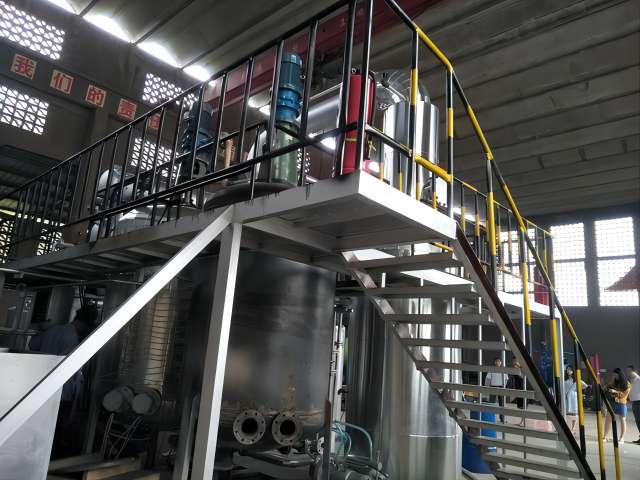
Establishing an industrial waste oil refinery involves clear capital expenditure (CAPEX) allocation and ongoing operational expenditure (OPEX) management.
Capital Expenditure (CAPEX)
- Core Refining Infrastructure: Thin-film evaporators, fractional distillation columns, vacuum sub-systems, thermal fluid heaters, and chemical dosing units.
- Civil and Environmental Infrastructure: Tank farms for feedstock and finished product storage (built with secondary containment dikes), API oil-water separation systems, and exhaust gas scrubbing units designed to neutralize sulfur dioxide (SO2) and volatile organic compounds (VOCs).
- Regulatory Licensing and Engineering: Environmental Impact Assessments (EIA), hazardous waste handling permits, local fire department certifications, and structural site engineering.
Operational Expenditure (OPEX) — Calculated per Metric Ton (MT)
- Utilities: Electrical energy for high-vacuum pumps and product transfer pumps; natural gas, fuel oil or light ends for the thermal fluid boilers
- Chemicals and Consumables: Alkaline agents (e.g., caustic soda) for the neutralization of organic acids; specialized filtration media (activated clay or silica gel) and catalysts for decolorizing and deodorizing.
- Labour and Laboratory Maintenance: Mechanical maintenance technicians, quality control chemists, and shift operators for gas chromatography and ASTM testing procedures.
ROI Financial Model & Calculation Example (Per Ton Basis)
The following financial matrix demonstrates the typical cost-to-revenue dynamics of a medium-scale continuous vacuum distillation refinery processing a standard batch of automotive waste oil (containing 10% water/sludge contamination) into Group I/II base oil fractions.
| Cost/Revenue Component | Estimated Value (USD / MT) | Technical and Operational Assumptions |
| Raw Feedstock Cost | $300.00 | Delivered cost of waste oil including logistics and regional collection fees. |
| Utilities (Electricity & Heat) | $55.00 | Assumes 45 kWh electricity and 350,000 BTU of thermal energy per metric ton. |
| Chemicals & Filter Media | $40.00 | Includes specialized bleaching clay, flocculants, and neutralizing agents. |
| Labor & Plant Overhead | $45.00 | Pro-rated based on a continuous 3-shift system with automated controls. |
| Maintenance & Spares Provision | $20.00 | Annualized pump replacements, gasket maintenance, and column cleaning. |
| Total Production Cost (A) | $460.00 | Sum of feedstock cost and total variable processing OPEX. |
| Base Oil Output Revenue (80% yield) | $720.00 | 0.80 MT of Base Oil valued at $900.00 per MT market price. |
| Co-product Light Fuel Revenue (8% yield) | $44.00 | 0.08 MT of light fractions sold as industrial fuel oil at $550.00 per MT. |
| Gross Revenue Per Ton (B) | $764.00 | Combined output value derived from the processing of 1 MT input. |
| Net Profit Margin Per Ton (B – A) | $304.00 | Net operational margin before tax, depreciation, and amortization (EBITDA). |
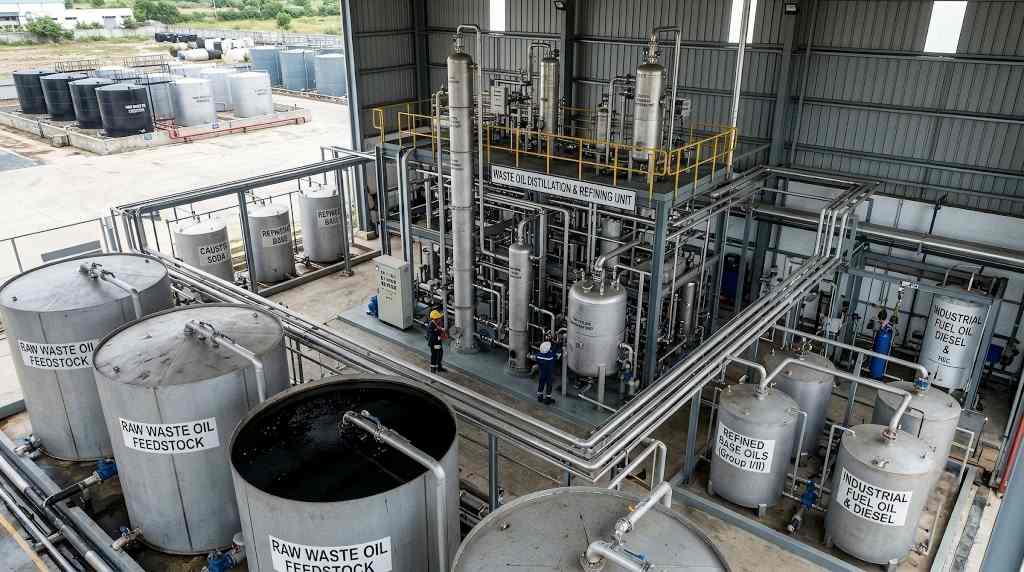
Payback Period & Scalability Scenarios
The payback duration of a waste oil recycling facility is determined by its daily processing capacity and its level of automation.
Small-Scale Batch Plants (5–10 Metric Tons / Day)
These configurations require low initial capital expenditure ($150,000 to $350,000). They operate on manual batch sequences and utilize simple atmospheric or basic vacuum distillation. Due to the lack of automated fraction cutting, output quality is inconsistent, typically restricting sales to the fuel oil market. Estimated Payback Period: 18 to 24 months, constrained by higher manual labor costs per ton and lower market pricing for the output product.
Medium-Scale Continuous Systems (20–50 Metric Tons / Day)
These facilities integrate continuous thin film evaporators and multi-stage vacuum distillation towers and require a CAPEX investment between $800,000 and $2,000,000. These systems run continuously ( 24/7 ) and maximise thermal efficiency through heat exchangers. This steady output qualifies for high-value B2B industrial lubricant markets.” Estimated Payback Period: 12 to 18 months based on energy optimisation, reduced labour per tonne and stable product pricing.
Large-Scale Industrial Refineries (100+ Metric Tons / Day)
These installations are highly engineered infrastructure that requires investments of more than $5,000,000. They include fully automated PLC/SCADA control rooms, advanced hydro-finishing units, solvent extraction processes and complete environmental treatment plants. They make Group II base oils of high purity. Estimated Payback Period: 24 to 36 months. The operational margin per tonne is maximised by economies of scale, but the extensive initial capital layout extends the amortisation timeline.
Critical Risk Factors & Mitigation Strategies
Financial performance within the waste oil recycling sector is subject to three primary operational and macro-economic risks.
1. Feedstock Quality and Contamination Volatility
A serious threat to the plant’s processing capacity and the structural integrity of the plant is the uncontrolled variability of the feedstock composition. High concentrations of chlorinated solvents, glycol from antifreeze, or synthetic silicone lubricants can disrupt distillation equilibrium, contaminate finalised product batches, or generate hydrochloric acid within the piping systems that is corrosive.
Mitigation Strategy: Refineries must establish a strict gate-keeping QA/QC laboratory protocol using rapid infrared spectroscopy or density testing prior to offloading feedstock. Advanced plants implement pre-treatment washing stages to extract glycols and light acids before thermal processing.
2. Commodity Price Exposure and Market Fluctuation
Because finished product pricing tracks global crude oil metrics, a significant decline in crude benchmarks compresses refining margins if feedstock acquisition costs remain static.
Mitigation Strategy: Industrial recyclers mitigate this exposure by adopting flexible pricing models for feedstock procurement, indexing their purchase price directly to current regional fuel or base oil indexes. Diversifying the plant’s production capability allows operators to shift outputs between industrial fuel and high-grade base oil depending on shifting demand dynamics.
3. Regulatory and Environmental Compliance Risks
The waste oil refining process yields hazardous by-products such as acid sludges, spent filtration clay and sulfur-rich off-gases. Tighter environmental legislation on industrial emissions can cause abrupt compliance costs or shutdowns of operations if emissions breach legal limits.
Mitigation Strategy: Advanced environmental engineering controls must be incorporated. Facilities are required to have closed-loop wastewater treatment systems to eliminate liquid discharge and use multi-stage thermal oxidisers or carbon adsorption beds to neutralise non-condensable process gases before they are released to the atmosphere.
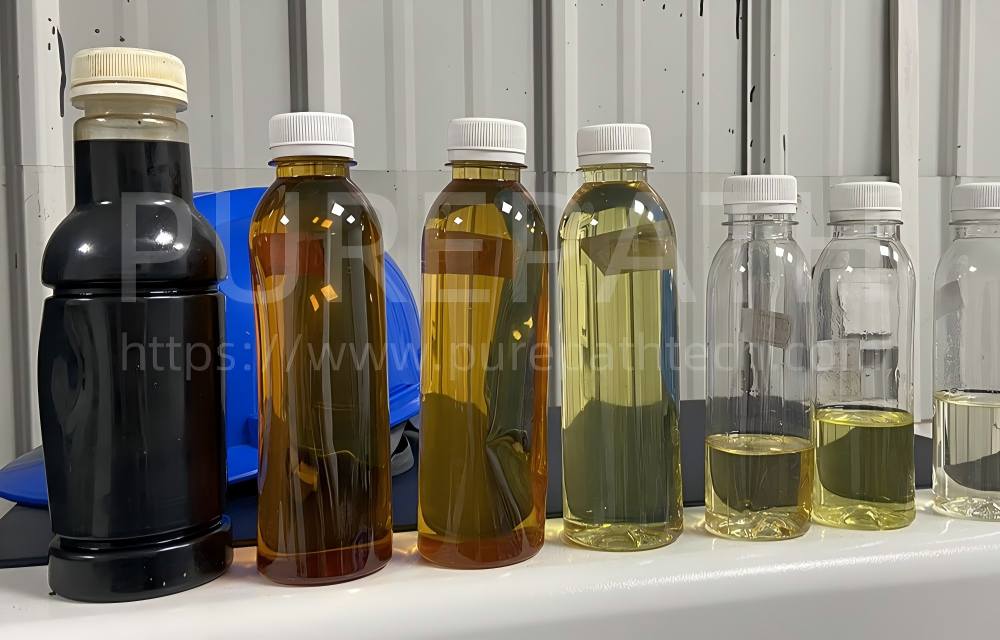
The recycling of industrial waste oil is a high-margin business when there is a suitable technological configuration and well-organised procurement channels. The capital amortisation and net return on investment are heavily affected by the suitability of the selected processing technology with the regional feedstock parameters and local product demand. However, long-term economic stability and the best financial returns are delivered by automated, continuous systems that can produce high-specification base oils to stringent international industry standards, while small-scale plants offer easy market entry.