
2026 Waste Oil Recycling Feedstock Strategy for Stabilizing Costs in a Volatile Market
Written By: Mr.Ran
Senior Petrochemical & Waste Oil Recycling Engineer
Deeply involved in the design, manufacturing, and optimization of various waste oil recycling and petrochemical equipment, delivering practical and efficient solutions for clients worldwide.
The established recycling procedure for waste oil business operations requires your understanding if you have worked in the industry for two years or more. One month, feedstock prices are manageable. The next month, they spike without warning. Tariffs shift. Trade routes change. Your business operations reach a critical point because your financial resources have become restricted.
The waste oil market reached a value of $68.2 billion in 2026 and continues to expand at an annual rate of almost 6%. But here’s the thing—growth doesn’t automatically mean profit. Your primary expense category maintains its unpredictable cost pattern because feedstock prices continue to fluctuate.
How can you maintain consistent waste oil prices throughout this current market situation? Let’s cut through the theory and get into actual procurement strategies that work.
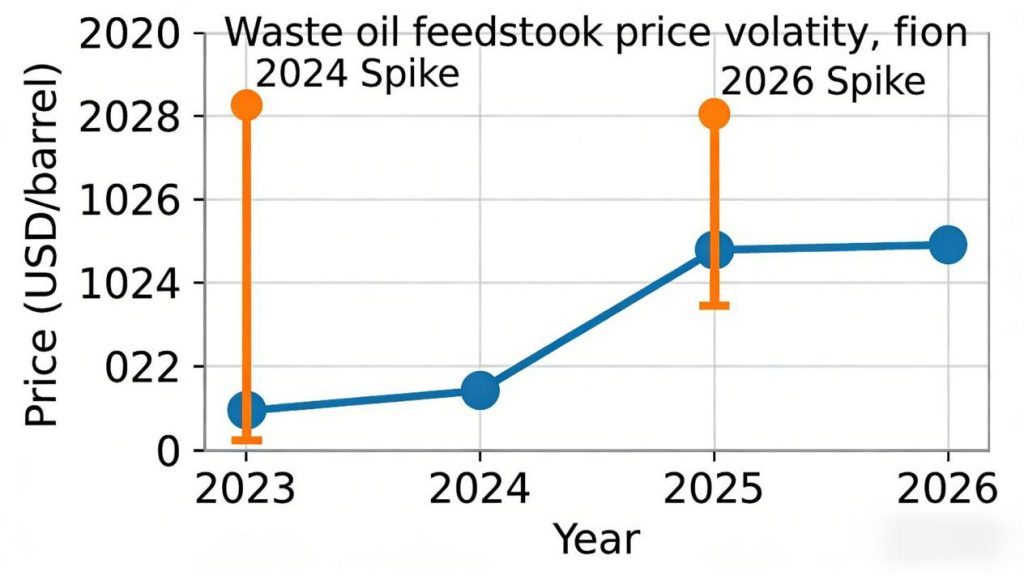
Why Waste Oil Prices Fluctuate in 2026?
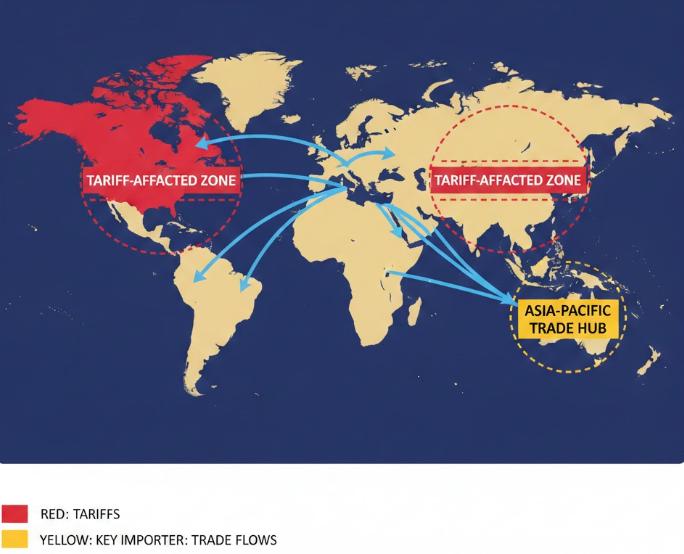
The problem exists because of specific elements that we need to identify before we start solving it.
The market is changing because of new tariff regulations. All imported recycling equipment and distillation units, together with treatment chemicals, now face higher prices. The regions most affected by this situation are North America and Europe. The Asia-Pacific region is currently facing difficulties because its reprocessing facilities operate under increasing cost constraints.
Vehicle sales keep rising throughout the market, even with the presence of electric vehicles. In 2023, EV sales reached 14 million, but the important detail is that 90% of current vehicles still use fossil fuels. The 346 million fuel vehicles require maintenance through oil changes. For the next ten years, they will continue to produce waste oil.
EVs actually create new demand. They don’t use oil for engines; they use specialty fluids for thermal management, driveline oils, and dielectric greases. That’s a whole new category of specialty lubricants. Which ultimately translates to specialty waste oil to be recycled.
Bottom line: Massive vehicle fleet + new specialty fluids + multi-year fuel vehicle tail = continued pressure on waste oil feedstock.
Understanding these drivers will not eliminate volatility. But it will give you insight into where to concentrate your purchasing strategy.
Strategy 1: Build Flexibility Into Your Feedstock Sourcing
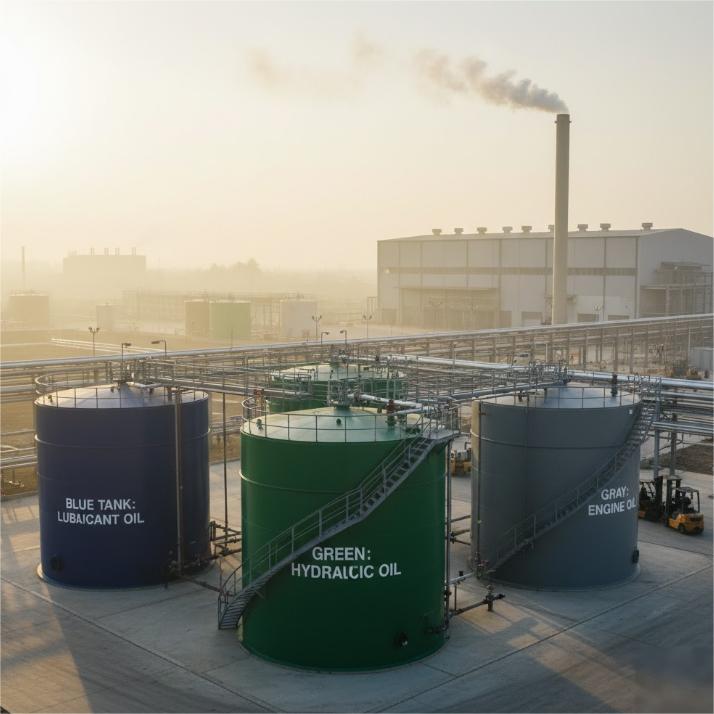
But let me tell you the hard truth: being locked in to one feedstock grade is a risk that you don’t have to take.
The most stable operations we see are the ones that can handle multiple grades of waste oil. I don’t mean just the higher-viscosity industrial oils. I don’t mean just the lighter automotive oils. I mean a mix of both.
Consider the variety of waste oils that actually come into your facility. Some of it is good stuff—drain oils from fleet maintenance operations with good filtration systems. Some of it is not so good—industrial oils with higher levels of contaminants, possibly some fuel dilution as well. If your equipment can only handle the good stuff, then you’re forced to pay the premium price even if the lesser oils could be used with the appropriate pretreatment.
Then, what does flexibility really mean in practice?
- Segregate your storage. Store tanks of different oil grades based on viscosity, contamination levels, or origin.
- Blend effectively. Mix high-quality oils with lower-cost ones to meet your process requirements.
- Understand your equipment’s true flexibility. Not just the spec, but the actual tolerance for variation in water content, solids, or flash point.
The point is not to always purchase the lowest-cost oil available. It’s to give yourself more flexibility in what you can buy so you’re never stuck with a bad price because that’s all your waste oil recycling plant can handle.
Strategy 2: Lock In Prices With Forward Contracts

This one’s from the big players’ playbook—and it works.
Major oil refiners use derivatives to negotiate fixed prices for projected purchases. There’s no need for fancy trading, but the principle holds true for any scale.
Forward contracts work like this:
- You agree on the price for oil in 3-6 months
- Supplier locks in the deal
- You get price stability
- Both sides win!
You might lose out if prices fall. But you win if they rise. For most recyclers, stability beats speculating any day of the week.
Start with the biggest and most reliable sources. Present it as a win-win situation.
Strategy 3: Shorten Your Supply Chain
Every handoff in your supply chain adds cost. It adds risk. And it adds price uncertainty that gets baked into every load you buy. The companies winning the volatility game right now are the ones building direct, traceable feedstock channels.
No brokers. No spot market middlemen—just a straight line from source to processor. When you cut out the intermediaries, you’re not just saving on their markup. You’re also removing the price speculation they build into every transaction.
Start by mapping your current chain. Figure out how many hands actually touch the oil before it reaches your gate. Then build direct relationships with the largest generators in your area. Use volume commitments as leverage—guarantee you’ll take all their waste oil at a fair price, and they’ll often work with you on terms that beat anything you’ll find on the spot market.
Shorter chains mean fewer people taking a cut. Fewer cuts mean more stable pricing.
Strategy 4: Match Equipment to Feedstock Reality
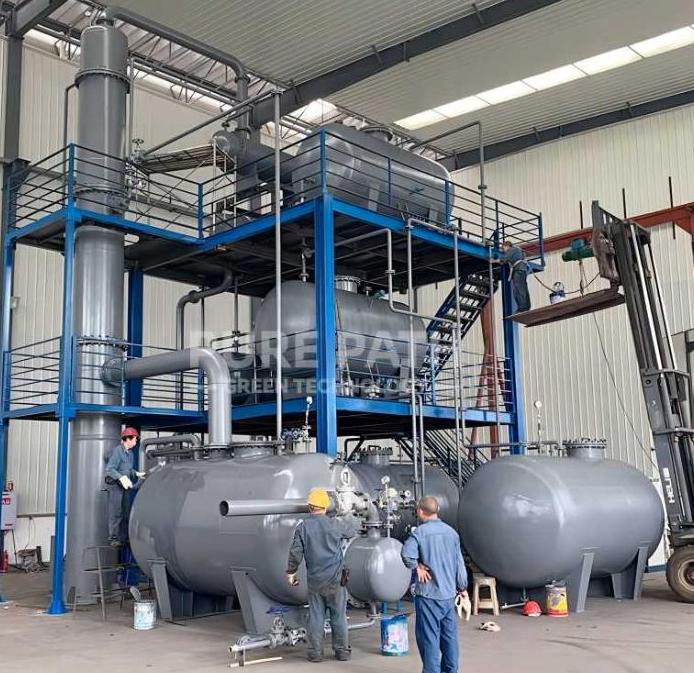
The problem with the markets sometimes is not the markets themselves; it’s your equipment. If your operation only processes narrow-spec feedstocks, you’re at the mercy of suppliers who know you can’t run anything else, who know that you have to take what they’re giving you because you can’t run anything else.
The industry trend is towards more flexible processing equipment. Better pretreatment, better distillation systems, hydrotreating—these are the types of equipment that give you more freedom in what you can economically process.
You have to think about your own situation. Can your equipment handle increased oxidation or polymer? Different between light auto fuels and heavy industrial fuels? Loads with high solids or high water?
The more “yes” answers you have to these questions, the more freedom you have in your feedstock procurement. If you have the ability to take feedstocks that others cannot even touch and process them for a profit, then you are not in competition for the same premium feedstocks that everyone else is trying to buy.
Strategy 5: Watch Policy Like a Hawk
This is where some operators tune out—and leave money on the table. Policy dictates waste oil pricing. Not demand. Particular policies in particular places.
Extended producer responsibility is emerging. It holds lubricant producers liable for end-of-life management. This changes who controls waste oil and the flow of it in the market. Some places are also tightening the definition of “recycled” vs. “fuel” in the market—this impacts where your output sells for as well.
You don’t need to be a policy expert. You just need to build a simple radar. Google alerts for certain terms, a trade newsletter, and monthly checks of regulatory sites in your region. The goal is to see changes before they affect your P&L.
Bringing It Together
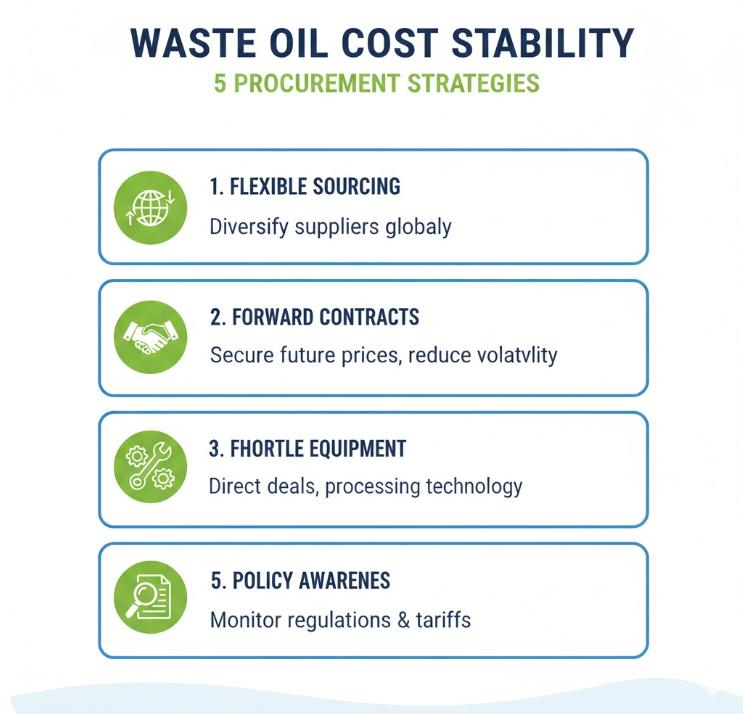
Stabilizing waste oil costs is not about making some magic move. It’s about layered strategy:
- Flexible sourcing – so you’re never trapped
- Forward contracts – for price visibility
- Shorter chains – with fewer intermediaries
- Equipment designed for variation – so you buy smarter
- Policy awareness – so you see the shifts coming
The market is growing – $68.2 billion and increasing. But don’t think growth means stability. That’s still your problem.
Choose a strategy – start there. Layer in the next – build a procurement operation
That doesn’t just react to change – but plans for it.