
Byproducts of Petroleum Refining and Their Uses as Fuel
Written By: Mr.Ran
Senior Petrochemical & Waste Oil Recycling Engineer
Deeply involved in the design, manufacturing, and optimization of various waste oil recycling and petrochemical equipment, delivering practical and efficient solutions for clients worldwide.
The petroleum refining method is pivotal in changing the quality of crude oil to that of energy and products, which must be used in industries, transportation, and daily life. However, crude oil refinement yields are not only gas and diesel but also a variety of by-products that have a deep impact on boththe energy and chemical sectors.
The by-products in question can be divided into four main categories: gases, liquids, solids, and chemicals that are vital for industrial applications. A few, mainly those that can be used as fuels, are still considered resources, not waste, and the energy potential of crude oil is, therefore, maximized through their use.
Understanding the Petroleum Refining Process
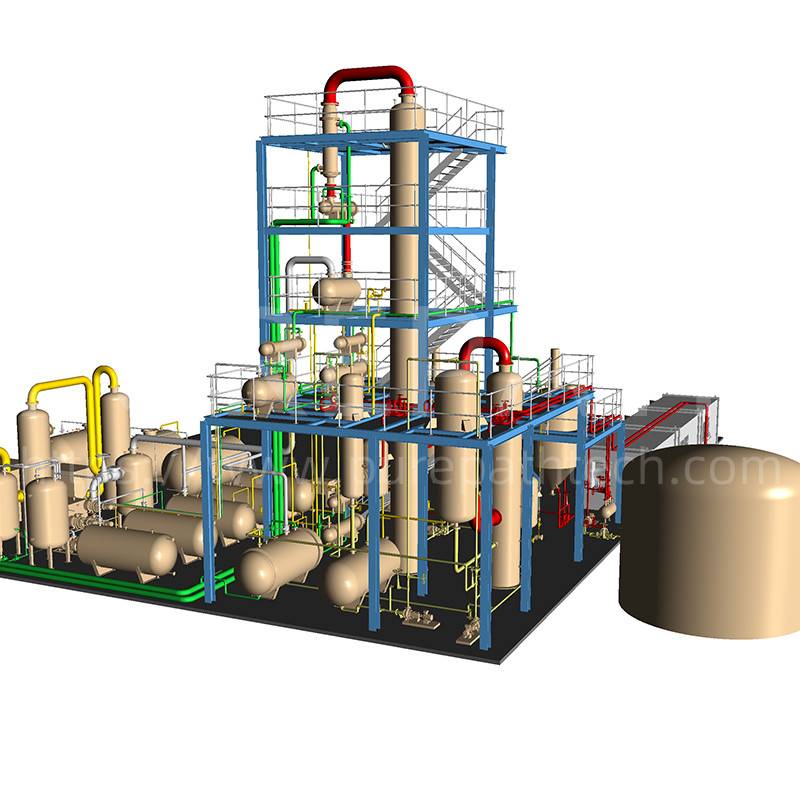
Crude oil consists of a combination of hydrocarbons that have different molecular weights and compositions. The process of petroleum refining is a very complicated series of chemical reactions and physical separations which are employed to obtain the crude oil’s different valuable products. The main purpose of refining is to separate these hydrocarbons and market them together with the fuel and byproducts, like gasoline, diesel, and jet fuel.
The refining procedure consists of various taking place consecutively:
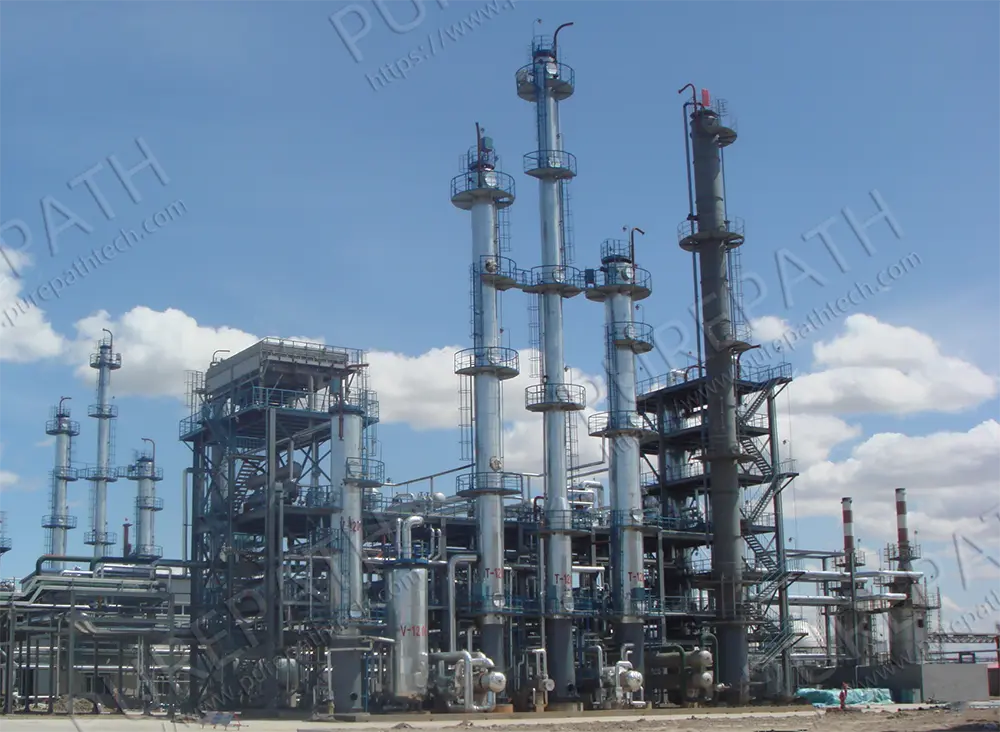
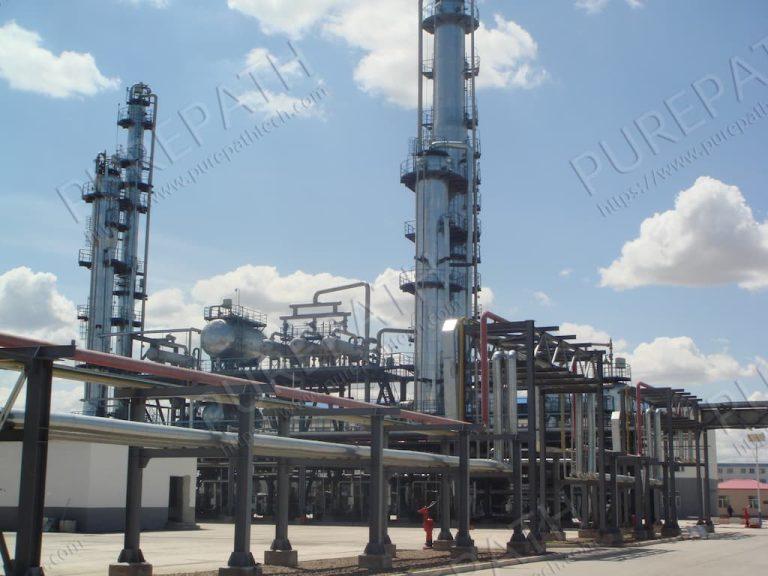
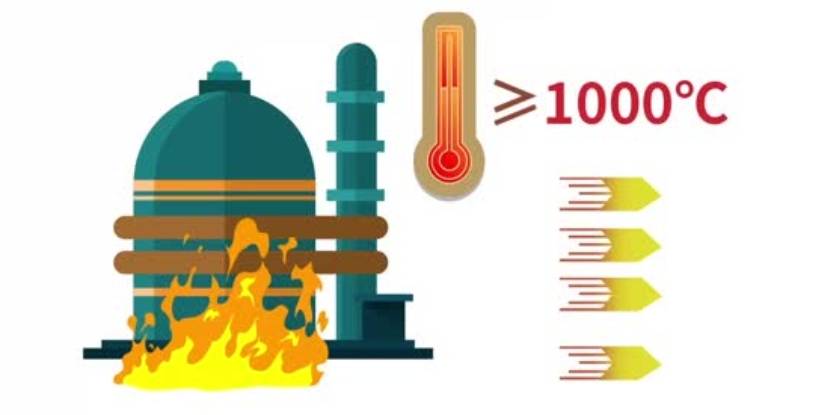
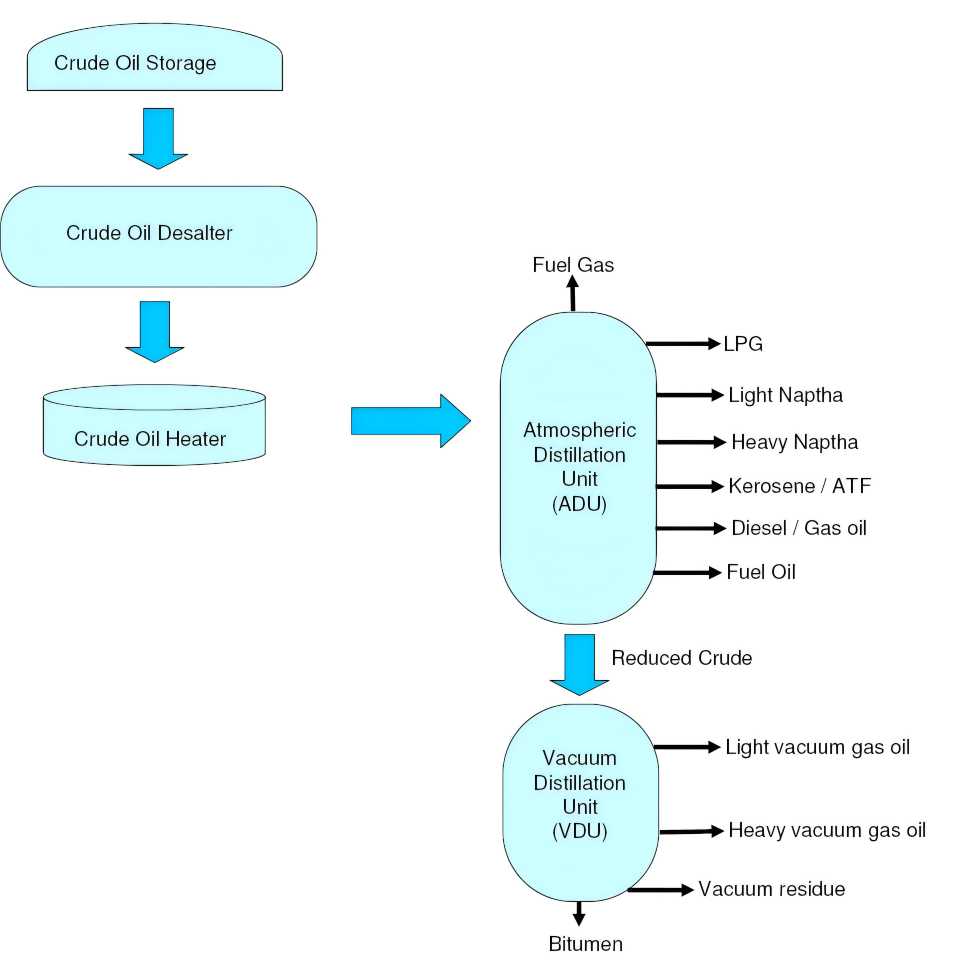
- Distillation: Petroleum refining’s initial step is sorting crude oil into different fractions whose boiling points determine them. This procedure, termed fractional distillation, is done inside a distillation column where crude oil is heated and vapourised hydrocarbons are further separated into lighter fractions (such as naphtha, gasoline, and diesel) and heavier residues.
- Conversion Processes: The heavier fractions after distillation are subjected to subsequent treatments for the liquefaction of the larger hydrocarbon molecules into lighter, more valuable products. This is the point at which catalytic cracking in the petroleum refining industry becomes extremely important. The procedure of catalytic cracking is a chemical transformation that applies heat and catalysts to disintegrate large complex hydrocarbons (like vacuum gas oil) into small light molecules, e.g., gasoline and LPG. This method greatly increases the output of light products from crude oil, and hence it is an indispensable part of the present-day refining operations.
- Hydroprocessing: Hydroprocessing is another crucial refining stage, in which hydrogen is principally employed to extract the undesirable substances like sulfur, nitrogen, and metals out of the intermediate fractions. The process results in the production of cleaner fuels that protect engines and pipelines from corrosion.
- Blending: The last operation in refining is the mingling of different fractions to create fuels that not only conform to predetermined regulatory standards and performance criteria but also include gasoline, diesel, and jet fuel, among others.
The refining operation yields indispensable fuels along with a plethora of byproducts, which are indeed very valuable, starting from liquid hydrocarbons such as naphtha to solid materials like petroleum coke. These byproducts are necessary for other industries, either as energy sources or as inputs for chemicals and construction.
What are the Byproducts of Petroleum Refining?
The petroleum refining process is a series of complex chemical reactions and physical separation techniques that break down crude oil into useful products. These products include not only gasoline and diesel but also an array of byproducts. These byproducts fall into four broad categories: gaseous, liquid, solid, and other special products.
1. Gaseous Byproducts
Gas by-products include light hydrocarbons produced in the refining process. Two of the most common types of gas by-products include liquefied petroleum gas and refinery gas.
- Liquefied Petroleum Gas (LPG): This is mainly a mixture of propane and butane. Both propane and butane are gases at ordinary temperatures. However, they are compressed to make them liquid. This gas is used for the purpose of heating and as fuel for vehicles.
- Refinery Gas: Also called tail gas, refinery gas is a combination of gases like hydrogen, methane, ethane, and traces of other lighter hydrocarbons. Refinery gas is most commonly used within the refinery itself, with the intent of providing fuel for heating and process drives, thus ensuring that no energy is wasted.
2. Liquid Byproducts
The liquid byproducts resulting from the petroleum refining process are products in between that are able to be either further treated or used as fuels directly.
- Naphtha: Naphtha is a light liquid hydrocarbon mixture that is one of the most important feedstocks in the production of petrochemicals. However, it can also serve as a blending component in gasoline and as a fuel for industrial processes.
- Light Diesel Oil: Light diesel oil is an inferior diesel fraction that is obtained during the distillation of crude oil. It is possible to mix it with ordinary diesel or use it as a pure fuel to run industrial machinery and to power vehicles.
3. Solid Byproducts
Solid by-products, although fewer in number, become indispensable to many industrial uses.
- Coke – Petroleum: It is a carbon-rich solid by-product produced by the coking process of petroleum refining. It consists mainly of a combustible element and thus finds its application mainly as a source of fuel in electrical generation plants and cement kilns. Petcoke is also used in the production of anodes for aluminum smelting.
- Asphalt: Heavy residue that is left behind after the distillation process during refining. It finds broad applications in the construction of roads and roofing materials owing to its toughness and waterproof nature.
4. Other Byproducts
These include substances such as chemicals and additives, which find their uses in the refining processes, among others.
- Petroleum Catalysts: Catalytic cracking is one of the refinery’s major processes, as it helps in the decomposition of larger hydrocarbon molecules into smaller ones. Used catalyst materials can sometimes be restored for use in different industrial applications.
- Petrol Additives: Different chemical additives are required to enhance fuel and lubricating oil performance. These additives include an antioxidant, corrosion inhibitors, and detergents, among many more, that improve product performance.
What are the Petroleum Refining Byproducts Used as Fuels?
The byproducts obtained from petroleum refining are not only waste materials but also a huge source of fuels, which are equal in value and thus support the whole process of the plant by providing energy and, at the same time, minimizing waste that is generated during the refining process.
1. Liquefied Petroleum Gas (LPG)
LPG is the most flexible and widely accepted byproduct of petroleum refining. Its main constituents are propane and butane, which are the reasons for it being a smoke-free fuel. LPG is most popular for heating and cooking in households and industries. Besides, its high portability and efficiency make it a preferred fuel in the countryside where natural gas supply is limited. Additionally, LPG is increasingly considered the fuel of choice for automobiles as it is less polluting than gasoline and diesel, especially for the transportation sector.
2. Naphtha
Naphtha is a very high-class versatile byproduct that works as a petrochemical feedstock and as a fuel at the same time. Its main production application is in plastics, synthetic rubber, and other chemicals. Naphtha, being a fuel, is very often mixed with gasoline to make it more suitable for combustion. In some industrial areas, it is used and even burnt as a fuel for generating heat or power. The role of naphtha both as a chemical feedstock and a fuel is very yield providing during the oil refining process.
3. Light Diesel Oil
Light diesel oil is a direct byproduct that is usable as a fuel in diesel engines. It is not as pure as standard diesel, but its use is mostly in the powering of machinery, generators, and transportation vehicles. It is also mixed with regular diesel to enhance fuel economy and lower emissions. Its use in fuel and in the industry makes it a very important byproduct in the industry that depends on diesel-operated equipment and vehicles.
4. Petroleum Coke
Petroleum coke (or petcoke for short) is a solid byproduct with a lot of energy in it. It is generally used as a fuel in power plants and industrial furnaces because of its capability to generate a great deal of heat when burned. Petcoke is especially appreciated by the cement and steel industries as it is consumed in kilns and furnaces respectively. The high carbon content of petcoke which makes it efficient as a fuel inthe first place has given rise to environmental issues especially sulfur and carbon dioxide emissions and consequently, its use is subject to more regulations in some parts of the world.
5. Refinery Gas (Tail Gas)
Refinery gas, also known as tail gas, is a combination of light hydrocarbons and hydrogen generated in the refining process. Instead of being released into the atmosphere or burnt, refinery gas is usually consumed as a fuel in the process of the refinery itself. This gas serves the heating and steam generation, thus, being a major factor in the overall energy efficiency of the refinery. Refinery gas usage not only prevents waste production but also diminishes the requirement for outside energy sources, thus, it is a significant component in the energy system of the refinery.
In general, the versatility of byproducts from petroleum refining underscores the industry’s ability to adapt and serve diverse sectors. From providing clean-burning alternatives to traditional fuels to supporting industrial processes through indirect means, these byproducts demonstrate the broad impact of petroleum refining on modern economies. Understanding their potential uses is vital for maximizing resource efficiency and exploring sustainable energy solutions.