
Can Waste Oil With High Ash Content Be Re-Refined?
Written By: Mr.Ran
Senior Petrochemical & Waste Oil Recycling Engineer
Deeply involved in the design, manufacturing, and optimization of various waste oil recycling and petrochemical equipment, delivering practical and efficient solutions for clients worldwide.
Yes, in many cases, high-sulfur waste oil can still be re-refined. However, for high-sulfur raw materials, more effective pre-treatment and residue separation measures need to be taken before and during the refining process.
High sulfur content usually indicates a higher concentration of inorganic contaminants, metals, additive residues, sludge, and other solid substances. These contaminants are not part of the valuable base oil components and must be separated from the oil.
Therefore, high sulfur content does not mean that the waste oil is unsuitable for re-refining. The key lies in identifying the cause of the high sulfur content and evaluating whether the recoverable oil components and the final product requirements justify the corresponding processing costs.
What Does High Ash Content Mean in Waste Oil?
Ash is the inorganic substance left after the oil sample burns. In waste lubricating oil, high ash content is usually associated with worn metals, detergent dispersants, dirt, dust, sludge, and other non-combustible substances.
For re-refining oil plants, many of the pollutants that form ash are non-volatile substances, and their properties are different from the hydrocarbon components that can be recovered through distillation.
Therefore, the process objective is not simply “removing ash”, but rather separating valuable hydrocarbon components from solid particles, metals, heavy compounds, and other pollutants.
In practice, high ash content mainly means that enhanced pollutant removal is required, and it should not be directly used as a basis for rejecting raw materials.
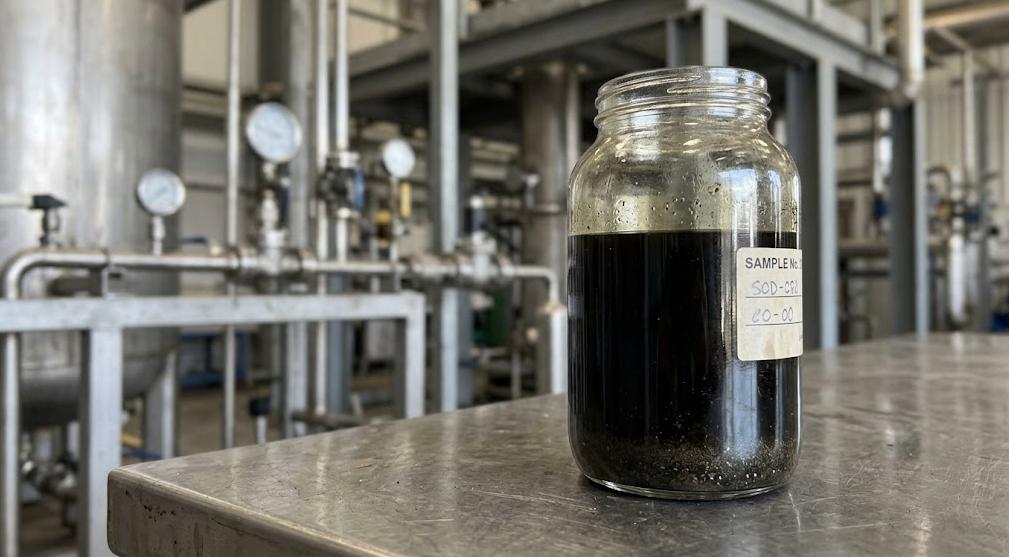
Can High-Ash Waste Oil Still Be Re-Refined?
Yes—but the refining process needs to be designed according to the feedstock. For projects aiming to recover base oil from waste lubricating oil, the overall process normally combines pretreatment, vacuum distillation, and further refining.
Usually, waste oil with high ash content should not be directly fed into the main distillation unit before adequate pre-treatment. Solid particles, metals, oil sludge, and heavy contaminants may cause scaling, reduce heat transfer efficiency, and increase the difficulty of coking and residue treatment.
The main goal of vacuum distillation is to recover suitable lubricating oil fractions while concentrating the heavier non-volatile contaminants in the bottom residue of the tower. Research on the regeneration and refining of waste lubricating oil indicates that metals, ash, and residual carbon mainly accumulate in the vacuum residue, rather than in the recovered oil fractions.
However, the ash content alone is not sufficient to determine whether the raw material is suitable.
When evaluating waste oil raw materials, the following factors should also be considered:
- Water content
- Precipitates and solid impurities
- Metal content
- Sulfur and chlorine content
- Viscosity
- Flash point
- Distillation characteristics
- Expected base oil yield
- Final product quality requirements
Even if the ash content of the two types of waste oil is the same, their refining processes may still differ, because the types and contents of pollutants may be significantly different.
How Do You Re-Refine High-Ash Waste Oil?
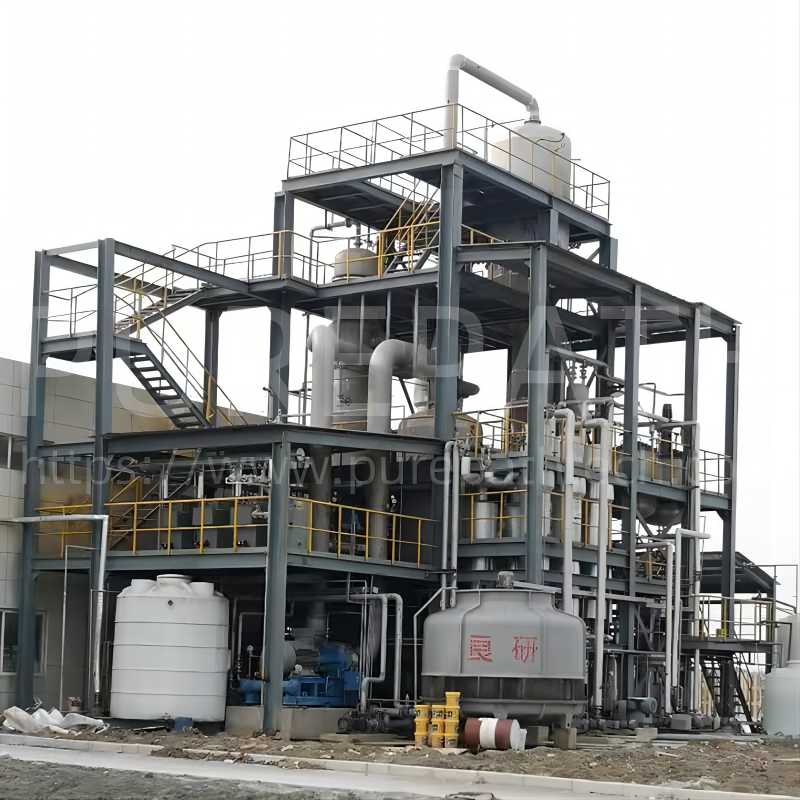
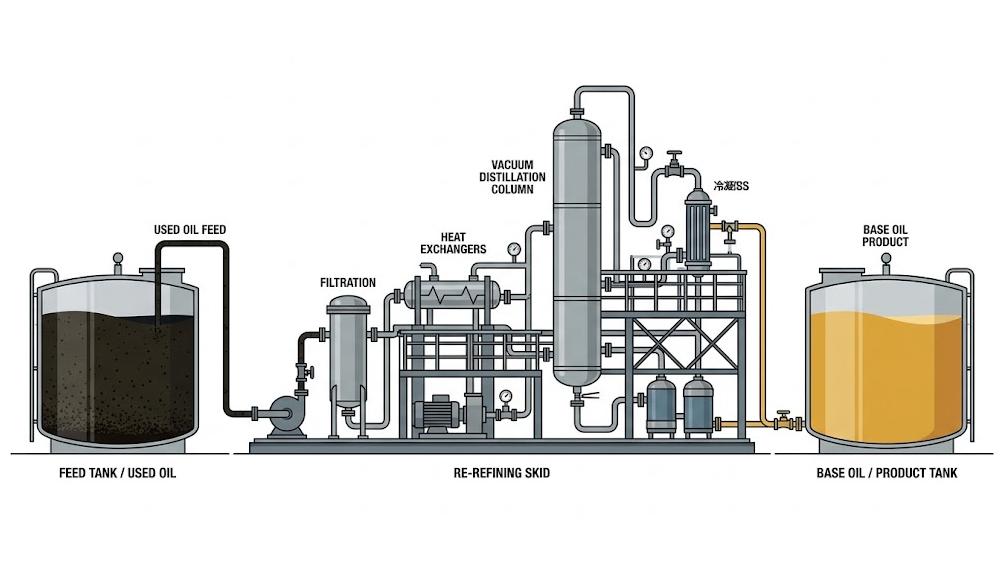
For high-sulfur waste lubricating oil, the typical processing flow can be summarized as follows:
High-sulfur waste oil → Pre-treatment → Dehydration and filtration → Vacuum distillation → Base oil fraction → Deep refining
1. Filtration and impurity removal
Firstly, remove free solids, sludge, dirt, and other suspended impurities. Depending on the characteristics of the raw material, separation methods such as sedimentation and filtration can be used.
Removing these impurities as early as possible can reduce the solid load entering the downstream equipment.
2. Dehydration
Before entering the main refining stage, it is necessary to remove moisture. Excessive moisture content can affect process stability and increase the difficulty of heating and distillation operations.
3. Pre-treatment
For high-sulfur raw materials, if they contain a lot of metals, additives, or polar contaminants, further pre-treatment may be required.
For some waste oils, solvent treatment can be used to separate undesirable components before deep refining. The specific process should be determined based on laboratory analysis results, rather than solely based on the sulfur content.
4. Vacuum distillation
Vacuum distillation is a core separation step in many waste oil regeneration processes.
Under reduced pressure conditions, the lubricating oil fraction can be vaporized at a lower temperature, while the heavy non-volatile pollutants and most ash-forming substances are concentrated at the bottom residue of the tower.
This step is particularly important when the goal is to recover base oil rather than produce lower-grade fuel.
5. Deep refining
Depending on the quality requirements of the target base oil, the distillation fractions may require further processing.
Downstream, solvent extraction, hydreating, adsorption, or other refining techniques can be used. The final process configuration should be determined based on the raw material analysis results and product specifications.
What Happens to the Ash After Re-Refining?
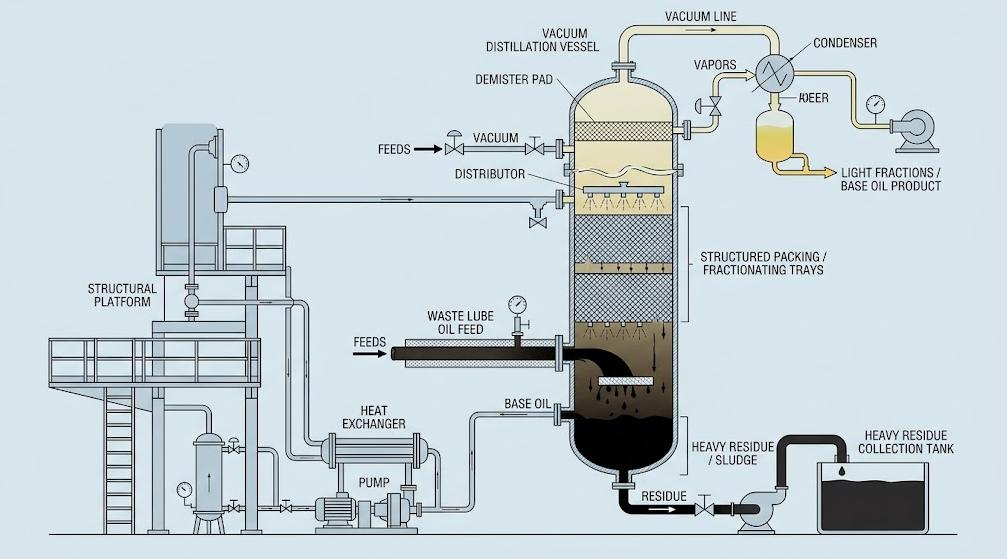
The ash does not disappear; instead, it is concentrated and removed along with the pollutants.
During the re-refining process, substances that turn into ash, such as metals, inorganic solids, and heavy pollutants, will be separated from the recoverable hydrocarbon components. Depending on the process configuration, these substances may ultimately exist in the following forms:
- Filtered solids
- Oil sludge
- Heavy residues
- Bottoms of distillation vessels
Therefore, residue treatment is an important step in the re-refining of high ash content waste oil.
The higher the content of raw material ash and pollutants, the more attention needs to be paid to the residue yield, fouling control, heat transfer efficiency, equipment cleaning, and residue treatment.
The goal of re-refining is not simply to reduce the ash content, but to effectively separate the pollutants while recovering as much usable oil as possible.
When Is High-Ash Waste Oil Worth Re-Refining?
High ash content should not be the sole criterion for the acceptance of the waste oil re-refining project.
| Feedstock condition | Re-refining consideration |
| High ash + good recoverable oil fraction | Generally worth evaluating |
| High ash + high water content | Effective dehydration required |
| High ash + heavy sludge | Strong solids removal and pretreatment needed |
| High metals + suitable distillation characteristics | Technically treatable with appropriate process design |
| Extremely contaminated + low recoverable oil fraction | Project economics may become challenging |
When evaluating high-ash waste oil, it is advisable to conduct tests on the actual raw materials before determining the factory configuration. Laboratory analysis can determine the characteristics of the pollutants, while process assessment can further estimate the recoverable oil yield, residue production, treatment requirements, and expected product quality.
Conclusion
High-sulfur waste oil can usually be subjected to reprocessing, but this requires proper process design.
The key point is not the exact level of the sulfur content, but rather the characteristics of the components represented by the sulfur, the content of the remaining recoverable oil, the effectiveness of impurity separation, and the requirements for the quality of the base oil.
For projects involving high-sulfur waste oil, a practical approach is to first conduct a raw material analysis, followed by the selection of appropriate pre-treatment, vacuum distillation, and subsequent refining process configurations.
If you are evaluating a waste oil reprocessing and refining project, providing raw material analysis data, processing capacity, and target base oil specifications will be the best starting point for determining an appropriate process configuration.