
How to Source Waste Oil Feedstock for a Commercial Recycling Plant
Written By: Mr.Ran
Senior Petrochemical & Waste Oil Recycling Engineer
Deeply involved in the design, manufacturing, and optimization of various waste oil recycling and petrochemical equipment, delivering practical and efficient solutions for clients worldwide.
A commercial waste oil recycling plant does not make money simply because it has efficient refining equipment. It needs a reliable flow of suitable feedstock to keep the plant operating at a high utilization rate. For investors and plant operators, this creates a fundamental procurement question: Where can enough waste oil be sourced consistently, and how should the supply network be organized before the plant starts commercial operation?
A strong feedstock sourcing strategy should address more than purchase price. It should cover supplier development, annual volume availability, collection logistics, supply contracts, geographic coverage, backup sources, and coordination between feedstock procurement and plant capacity. This is particularly important because a recycling plant with insufficient feedstock may operate below its designed capacity, increasing the effective processing cost per ton and weakening the project’s financial performance.
The objective, therefore, is not simply to find the cheapest waste oil. It is to build a stable, scalable, and commercially manageable waste oil supply network.
Identify the Best Waste Oil Sources for Your Plant
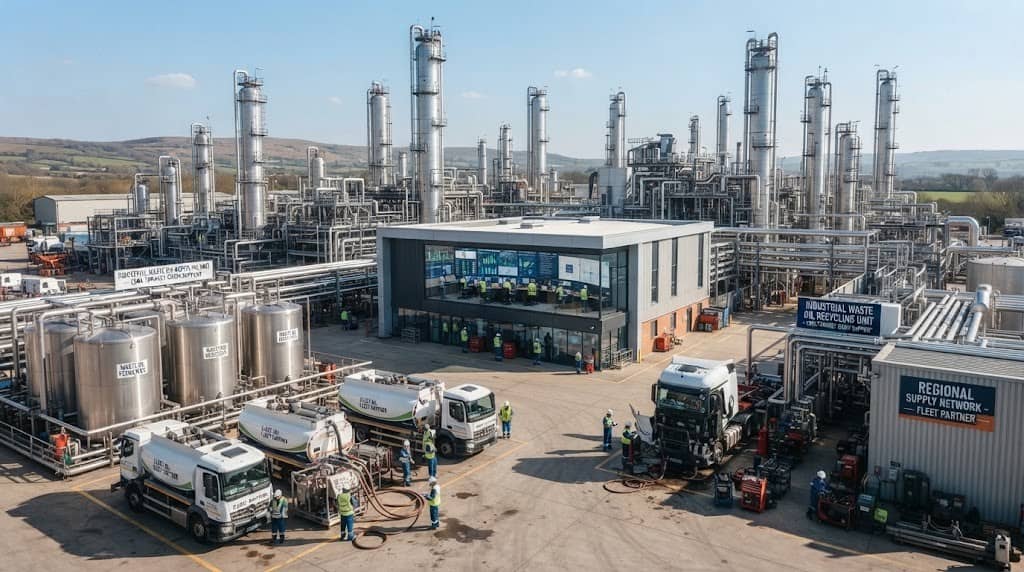
The first step in waste oil feedstock sourcing is to identify where sufficient volumes are generated within an economically practical collection area. Potential suppliers are not limited to individual repair shops. A commercial recycling plant should develop several supplier channels simultaneously.
1. Automotive Service Networks
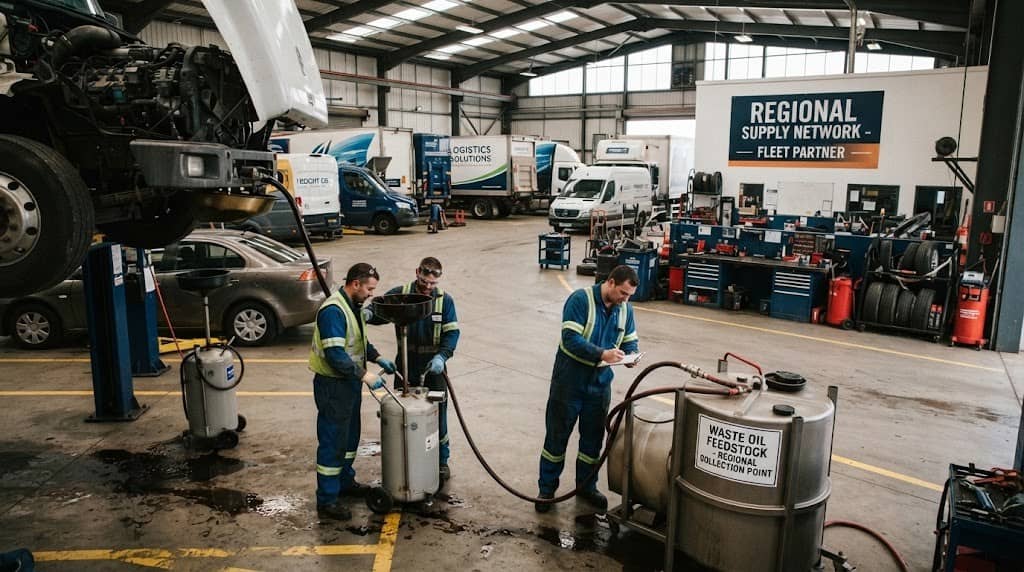
Automotive workshops, quick-lube centers, truck maintenance facilities, and fleet service depots can generate relatively regular quantities of used lubricating oil. Large fleet operators are particularly attractive because their oil changes are scheduled rather than occasional. A single transportation company may operate dozens or hundreds of vehicles, creating a recurring source of used oil.
For a commercial recycler, the key question is not: How much waste oil does one workshop generate? It is: How many workshops or fleet facilities can be connected to a collection network that provides predictable monthly volume?
2. Industrial Companies
Manufacturing facilities can generate used hydraulic oil, gear oil, compressor oil, turbine lubricants, and other industrial lubricants. Large factories can become valuable direct suppliers because they may generate significant quantities at a single location. This can reduce the number of collection points required per ton of feedstock.
Industrial suppliers may also be suitable for long-term agreements because their lubricant consumption is linked to ongoing production and equipment maintenance.
3. Transportation and Heavy Equipment Operators
Mining companies, construction fleets, logistics companies, agricultural machinery operators, ports, and other heavy-equipment users can represent another important supply channel. Their advantage is scale. However, collection logistics may be more complicated if equipment operates across remote or geographically dispersed locations.
4. Waste Oil Collection Companies
Professional waste oil collectors and waste management companies can aggregate material from many smaller generators. For a recycling plant, this can simplify procurement because one commercial relationship may provide access to multiple collection points.
The trade-off is that an intermediary may add transportation, aggregation, and commercial margins. Therefore, collectors should be evaluated not only by quoted price but also by delivered cost, reliability, geographic coverage, and available volume.
5. Build a Portfolio Rather Than Depend on One Source
A commercial recycling plant should avoid designing its entire feedstock strategy around one supplier. A more resilient structure can include:
- Large industrial generators as core suppliers
- Fleet operators as recurring regional suppliers
- Collection companies as volume aggregators
- Smaller workshops as supplementary sources
- Backup suppliers for unexpected shortages
The goal is to create enough procurement redundancy that the failure of one supplier does not immediately reduce plant throughput.
Build a Multi-Source Feedstock Supply Network
Finding suppliers is only the beginning. The next challenge is organizing them into a supply network that can support continuous plant operation. A useful approach is to divide suppliers into several levels according to their strategic importance.
| Supplier Type | Primary Role | Supply Stability | Typical Use |
| Large industrial generators | Core supply | High | Base-load feedstock |
| Fleet operators | Regional supply | Medium–High | Recurring collection |
| Waste oil collectors | Volume aggregation | Medium–High | Expanding supply |
| Small workshops | Supplementary supply | Low–Medium | Local collection |
| Spot-market suppliers | Emergency supply | Variable | Short-term shortages |
1. Core Suppliers
Core suppliers should provide a significant proportion of the plant’s expected annual feedstock requirement. These relationships deserve the strongest commercial attention because losing one major supplier can create a substantial gap in monthly throughput.
2. Regional Suppliers
Regional suppliers create additional volume and reduce dependence on a limited number of large accounts. They can include workshops, small industrial plants, fleet operators, and regional collection companies.
3. Backup Suppliers
Backup suppliers should not necessarily provide material every day. Their strategic value is their ability to increase deliveries when a core supplier experiences an interruption.
4. Why Supplier Concentration Matters
Consider a plant that depends on three suppliers for 90% of its annual feedstock. The nominal supply volume may look sufficient, but the procurement structure is fragile. If one supplier suddenly stops operating, changes its waste management contractor, or redirects its used oil to another buyer, the plant could lose one-third of its supply.
A diversified network may therefore be more valuable than a slightly lower purchasing price from one dominant supplier.
Calculate How Much Feedstock You Need Before Signing Supply Agreements
Feedstock procurement should be planned from the plant’s operating requirements rather than based on the amount of oil that suppliers happen to offer. The basic annual requirement can be estimated as:
Annual Feedstock Requirement = Design Capacity × Operating Days × Target Utilization
For example, consider a hypothetical 50-ton-per-day plant:
- Design capacity: 50 tons/day
- Planned operating days: 330 days/year
- Target utilization: 85%
The annual feedstock requirement would be:
50 × 330 × 85% = 14,025 tons/year
This means the project would need access to approximately 14,000 tons of feedstock annually under these assumptions. The calculation should then be converted into monthly and weekly procurement targets.
Monthly Procurement Target
14,025 tons ÷ 12 ≈ 1,169 tons/month
This figure gives the procurement team a practical target when negotiating with suppliers.
Do Not Plan Supply at Exactly 100% of Plant Requirement
A commercial procurement plan should include a supply margin. If the plant needs approximately 1,170 tons per month, contracting exactly 1,170 tons leaves little protection against:
- supplier shutdowns
- vehicle shortages
- seasonal collection changes
- maintenance at supplier facilities
- transportation disruptions
- unexpected changes in collection volumes
The actual contracted supply requirement should therefore be determined according to local market conditions and the project’s acceptable supply risk.
Feedstock Availability Should Influence Plant Capacity
The sequence should be: Local Feedstock Assessment → Supplier Network → Contracted Volume → Logistics Capacity → Plant Capacity
rather than: Choose Plant Capacity → Search for Feedstock Later
A 100 TPD recycling plant is not automatically a better investment than a 30 or 50 TPD plant if the local market cannot reliably provide the required feedstock.
Evaluate Waste Oil Suppliers Beyond Price
Price is important, but it should not be the only supplier selection criterion. A supplier offering the lowest purchase price may become expensive if the collection distance is long, deliveries are inconsistent, or the available volume is much lower than expected.
A commercial supplier evaluation should therefore consider several dimensions.
1. Available Volume
Ask:
- How much waste oil is generated per month?
- How much can realistically be allocated to your plant?
- Is the volume seasonal?
- Can the supplier increase supply in the future?
2. Supply Consistency
A supplier may claim a large annual volume but deliver irregularly. Historical delivery records are therefore more useful than a single volume estimate.
3. Delivered Cost
The relevant procurement figure is not simply the supplier’s quoted price. A better commercial calculation is:
Delivered Feedstock Cost = Purchase Price + Transportation + Collection Costs + Handling Costs
For remote suppliers, transportation can materially change the economics.
4. Geographic Location
Two suppliers offering the same price may have completely different economic value if one is 50 km from the plant and the other is 500 km away.
5. Scalability
A strong supplier should have the ability to increase volume as the recycling plant expands. This is particularly important for projects that intend to add additional processing capacity later.
6. Documentation and Business Reliability
A commercial recycling operation should also consider whether suppliers can provide the documentation required for lawful collection, transportation, and transfer of used oil in the relevant jurisdiction.
A Practical Supplier Scorecard
A procurement team can use a weighted scorecard:
| Evaluation Factor | Example Weight |
| Available volume | 25% |
| Supply consistency | 20% |
| Delivered cost | 20% |
| Logistics and location | 15% |
| Contract reliability | 10% |
| Future scalability | 10% |
The exact weighting should be adjusted according to local market conditions and project priorities. This approach prevents the purchasing team from choosing suppliers solely because they offer the lowest quoted price.

Design the Collection and Logistics System
Once suppliers have been identified, the next question is how the waste oil will physically reach the recycling plant. A large supplier network can become inefficient if collection routes are poorly designed.
1. Supplier-Delivered Model
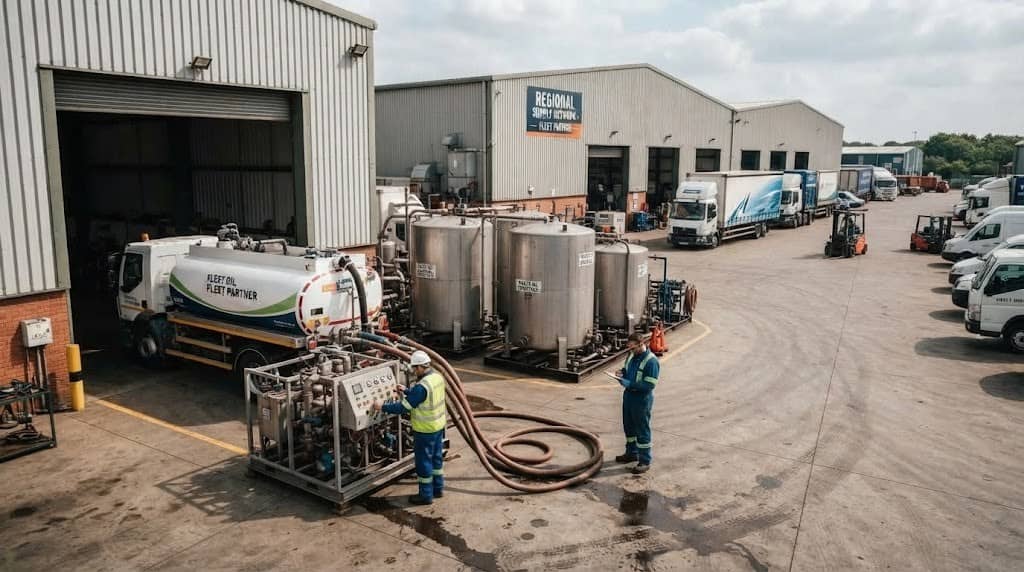
Under this model, suppliers deliver waste oil directly to the recycling plant.
Advantages:
- Lower collection responsibility for the plant
- Simpler internal logistics
- Easier scheduling for large suppliers
Limitations:
- Smaller suppliers may not have suitable transportation
- Suppliers may require higher delivered prices
- Remote sources may become uneconomical
2. Plant Pickup Model
The recycling company arranges collection using its own vehicles or contracted transporters. This provides greater control over collection schedules and routing. It can be particularly useful when working with many small generators.
3. Third-Party Logistics Model
The recycler can outsource transportation to a specialized logistics provider. This reduces the need to own and maintain a large vehicle fleet but introduces another commercial relationship into the supply chain.
4. Hybrid Model
For many commercial operations, a hybrid model can be more practical:
- Large suppliers → Direct delivery
- Regional suppliers → Scheduled pickup
- Small generators → Aggregation point
- Remote suppliers → Third-party logistics
This allows the collection system to be matched to supplier size and geographic location.
5. Think in Terms of Cost per Ton
Transportation should not be evaluated only on cost per trip. The more useful metric is:
Transportation Cost per Ton = Total Collection and Delivery Cost ÷ Tons Delivered
A truck traveling a long distance with a partially loaded tank can produce a much higher transportation cost per ton than a full truck collecting several nearby suppliers on an optimized route. For this reason, route density, truck utilization, pickup frequency, and minimum collection volume should be considered when developing the supplier network.
Structure Long-Term Waste Oil Supply Agreements
Once reliable suppliers have been identified, commercial recycling plants should move from informal purchasing toward structured supply agreements. The purpose is not simply to lock in a price. A well-designed agreement should define how much material will be supplied, how it will be collected, and what happens when supply conditions change.
1. Define Contract Volume
A supply agreement can establish:
- Minimum monthly volume
- Annual commitment
- Delivery frequency
- Acceptable delivery variation
- Maximum storage period before pickup
These terms give both parties a clearer operational forecast.
2. Define Collection Responsibilities
The agreement should clarify:
- Who arranges transportation?
- Who provides collection containers?
- Who pays transportation costs?
- Where does ownership transfer?
- Who is responsible for loading and unloading?
Ambiguity in these areas can create unexpected costs after the contract begins.
3. Establish a Practical Acceptance Procedure
Commercial agreements should also define how incoming material is accepted. The contract can specify:
- Required documentation
- Sampling procedure
- Acceptance point
- Handling of non-conforming loads
- Dispute resolution
Detailed technical testing requirements should be developed separately according to the plant’s processing configuration and applicable regulations rather than relying on a generic specification.
4. Plan for Supply Interruptions
A robust agreement should also address what happens if:
- the supplier temporarily shuts down
- collection volume falls
- transportation becomes unavailable
- the supplier cannot meet its monthly commitment
Backup supply arrangements are particularly important for plants with high fixed operating costs.
Create a Feedstock Procurement Strategy for Long-Term Plant Operation
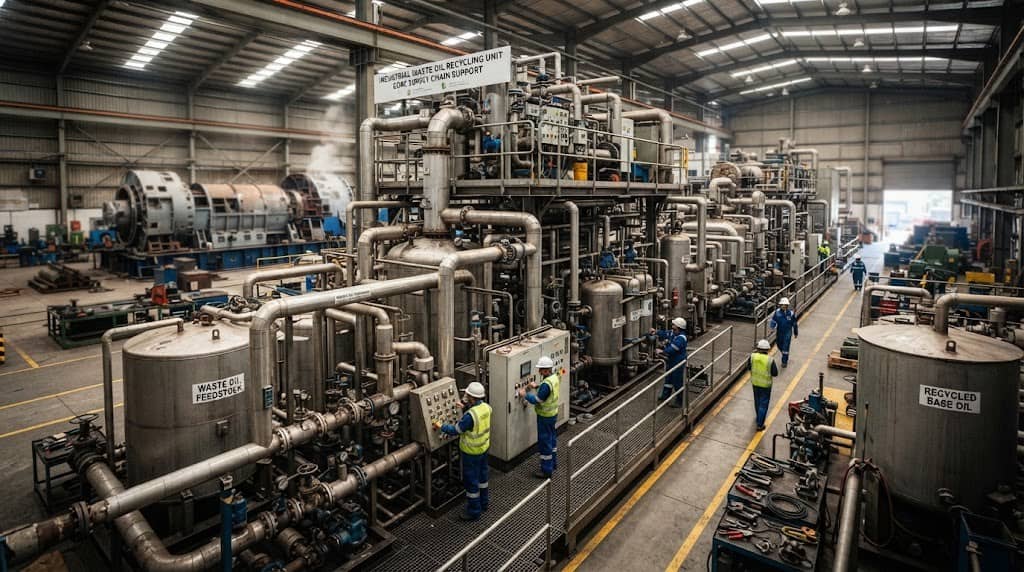
A mature procurement strategy should combine several supply layers rather than relying on a single purchasing method. One practical model is a four-layer structure.
- Layer 1 — Core Supply: Long-term relationships with high-volume generators and reliable collection companies. This should form the foundation of plant feedstock availability.
- Layer 2 — Regional Supply: A wider network of medium-sized suppliers provides additional volume and geographical flexibility.
- Layer 3 — Backup Supply: Pre-qualified suppliers remain available to compensate for temporary shortages from core suppliers.
- Layer 4 — Spot Supply: Spot purchases can help close short-term gaps but should not become the primary basis for plant operation.
The exact proportion of each layer should be determined by local supply conditions. The important principle is diversification.
Track Procurement KPIs
A commercial procurement department should monitor more than purchase price. Useful KPIs include:
- Tons secured per month
- Contracted vs. actual volume
- Supplier utilization rate
- Average delivered cost per ton
- Transportation cost per ton
- Number of active suppliers
- Supplier concentration
- On-time delivery rate
- Percentage of feedstock from contracted sources
- Emergency purchases
These indicators can reveal supply problems before they become production problems. The existing PurePath feedstock strategy article already discusses flexible sourcing, shorter supply chains, equipment flexibility, and procurement risk; this procurement framework should therefore be used as the implementation layer, rather than repeating the broader market discussion.
From Feedstock Sourcing to Plant Investment: What Should You Confirm Before Ordering?
Feedstock sourcing should be completed far enough in advance to influence the final plant configuration. Before ordering a commercial waste oil recycling plant, the project team should be able to answer the following questions:
Feedstock Supply:
- Where will the waste oil come from?
- How many suppliers have been identified?
- How much volume can each supplier provide?
- How much annual volume is contractually secured?
- How much additional backup volume is available?
Logistics:
- What is the average collection distance?
- Who is responsible for transportation?
- What collection frequency is required?
- Are temporary storage or aggregation points needed?
- What is the delivered feedstock cost per ton?
Plant Planning:
- What is the realistic annual feedstock volume?
- What plant capacity is supported by that volume?
- How much storage capacity is required?
- What type of final product is planned?
- Does the selected process configuration match the commercial feedstock strategy?
Feedstock availability should be confirmed before finalizing plant capacity, because plant utilization is ultimately constrained by the amount of material that can be collected and delivered consistently.
Once the feedstock network, annual volume, logistics model, and target product have been defined, the project team can evaluate whether a Waste Oil to Base Oil Plant, Waste Oil to Diesel Plant, or a more advanced configuration involving base oil extraction or hydrotreating is appropriate. PurePath currently provides these processing solutions as part of its waste oil and petroleum refining equipment portfolio.