
Feedstock Quality Requirements for Waste Oil Re-Refining
Written By: Mr.Ran
Senior Petrochemical & Waste Oil Recycling Engineer
Deeply involved in the design, manufacturing, and optimization of various waste oil recycling and petrochemical equipment, delivering practical and efficient solutions for clients worldwide.
Waste oil re-refining stands at the intersection of environmental sustainability and high-value chemical engineering. Transforming used lubricants back into virgin-quality base oils requires sophisticated technological infrastructure, yet the foundation of any successful re-refining facility begins long before the oil ever enters a distillation column. The quality of the incoming feedstock is the single most critical determinant of plant performance, energy efficiency, catalyst longevity, finished product quality, and overall economic profitability.
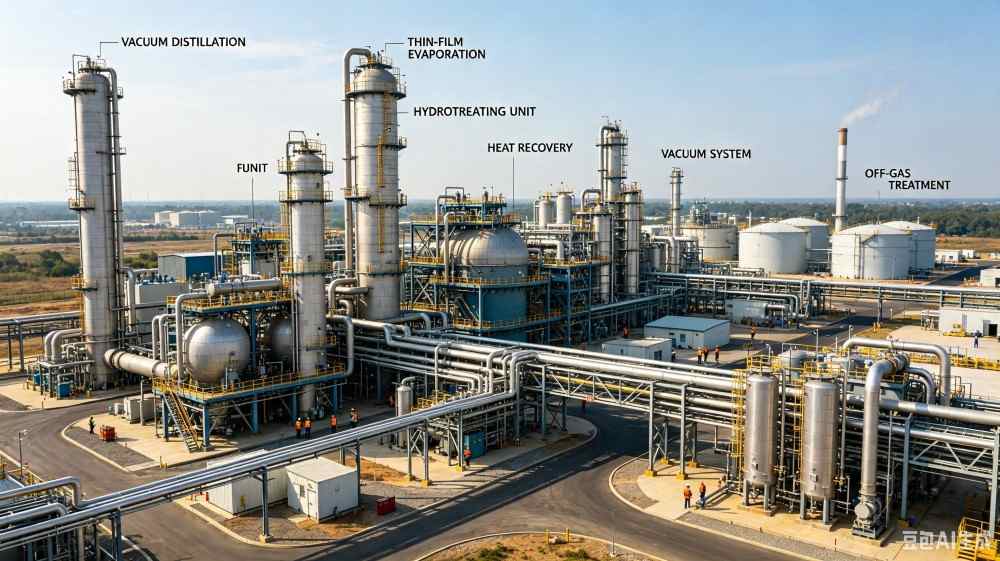
Modern re-refining configurations, including vacuum distillation, thin film evaporation, solvent extraction and catalytic hydrotreating, can handle a wide variety of used oils, but they are not silver bullets. Severe operating penalties are imposed by oils contaminated with excessive water, chlorinated compounds, heavy metals or incompatible chemical admixtures. This guide provides a comprehensive engineering analysis of the critical feedstock quality requirements for waste oil re-refining. It discusses the importance of raw material characterisation, the effect of specific contaminants on downstream processing, and the best practices needed to optimise feedstock management.
Why Feedstock Quality Dictates Plant Economics and Process Integrity
The key to waste oil re-refining is not just waste disposal or simple impurity removal but rather the selective recovery of high-value hydrocarbon base oil molecules while safely separating, neutralising or destroying complex contaminants.
When a facility handles poor-quality feedstock, the cascading operational consequences impact every unit operation in the plant:
- Reduced Base Oil Recovery: Contaminated or heavily degraded oils have broken hydrocarbon chains and high carbon residues. These directly reduce the volumetric yield of marketable base oil.
- Thermal and Energy Inefficiencies: Latent heat burden created by excess moisture and low-boiling light ends is enormous, resulting in a dramatic spike in fuel and electricity consumption.
- Vacuum Instability and Fouling: Volatile contaminants and suspended solids increase fouling of heat exchangers, put a greater load on vacuum generation systems and accelerate coke formation on thermal surfaces.
- Catalyst Poisoning and Deactivation: Trace metals, silicon, and halides are very strong catalyst poisons which permanently destroy active sites in hydrotreating units and thereby increase operating costs.
- Environmental and Compliance Risks: Uncontrolled hazardous contaminants, particularly organic chlorides, can cause catastrophic equipment corrosion and generate toxic emissions or off-spec waste streams.
Categorization and Suitability of Waste Oil Feedstock Sources
Different waste oils originate from diverse industrial, automotive, and marine applications, resulting in vastly different chemical profiles and contaminant loads. Understanding the origin of the feedstock allows engineers to predict processing behavior and tailor pretreatment protocols.
| Feedstock Type | Typical Suitability | Primary Contaminants | Processing Complexity |
| Used Engine Oil (UEO) | Excellent | Carbon, soot, fuel dilution, spent additive packages | Medium (High volume, requires robust front-end treatment) |
| Hydraulic Oil | Excellent | Water, oxidation products, particulate matter | Low to Medium |
| Gear Oil | Good | Sulfur-based extreme pressure additives, wear metals | Medium (Requires attention to sulfur management) |
| Turbine Oil | Excellent | Moisture, soluble oxidation byproducts | Low (High baseline stability) |
| Compressor Oil | Good | Carbon deposits, oxidized varnish | Low |
| Industrial Lubricants | Good | Process-specific chemical contaminants | Variable |
| Marine Lubricants | Moderate | Saltwater, heavy metals, fuel combustion residues | High (Requires desalination and extensive washing) |
| Transformer Oil | Special Process | Aging products, trace moisture, PCBs (prohibited) | High (Strict dielectric and environmental testing required) |
| Cutting Oil (Soluble/Insoluble) | Difficult | Water-in-oil emulsions, metal fines, biocides | Very High (Demulsification and heavy filtration needed) |
| Mixed Waste Oil | Variable | Unpredictable cocktail of multiple contaminants | Extreme (Requires strict segregation and blending) |
Deep Dive into Essential Feedstock Quality Parameters
To prevent operational disruptions, incoming feedstocks must be rigorously evaluated against a suite of physical and chemical parameters.
1. Water Content and Dehydration Dynamics
Water is almost always present in waste oils, either from atmospheric condensation, leakage from cooling systems, intrusion of rainwater, or bad storage practices.
Operational Impacts: High moisture leads to serious foaming, hoover system instability, quick corrosion of overhead condensers, and huge energy drains due to water vaporisation.
Water content less than 0.5% is excellent, 0.5-2.0% is acceptable with normal flash-dehydration, and more than 2.0% requires dedicated multi-stage vacuum dehydration prior to distillation.
2. Sludge, Sediment, and Insoluble Solids
Used oils frequently harbor suspended particulate matter, including carbon soot, road dust, iron oxide rust, microscopic wear metals, and oxidized high-molecular-weight polymers.
Operational Impacts: High solids content leads to rapid blinding of coarse and fine filters, abrasive wear on high-pressure transfer pumps, severe heat exchanger fouling, and bloated distillation bottom residues that complicate asphalt or bitumen blending.
3. Viscosity Anomalies
Viscosity is an important measure of the physical and thermal integrity of the fluid.
Anomalous Readings: Low kinematic viscosity is a direct indication of fuel dilution (gasoline or diesel) or solvent contamination. On the other hand, too high viscosity means serious thermal oxidation, heavy polymerisation, or serious sludge agglomeration, which can impair fluid pumpability and heat transfer coefficients.
4. Total Acid Number (TAN)
During service, continuous thermal and oxidative stress degrades base oil molecules into organic acids.
Corrosion and Catalytic Impacts: A high TAN (typically above 5 mg KOH/g) accelerates metallurgical degradation in carbon steel piping and distillation vessels, while introducing organic acid species that can overwhelm neutralization systems and foul downstream catalysts.
5. Flash Point Verification
Flash point testing is a critical safety and compositional screening metric.
Safety Implications: A depressed flash point indicates the presence of volatile low-boiling hydrocarbons, unburnt fuel fractions, or industrial solvents. This drastically elevates fire risks during storage and handling, overburdens vacuum recovery systems, and creates explosive vapor pockets in processing units.
6. Density and Specific Gravity
Density variations act as a rapid preliminary indicator of bulk contamination. Unexpected shifts in specific gravity immediately signal adulteration with water, heavy-fuel oils, dense chlorinated solvents, or chemical waste streams.
7. Chlorine and Halogen Content
Chlorinated compounds are among the most toxic classes of contaminants in waste oil re-refining. Halogens are associated with chlorinated degreasers, metalworking fluids, or the illegal mixing of hazardous wastes and cause serious damage to industrial assets.
Destructive Mechanisms: Thermal cracking of organic chlorides at distillation column overhead temperatures produces hydrochloric acid (HCl), which causes severe pitting corrosion of overhead carbon steel and stainless steel systems. Chlorine is also a potent irreversible poison for the precious metal hydrotreating catalysts.
8. Sulfur and Nitrogen Heteroatoms
Sulfur originates primarily from heavy-duty additive packages (such as zinc dialkyldithiophosphates), gear lubricants, and high-sulfur base stocks.
Refining Demands: While re-refining successfully strips out most sulfur, high baseline sulfur levels force operators to increase hydrogen consumption, intensify hydrotreater operating temperatures and pressures, and accept accelerated catalyst deactivation rates.
9. Silicon Contamination
Now silicon is a common trace contaminant due to the proliferation of silicone-based sealants, anti-foaming agents and industrial greases.
Catalyst Poisoning: The silicon deposits glassy silica on the active sites of hydrotreating catalysts, causing a permanent loss of catalytic activity as well as a significant reduction in cycle lengths. Tracking silicon requires Inductively Coupled Plasma (ICP) spectroscopy.
10. Heavy Metals (Wear and Additive Metals)
Mechanical friction (engine wear) and additive formulation are the elements that introduce iron, copper, lead, chromium, nickel, zinc, and calcium into waste oil.
Poisoning & Residues Effects: High concentrations of metals concentrate in the bottom residue of vacuum distillation units, complicating vacuum residue management, and directly participating in catalyst poisoning in subsequent hydroprocessing stages.
Analytical Protocols and Laboratory Testing Matrix
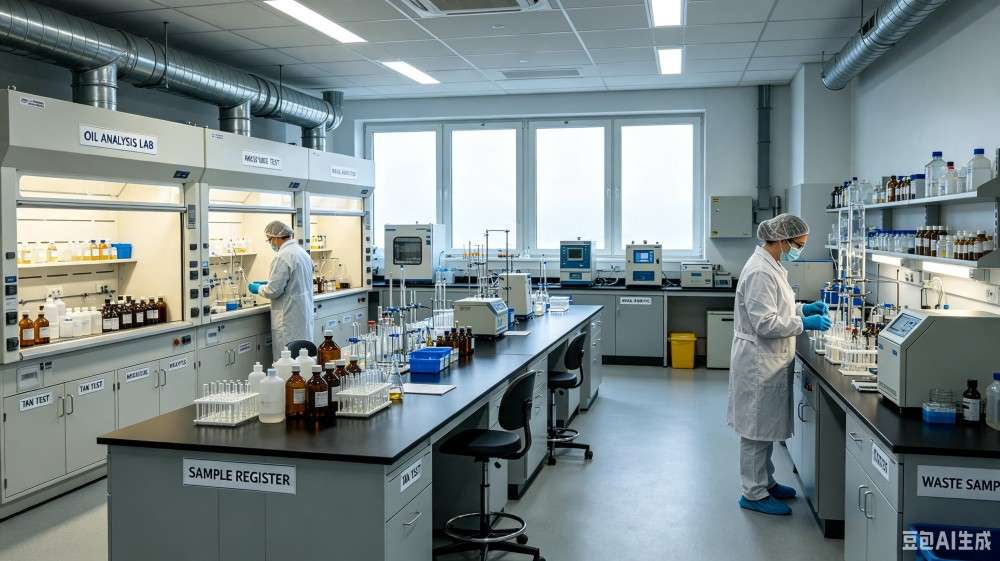
Professional re-refining facilities maintain strict quality assurance laboratories to analyze every incoming batch before offloading.
| Test Parameter | Analytical Standard (Typical) | Primary Objective | Action Trigger |
| Water Content | ASTM D95 / D6304 | Moisture evaluation | > 2.0% triggers pre-dehydration |
| Kinematic Viscosity | ASTM D445 | Fluid condition & dilution check | Out-of-spec triggers blending/rejection |
| Density / Specific Gravity | ASTM D1298 / D4052 | Consistency & bulk purity check | Sudden shifts indicate chemical dumping |
| Flash Point | ASTM D92 / D93 | Volatile contamination & safety | < 150°C triggers strict vapor safety protocols |
| Total Acid Number (TAN) | ASTM D664 / D974 | Oxidation level & corrosiveness | > 5.0 mg KOH/g requires neutralization/blending |
| Chlorine Content | ASTM D7536 / D4929 | Corrosion & catalyst protection | Exceeding plant limit triggers total rejection |
| Sulfur Content | ASTM D4294 / D5453 | Hydrotreater design load | High sulfur mandates severe hydro-processing |
| ICP Multi-Element Metals | ASTM D5185 | Wear metal & poison tracking | High Si/Pb/Ni flags severe catalyst threats |
| Insolubles & Ash | ASTM D893 / D482 | Sludge & heavy residue prediction | High ash limits vacuum residue utilization |
Feedstock Classification and Segregation Strategies
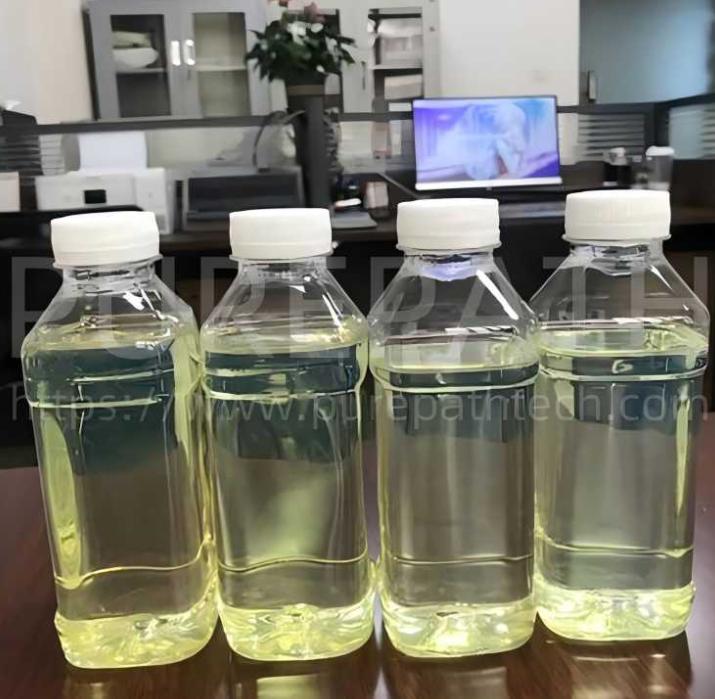
Allowing unclassified, highly variable waste oils to enter a continuous re-refining process stream is an operational hazard. Best-practice facilities implement a multi-tier grading matrix upon receipt:
- Grade A (Clean Industrial Oil): Low water, minimal contaminants, low TAN. Action: Direct routing to flash distillation, bypassing heavy pretreatment.
- Grade B (Standard Used Engine Oil): Typical automotive profile with moderate soot and wear metals. Action: Standard thermal pretreatment, mechanical filtration, and vacuum dehydration.
- Grade C (High-Water Waste Oil): Substantial moisture and emulsified water content. Action: Diverted to dedicated settling and thermal-vacuum dehydration trains.
- Grade D (Mixed Industrial / Variable Oil): Unpredictable physical properties and mixed additive packages. Action: Mandatory laboratory blending, extensive compatibility testing, and controlled co-processing.
- Grade E (Hazardous / Severely Contaminated Oil): High chlorine, PCBs, heavy solvent dilution, or toxic chemical presence. Action: Immediate rejection or specialized hazardous waste disposal.
Feedstock Storage and Pretreatment Best Practices
Preserving feedstock quality between the moment of off-loading and the beginning of the thermal process requires rigorous tank farm management.
Storage Optimization
- Covered and Bunded Storage: All bulk storage tanks should have fixed roofs and inert gas blanketing (or breather vents with desiccants). These provisions will prevent the ingress of atmospheric moisture, contamination by ambient dust, and progressive oxidative degradation.
- Thermal Management: Storage tanks should be kept at moderate temperatures (around 40°C to 60°C), so they are pumpable but not so hot as to cause thermal cracking or excessive oxidation.
- Sludge Management: Tanks are required to have conical bottoms and automated bottom-drain valves for the regular purging of settled heavy sludges, water pockets and inorganic sediment before tanks are drawn into the process pumps.
Pretreatment Train Architecture
A robust industrial pretreatment sequence typically comprises:
- Incoming Sampling and Coarse Screening: Capturing large debris (rags, metal fragments).
- Thermal Conditioning and Demulsification: Breaking water-in-oil emulsions using heat and chemical demulsifiers.
- Centrifugal Separation: Rapid mechanical removal of free water and dense particulate matter.
- Multi-Stage Filtration: Moving from 100-micron coarse mesh filters down to 5-micron absolute fine filtration.
- Feed Homogenization: Blending disparate batches in agitated day-tanks to ensure a steady, chemically uniform feedstock supply to the primary re-refining units.
Technological Adaptation: Matching Feedstock Quality to Refining Technology
No single re-refining technology can economically process every quality grade. Plant designers must align technology selection with the feedstock profile:
- Distillation and Thin-Film Evaporation Only: Suitable for relatively clean industrial oils and turbine fluids where contaminant levels are low, and the primary goal is physical fractionation of base oil cuts.
- Integration with Hydrotreating: When processing high-volume used engine oils laden with sulfur, nitrogen, and reactive unsaturated hydrocarbons, catalytic hydrotreating is indispensable. Hydrotreating saturates aromatic rings, strips heteroatoms, and dramatically improves color, odor, and oxidation stability, yielding API Group II or Group III base oils.
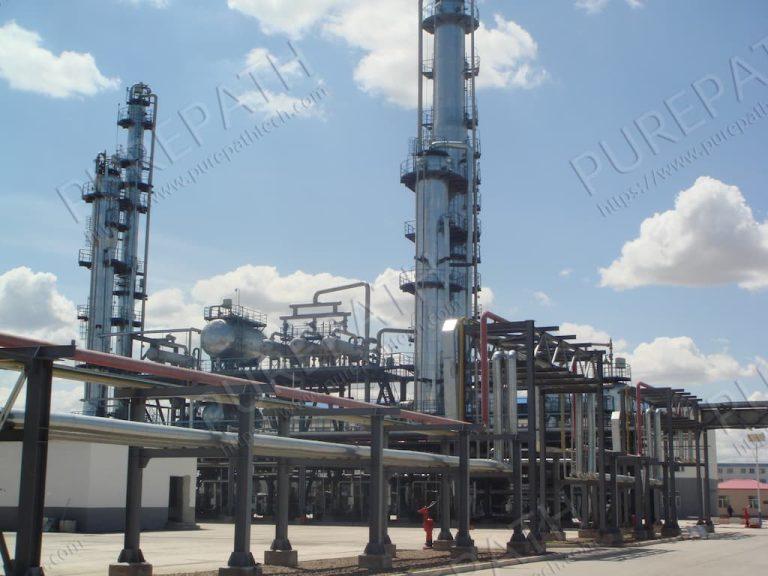
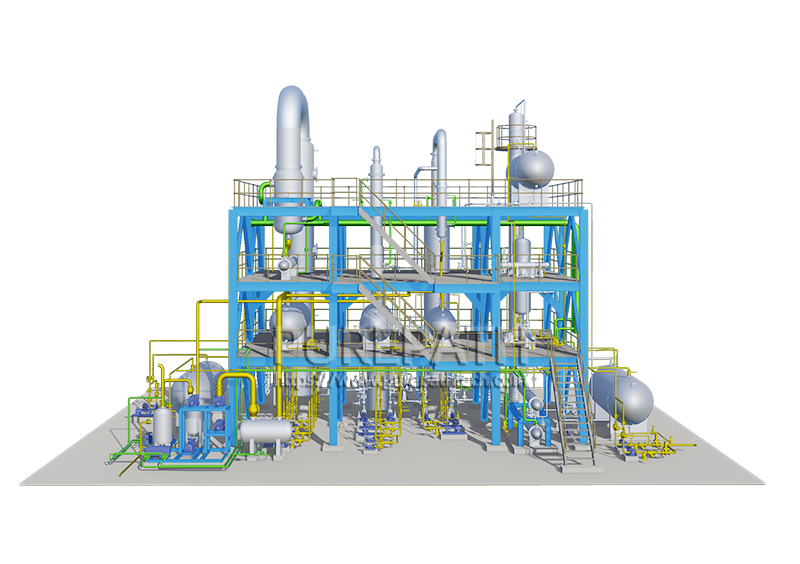
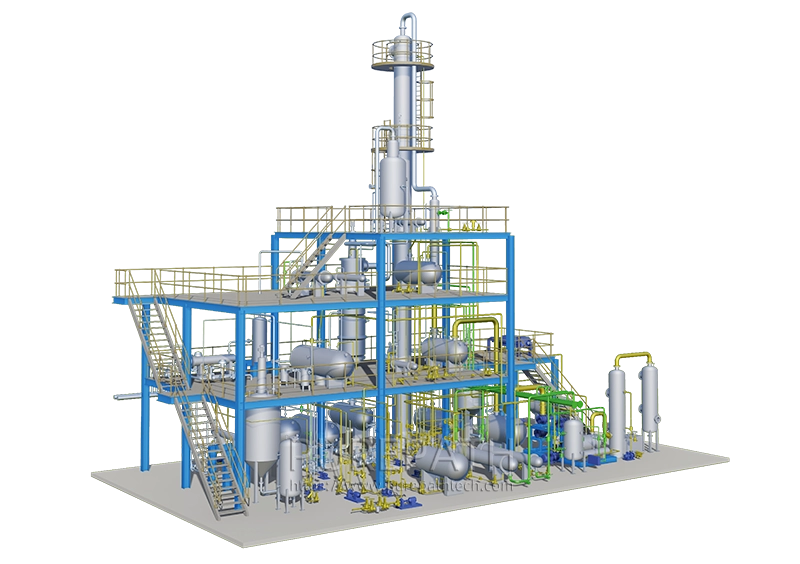
- Comprehensive Multi-Stage Architecture: For facilities handling highly variable or lower-quality feedstocks, an integrated facility featuring pretreatment, vacuum distillation, solvent extraction, and severe hydrotreating provides the operational flexibility needed to consistently produce virgin-equivalent base oils regardless of raw material variance.
FAQs
What types of waste oil are best for re-refining?
Used engine oil, hydraulic oil, turbine oil, compressor oil, and many industrial lubricants are excellent feedstocks because they contain recoverable base oil molecules. Feedstocks with excessive water, chlorinated compounds, or hazardous contaminants require additional pretreatment or may be unsuitable.
Why is water content important in waste oil re-refining?
High water content increases energy consumption, causes vacuum instability, promotes corrosion, and reduces distillation efficiency. Most plants remove free and dissolved water through a dedicated dehydration stage before re-refining.
How do heavy metals affect the re-refining process?
Wear metals such as iron, copper, lead, chromium, and nickel can foul equipment, increase residue formation, and poison hydrotreating catalysts. Monitoring metal content helps optimize pretreatment and protect downstream units.
Can mixed waste oils be re-refined?
Yes, but mixed feedstocks often contain incompatible additives and contaminants. They usually require more extensive laboratory analysis, segregation, blending, and pretreatment to ensure stable operation and consistent base oil quality.
What laboratory tests should be performed on incoming waste oil?
A complete evaluation typically includes water content, viscosity, density, flash point, Total Acid Number (TAN), sulfur, chlorine, ash, insoluble solids, and elemental analysis (ICP) for wear metals. These tests help classify feedstock quality and determine the most appropriate re-refining process.