
How to Prevent Corrosion in Refinery Hydrotreating Units?
Written By: Mr.Ran
Senior Petrochemical & Waste Oil Recycling Engineer
Deeply involved in the design, manufacturing, and optimization of various waste oil recycling and petrochemical equipment, delivering practical and efficient solutions for clients worldwide.
Hydrotreating removes sulfur, nitrogen, and heavy metal impurities from petroleum to meet environmental fuel standards and protect downstream catalysts. This hydrotreater unit operates in harsh environments, typically at high temperatures (above 300°C to 400°C), high hydrogen partial pressures (≥15 MPa), and highly corrosive media.
Inadequate corrosion control can lead to unplanned downtime, catalyst poisoning, heat exchanger scaling, and high-pressure leaks. A single day of unplanned downtime can result in losses of hundreds of thousands of dollars. Inhibiting material degradation through process corrosion prevention and equipment structural design is crucial for ensuring the safety and profitability of refineries.
Two Core Corrosion Mechanisms in Hydrotreater Units
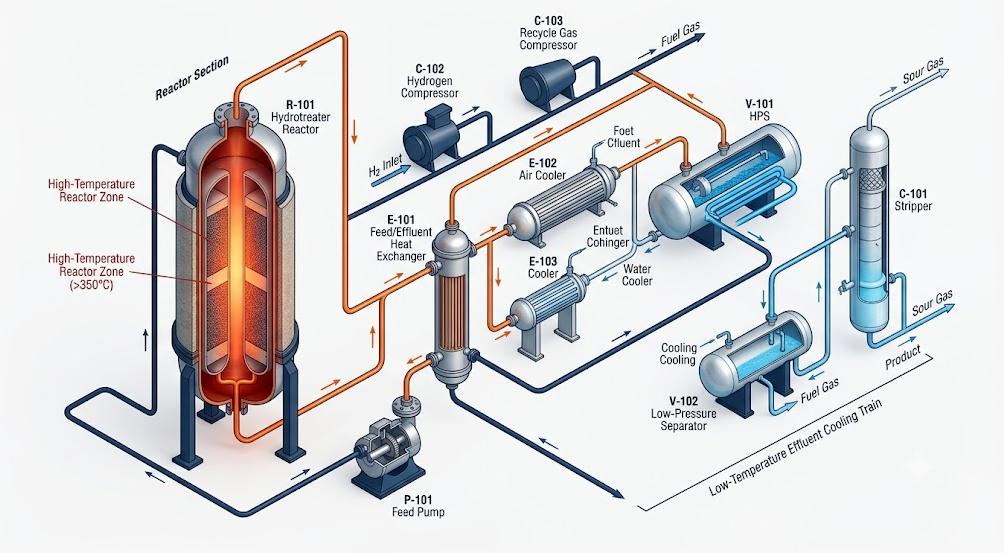
To protect a hydrotreater unit refinery loop, engineers must address two distinct, highly aggressive corrosion pathways that occur at different temperature zones.
| Corrosion Mechanism | Active Temperature Zone | Primary Chemical Driver | Main Equipment Impacted |
| High-Temp H2S / Sulfidic Attack | High Temperature (> 230°C / 450°F) | Dissolved H2S & Organic Sulfur | Charge Heaters, Reactor Shells, Hot Effluent Lines |
| Ammonium Chloride (NH4Cl) Deposition | Lower Temperature (Below Water Dew Point) | Sublimated NH4Cl Salts | Reactor Effluent Air Coolers (REAC), Cold Separators |
1. High-Temperature Hydrogen Sulfide (H2S) and Sulfide Corrosion
When the temperature exceeds 230℃, organic sulfur reacts with hydrogen to form H2S. Under anhydrous conditions, high concentrations of H2S directly corrode carbon steel and low-alloy steel:
Fe + H2S -> FeS + H2
The resulting iron sulfide (FeS) scale layer has a loose structure and is easily detached under the impact of fluid turbulence, continuously exposing fresh metal and causing rapid and uniform thinning of the pipe wall.
2. Ammonium Chloride (NH4Cl) Deposition and Under-Scale Pitting Corrosion
When the reaction products are cooled downstream, trace amounts of nitrogen combine with hydrogen chloride and sublimate to form solid NH4Cl salt crystals:
NH3(g) + HCl(g) -> NH4Cl(s)
Dry NH4Cl salt deposits on the heat exchanger tube walls, causing scaling and blockage. In addition, NH4Cl is highly hygroscopic. After absorbing trace amounts of water, it forms a highly acidic, concentrated chloride slurry, which causes severe pitting corrosion, with a corrosion rate of more than 10 mm per year.
Operational Control & Process Mitigation
In addition to selecting corrosion-resistant materials, the following routine process corrosion prevention strategies are also required:
- Continuous Injection of Wash Water: Inject high-purity deoxygenated water upstream of the outlet cooling water (REAC) system to dissolve ammonium salts and prevent NH4Cl crystallization and deposition.
- Monitoring Wall Temperature and Dew Point: Monitor the outlet water heat exchanger tube wall temperature in real time to ensure it is above the salt crystallization dew point.
- Upstream Feed Desalting: Improve crude oil desalting efficiency to control the problem at its source and reduce the chloride content entering the hydrotreating unit.
Metallurgical Solutions: Alloy Selection & PurePath Cladding Technology
Long-term operation requires careful material selection for protection. The following are alloy selection guidelines for different areas of the hydrogenation unit:
- Carbon steel/low-alloy steel (e.g., 2.25Cr-1Mo): Resistant to high temperature and pressure, but susceptible to H2S corrosion without a weld overlay.
- Austenitic stainless steel (e.g., SS 321 / SS 347): Resistant to H2S sulfidation and polythiosulfate corrosion, suitable for reactor internals and linings.
- Nickel-based alloys (e.g., Inconel 625 / Hastelloy C-276): Resistant to wet H2S, acidic chloride pitting, and stress corrosion cracking (SCC), suitable for harsh cold loop areas.
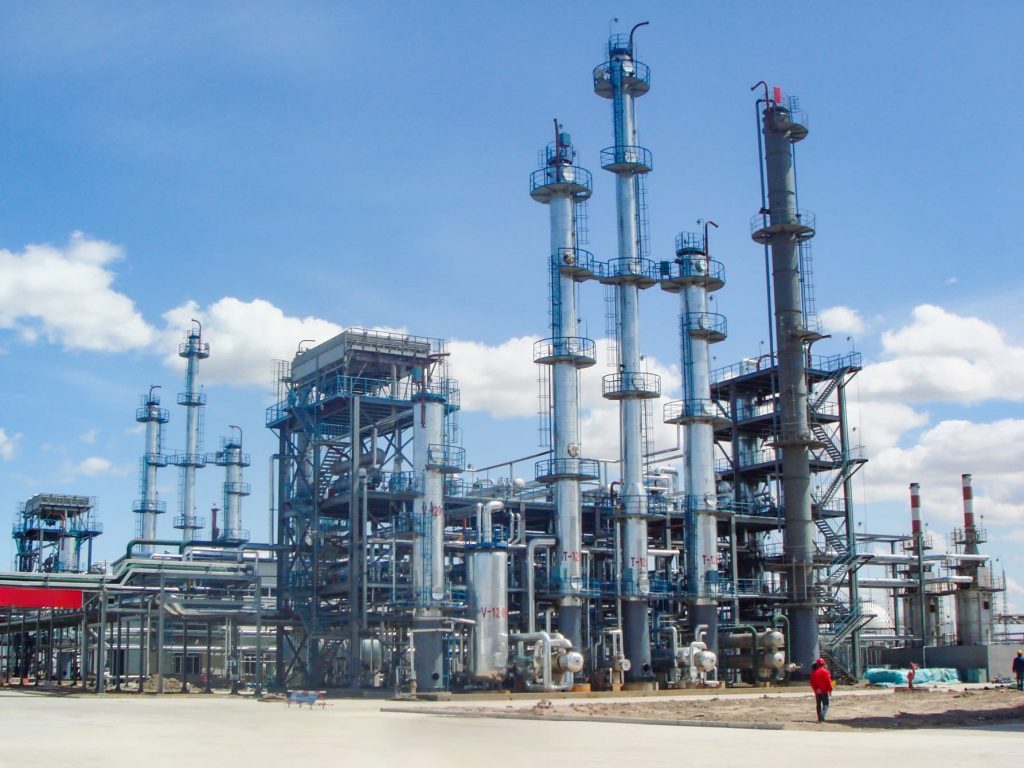
PurePath Composite Coating Technology Advantages
Using high-nickel alloys for the entire construction of large, thick-walled pressure vessels would result in extremely high material costs. PurePath employs explosive coating and automated roll forming composite technology to metallurgically bond corrosion-resistant alloy linings such as SS 347 or Inconel 625 to a chromium-molybdenum steel substrate.
This technology provides a metallurgical barrier protection against H2S and NH4Cl, significantly reducing the CAPEX (Capacity to Expenditure) of medium to large-scale industrial facilities while ensuring structural safety.
Why PurePath Hydrotreating Plants Deliver Uncompromised Reliability
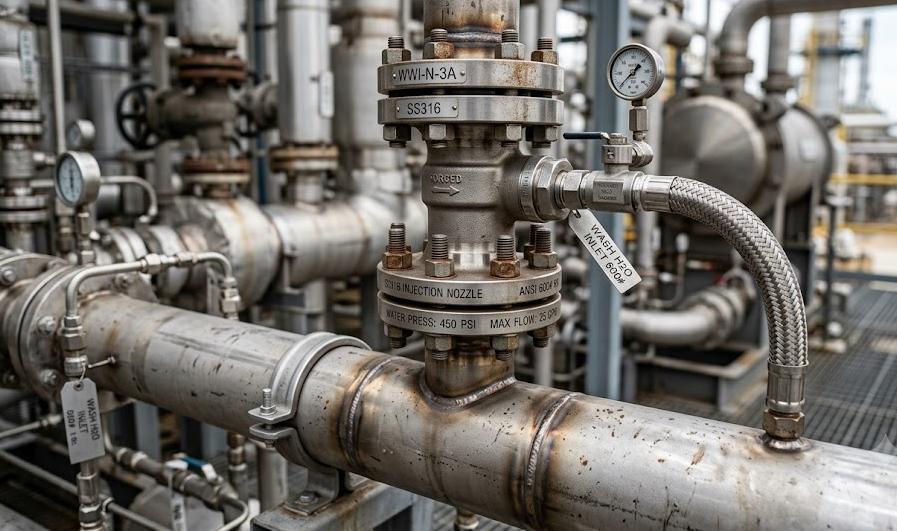
PurePath specializes in the research and development and manufacturing of industrial-grade refining equipment, providing engineering solutions for highly corrosive environments:
- International Standards Compliance: Pressure vessels, reactors, and heat exchangers are designed and manufactured strictly according to ASME Section VIII Part 2 and NACE MR0103/MR0175 (Wet Acidic Hydrogen Environments) specifications.
- Proprietary Cleaning Nozzle Design: Customized spray technology ensures uniform distribution of washing water, preventing erosion and corrosion of outlet pipes.
- EPC Delivery and Precision Manufacturing: Providing end-to-end design, manufacturing, and QA delivery services, from thermal-hydraulic calculations to 100% ultrasonic (UT) fit testing.
Final
Corrosion control in the hydrotreating process is crucial to equipment lifespan, operational safety, and refinery profitability. Combining rigorous process chemistry management with PurePath‘s metallurgical coating technology effectively ensures long-term stable system operation and mitigates the risk of unplanned downtime.
To improve the reliability of your hydrotreating unit, please contact the PurePath engineering team for equipment specification assessments, corrosion protection coating consultations, and EPC project quotations.