
Why Vacuum Distillation Alone Cannot Produce High-Quality Base Oil
Written By: Mr.Ran
Senior Petrochemical & Waste Oil Recycling Engineer
Deeply involved in the design, manufacturing, and optimization of various waste oil recycling and petrochemical equipment, delivering practical and efficient solutions for clients worldwide.
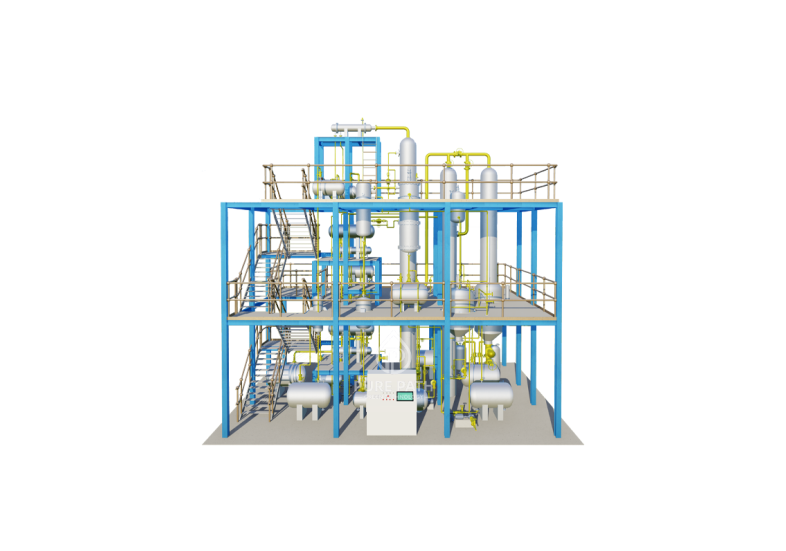
Vacuum distillation stands as a foundational cornerstone within industrial waste oil to base oil production facilities. By significantly reducing the operating system pressure, this technology efficiently separates valuable lubricating oil fractions from water, volatile light hydrocarbons, and heavy asphaltic residues at lower thermal thresholds, protecting the recovered molecules from destructive thermal cracking. However, a prevalent misconception among new investors and project developers in the waste oil recycling plant sector is that vacuum distillation process setups alone are entirely sufficient for yielding high-grade lubricant stocks.
In reality, while vacuum distillation serves as an indispensable primary separation phase, it possesses inherent technological boundaries. It cannot selectively isolate or eradicate numerous dissolved molecular contaminants that fundamentally govern the final product’s color stability, oxidation resistance, chemical purity, and commercial market value. To bridge the gap between crude re-refined fractions and premium-grade lubricants compliant with modern international standards, supplementary refining technologies such as solvent extraction and hydrotreating are mandatory. This comprehensive guide provides an in-depth exploration of why vacuum distillation alone falls short and outlines the integrated architecture required for elite base oil refining.
What Does Vacuum Distillation Actually Do?
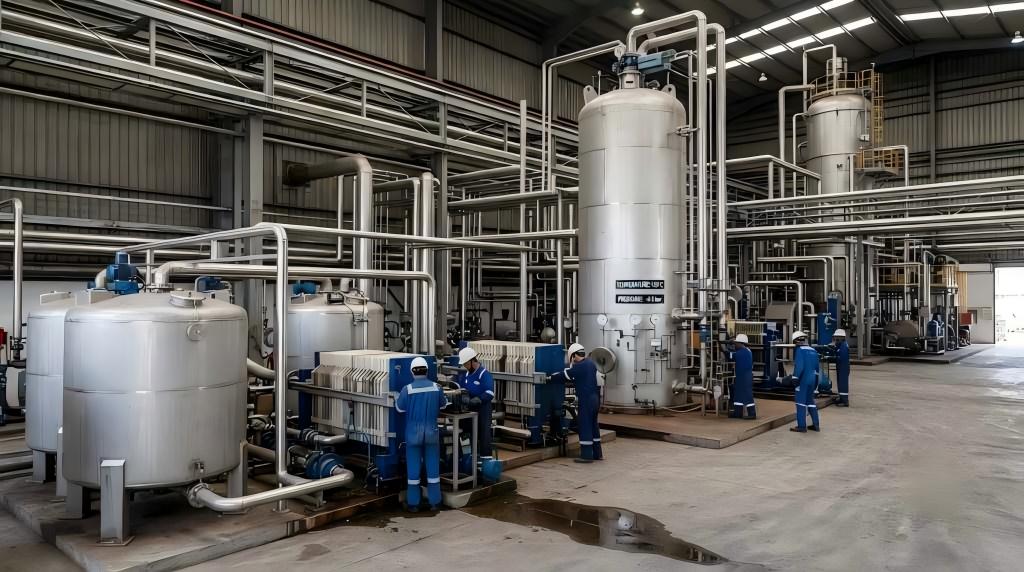
The vacuum distillation unit lowers the pressure in the system, which significantly lowers the boiling points of heavy hydrocarbon blends. When lubricating oil, which contains base stocks, residual additives, thermal breakdown products and various contaminants, is introduced into the fractionator, the whole process takes place under a strong vacuum.
Its primary operational functions include:
- Removing water and moisture: Entrained water and low-boiling moisture fractions are flashed off immediately to prevent system cavitation and foaming.
- Separating light fuel fractions: Residual gasoline, diesel, and solvent dilutions originating from fuel contamination are stripped out.
- Recovering lubricating oil fractions: Valuable base oil cuts are distilled across specific boiling range fractions tailored for target viscosities.
- Removing asphaltic residues and heavy sludge: Thermal degradation precursors, heavy carbonaceous sludge, and inorganic particulate matter are concentrated in the bottom residues.
- Minimizing thermal degradation: Operating under reduced pressure drastically lowers required heater tube temperatures, preventing severe coking and thermal cracking of the desirable lube molecules.
Key Takeaway: While vacuum distillation is exceptional at physical boiling-point fractionation and gross impurity separation, it remains fundamentally a physical separation tool rather than a chemical purification process.
What Vacuum Distillation Cannot Remove
Although vacuum distillation achieves remarkable physical separation, it operates purely based on volatility and boiling ranges. Consequently, numerous hazardous and performance-inhibiting contaminants possessing boiling points overlapping with lubricating oil fractions remain trapped in the distillate. These residual contaminants dictate why used oil re-refining demands advanced downstream units.
1. Oxidation Products
The base oils are under continuous thermal-oxidative stress during long-term operation of internal combustion engines or industrial machinery. This results in a spectrum of oxidised compounds, including organic acids, aldehydes, ketones and complex oxidised hydrocarbons. These chemical species are responsible for the dark, undesirable colour of the oil, rapid gum and varnish formation, a drastic reduction in oxidation stability, and a shortened service life. Vacuum distillation cannot completely remove oxidation products because many of them have volatility similar to that of base oil molecules.
2. Sulfur Compounds
Sulfur-containing molecules in used oil originate from sour crude, extreme-pressure (EP) gear oil additives, anti-wear packages such as ZDDP, and fuel soot contamination. High levels of sulphur corrode engines, poison emission control catalysts, reduce thermal oxidation stability, and preclude the production of higher quality Group II base oil or Group III base oil stocks. Sulphur removal catalytic hydrogenation processes react high-pressure hydrogen to cleave carbon-sulfur bonds.
3. Nitrogen Compounds
The organic nitrogen components are usually the product of dispersant and detergent additive degradation. They dramatically accelerate the ageing of the lubricant and interfere with the fresh additive performance during subsequent formulation. These nitrogenous structures dissolve completely in the lube fraction matrix, and so vacuum distillation cannot efficiently purge them from the distillate.
4. Aromatic Compounds
Multiring aromatic hydrocarbons are often found in high concentrations in used lubricating oil. Too many aromatics lowers the viscosity index (VI), reduces UV and oxidation resistance, and gives a dark colour. Selective extraction or saturation of these aromatic rings is required to convert raw distillate to high-performance re-refined base oil.
5. Polycyclic Aromatic Hydrocarbons (PAHs)
PAHs represent toxic, persistent organic pollutants that pose severe ecological hazards and human health risks. Their presence restricts downstream lubricant applications and regulatory compliance. Vacuum distillation alone leaves significant concentrations of PAHs distributed within the recovered oil matrix.
6. Metal Residues and Ash Precursors
Primary physical filtration removes suspended solid particulates; however, used oils contain chemically bound or finely emulsified organometallic compounds from detergent packages and mechanical wear. These are calcium, zinc, phosphorus, iron, copper and lead. Dissolved metallic complexes are often carried over into vacuum distillates requiring chemical or hydrogen polishing technology.
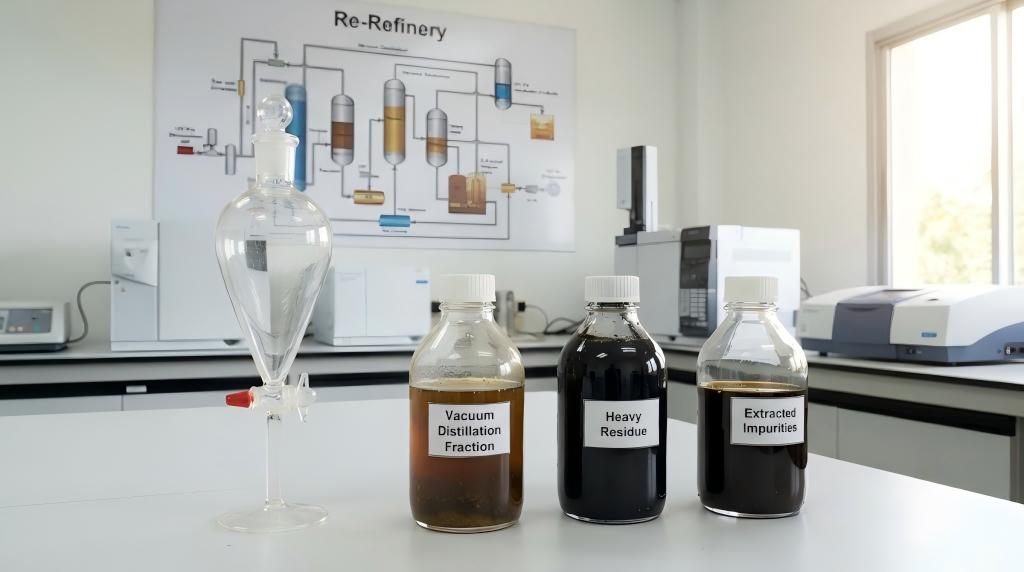
Comparison: Vacuum Distillation vs Advanced Refining Processes
| Contaminant / Parameter | Vacuum Distillation | Solvent Extraction | Hydrotreating |
| Water & Moisture | ✔ Excellent | — | — |
| Light Hydrocarbons | ✔ Excellent | — | — |
| Heavy Residues & Asphalt | ✔ Excellent | — | — |
| Oxidation Products | ✖ Limited | ✔ Good | ✔ Excellent |
| Aromatic Compounds | ✖ Limited | ✔ Excellent | ✔ Excellent |
| Sulfur Compounds | ✖ Poor | △ Partial | ✔ Excellent |
| Nitrogen Compounds | ✖ Poor | △ Partial | ✔ Excellent |
| PAHs Removal | ✖ Poor | ✔ Good | ✔ Excellent |
| Oil Color Improvement | ✖ Limited | ✔ Excellent | ✔ Excellent |
| Oxidation Stability | ✖ Limited | ✔ Good | ✔ Excellent |
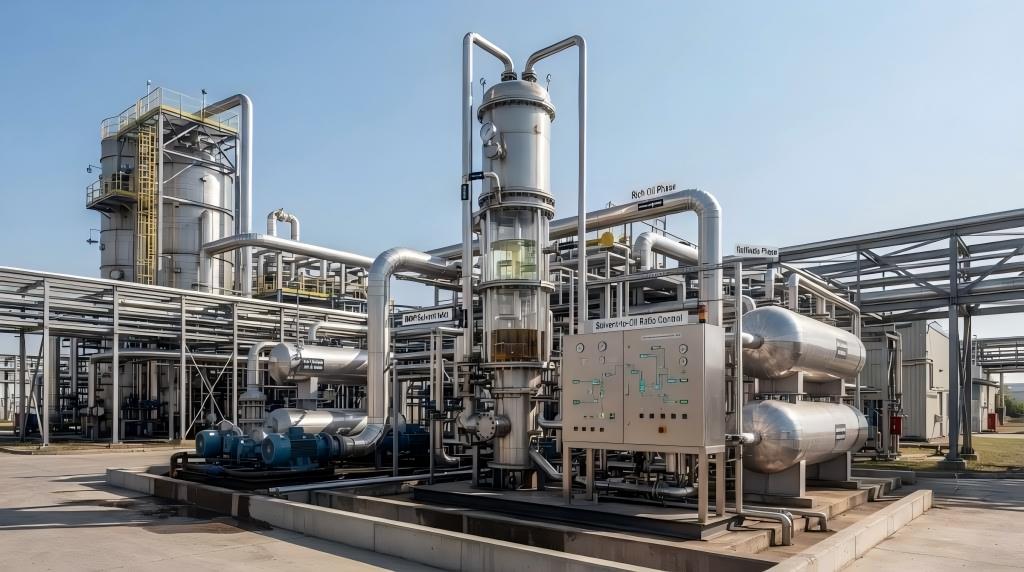
Why Solvent Extraction Is an Essential Next Step
To overcome the selectivity limitations of physical distillation, numerous modern re-refineries integrate solvent extraction as a secondary purification stage. Utilizing selective solvents (such as N-methyl-2-pyrrolidone (NMP), furfural, or phenol), this process exploits solubility differences to selectively dissolve and extract undesirable aromatic rings, polar compounds, and sulfur/nitrogen species while leaving paraffinic and naphthenic base oil components intact.
The strategic benefits of incorporating solvent extraction include:
- Lower aromatic content: Drastically reduces undesirable ring structures, boosting chemical stability.
- Improved color and clarity: Transforms dark, distillate oils into clear, golden-hued base stocks.
- Higher Viscosity Index (VI): Enhances the oil’s ability to maintain stable viscosity across fluctuating operational temperatures.
- Enhanced oxidation stability: Extends fluid longevity and minimizes deposit formation under thermal stress.
- Environmentally sound operation: Modern solvent recovery loops minimize chemical loss and avoid the toxic acid sludge hazards historically associated with traditional acid-clay treatments.
Why Hydrotreating Produces Premium Base Oil
For processing plants targeting elite API Group II base oil or Group III base oil classifications from waste engine oil recycling, catalytic hydrotreating represents the definitive technological pinnacle. Operating under elevated temperatures and pressures in the presence of specialized catalysts (such as nickel-molybdenum or cobalt-molybdenum) and hydrogen gas, hydrotreating chemically transforms the oil.
Hydrogen reacts aggressively with molecular contaminants, instantly eliminating:
- Sulfur into hydrogen sulfide (H₂S)
- Nitrogen into ammonia (NH₃)
- Oxygen compounds into water (H₂O)
- Unsaturated olefins and polycyclic aromatics into saturated, stable paraffinic structures
The resulting re-refined base oil achieves exceptional saturation levels, water-white color, peerless thermal oxidation stability, ultra-low sulfur levels, and superior blending flexibility for top-tier automotive and industrial lubricants.
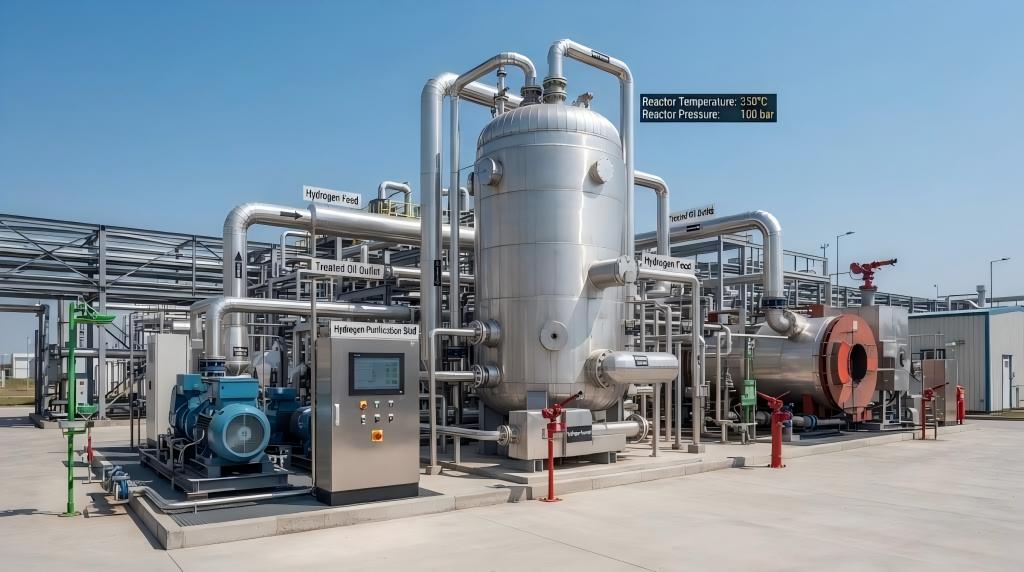
Typical Waste Oil to Base Oil Process Architecture
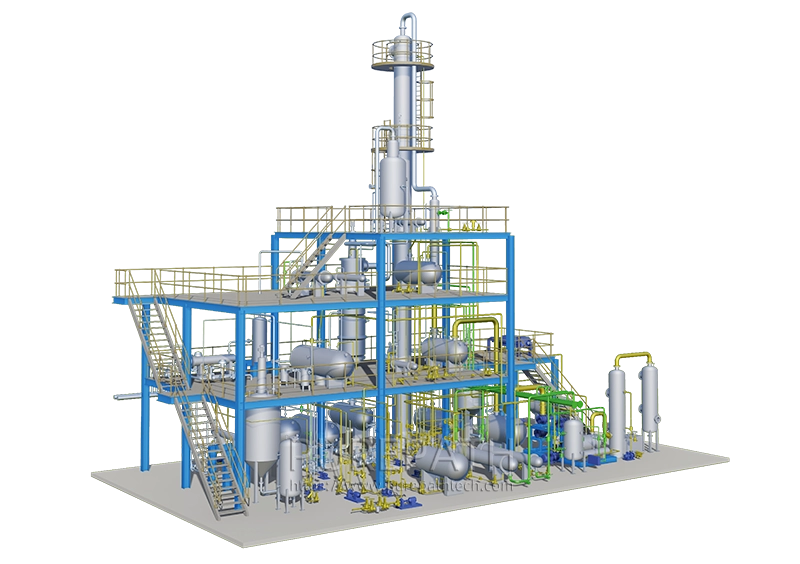
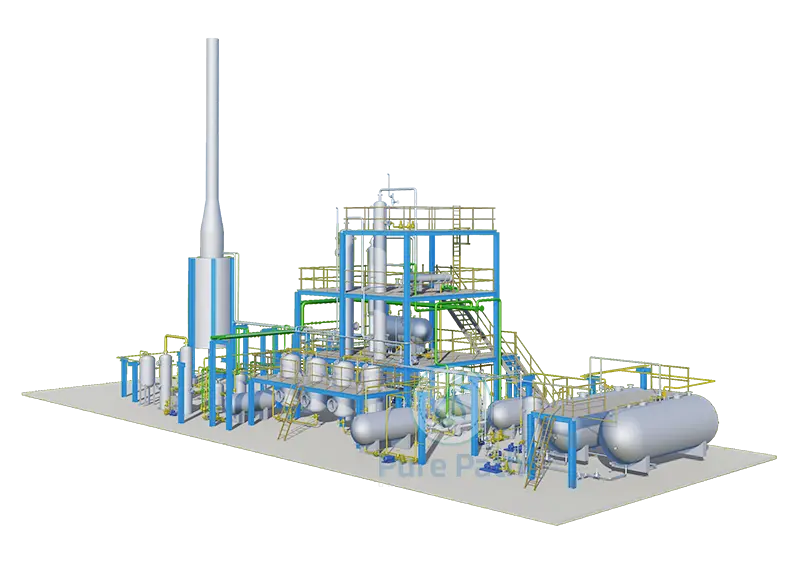
A commercially viable, state-of-the-art waste oil recycling plant integrates multiple sequential treatment steps to ensure zero waste and maximum product grade:
- Waste oil collection and storage: Initial containment, settling, and homogenization of incoming feedstocks.
- Pretreatment and filtration: Centrifugal separation and fine filtration to remove coarse suspended solids, fibers, and free water.
- Dehydration and degassing: Flash vaporization to strip volatile light ends and remaining moisture.
- Vacuum distillation: Separation of broad lube oil distillate cuts from heavy asphaltic bottom residues.
- Solvent extraction: Selective removal of aromatics, polar compounds, and color bodies.
- Hydrotreating (catalytic finishing): Deep hydrogenation to saturate aromatics and strip heteroatoms (sulfur/nitrogen).
- Product polishing and final filtration: Clay-contacting or micron polishing to ensure pristine clarity and particulate control.
- Finished base oil storage: Blending, certification, and dispatch of high-value re-refined base oil stocks.
Can Vacuum Distillation Alone Produce Marketable Base Oil?
The commercial viability of a vacuum distillation process alone will be entirely dependent on target market specifications and end user requirements. Distillate produced only by vacuum fractionation may be of limited use in low-demand, coarse applications in industry, such as for low-grade formwork release agents, heavy residual fuel oil extenders or uncritical chain lubricants, where lubricant performance, colour and oxidation stability are not important.
But oil that’s vacuum distilled doesn’t meet, in its base form, the stringent technical standards of today’s automotive and industrial lubricant blenders. If you want to sell into high-end lubricant markets, export customers or commercial fluid formulators that must comply with ISO, SAE and API standards, you can’t just rely on distillation. The product suffers from poor colour stability, high carbon residue and quick thermal degradation if not further purified by solvent extraction or hydrotreating.
Choosing the Right Refining Technology
Investing in a robust waste oil recycling plant requires careful evaluation of several critical techno-economic parameters:
- Feedstock quality and variability: Determining whether incoming used oils comprise primarily automotive crankcase oils, industrial hydraulic fluids, or mixed electrical oils.
- Desired base oil grade: Setting clear targets between baseline API Group I equivalents versus high-saturation Group II/III specifications.
- Product specifications: Meeting stringent regional environmental and sulfur-content regulations.
- Operating expenditures (OPEX) and Capital expenditures (CAPEX): Balancing initial plant setup costs against long-term operational margins.
- Return on investment (ROI): Premium re-refined base oils command significantly higher market pricing, rapidly amortizing the capital investment required for advanced hydrotreating or extraction units.
Frequently Asked Questions
Q 1. Why is vacuum pressure necessary during the distillation of used lubricating oil?
The vacuum pressure lowers the boiling point of the hydrocarbon fractions very much so that valuable lubricating oil can be recovered at a substantially lower temperature. This avoids severe thermal cracking, coking and destruction of the molecular framework of the oil.
Q 2. What are the primary contaminants that survive vacuum distillation?
Vacuum distillation cannot selectively remove dissolved oxidation products (such as organic acids and ketones), sulfur and nitrogen compounds, polycyclic aromatic hydrocarbons (PAHs), and soluble organometallic wear residues that share similar boiling ranges with base oils.
Q 3. Can you dump vacuum-distilled oil directly into your modern car?
No. Today’s automotive engines are designed for high-performance lubricants with good oxidation stability, low sulphur and high viscosity indices. Vacuum-distilled oil does not possess these properties and requires additional refining, for example, by solvent extraction or hydrotreating.
Q 4. What are the differences between solvent extraction and hydrotreating in refining of base oil?
Solvent extraction uses selective solvents to dissolve and remove aromatic rings and polar impurities based on solubility differences. Hydrotreating utilizes high pressure, hydrogen gas, and catalysts to chemically react with and eliminate sulfur, nitrogen, and unsaturated hydrocarbons while fully saturating the oil.
Q 5. Is investing in an advanced re-refining plant economically viable?
Yes. While adding solvent extraction or hydrotreating units increases initial capital expenditure (CAPEX), it transforms low-value waste oil into high-margin API Group II or Group III base oils, commanding premium market prices and ensuring long-term profitability and regulatory compliance.