
Why Does Re-Refined Base Oil Have an Unpleasant Odor?
Written By: Mr.Ran
Senior Petrochemical & Waste Oil Recycling Engineer
Deeply involved in the design, manufacturing, and optimization of various waste oil recycling and petrochemical equipment, delivering practical and efficient solutions for clients worldwide.
The refined base oil may not have a strong odor. If the final product still has a noticeable smell, it is usually related to the original waste oil condition, residual volatile impurities, or insufficient refining and post-processing. By adopting an appropriate refining process, the odor of the final product can usually be significantly reduced.
What Causes the Odor in Used Oil?
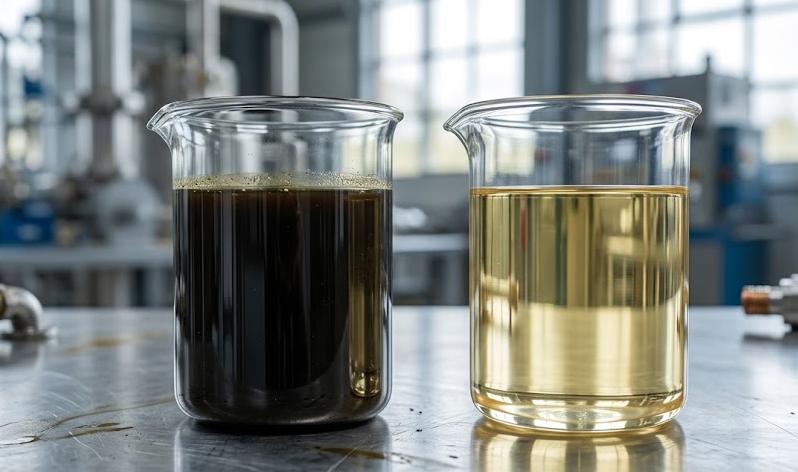
The components of waste lubricating oil are far more than just the degraded base oil. After being used in engines or industrial equipment, it may also contain fuel residues, water, oxidation products, additives, sludge and other pollutants. Some of the compounds in these substances can produce a distinct odor.
Sulfur-containing compounds
Sulfur compounds such as sulfides and mercaptans have a strong odor and can be detected even at very low concentrations.
Oxidation products
Lubricating oil, when exposed to high temperatures and oxygen for a long time, will produce organic acids, aldehydes and ketones and other oxidation products. Some of these substances have a distinct odor.
Light hydrocarbons and fuel residues
Waste engine oil may contain unburned fuel and other light hydrocarbons. If these volatile components are not effectively separated, they may remain in the recycled oil and produce an odor.
Additives and their degradation products
The additives in lubricating oil have functions such as lubrication, cleaning and oxidation resistance. After long-term use, some of the additives will undergo degradation and form new compounds.
Why Can Re-Refined Base Oil Still Smell?
Waste oil re-refining can remove most pollutants, but the final product’s odor largely depends on the process design and operation methods.
1. Incomplete removal of light components: If the separation of light hydrocarbons and other volatile compounds is insufficient during the distillation process, they may remain in the base oil fraction. Vacuum distillation can complete the separation at a lower temperature, which helps reduce thermal degradation and recover useful oil fractions. Therefore, it is widely used.
2. Insufficient dehydration: Although water itself is not the main source of oil odor, the moisture in waste oil often accompanies volatile pollutants and other impurities. Therefore, pre-treatment and dehydration before deep refining are very important.
3. Residual sulfur and nitrogen compounds: Simple distillation cannot remove all unwanted compounds. Some sulfur- and nitrogen-containing compounds may remain in the oil due to their chemical properties and boiling point differences. To obtain higher-quality products, further processing may be necessary.
4. Large differences in raw material quality: The components of different waste oils are not the same. Waste engine oil, industrial lubricants, hydraulic oil, and mixed waste oils may have significant differences in pollutants. The process that works for one type of raw material may not be equally effective when used with other raw materials. Therefore, raw material analysis is an important step in designing the re-refining process.
How Is Odor Removed During Base Oil Re-Refining?
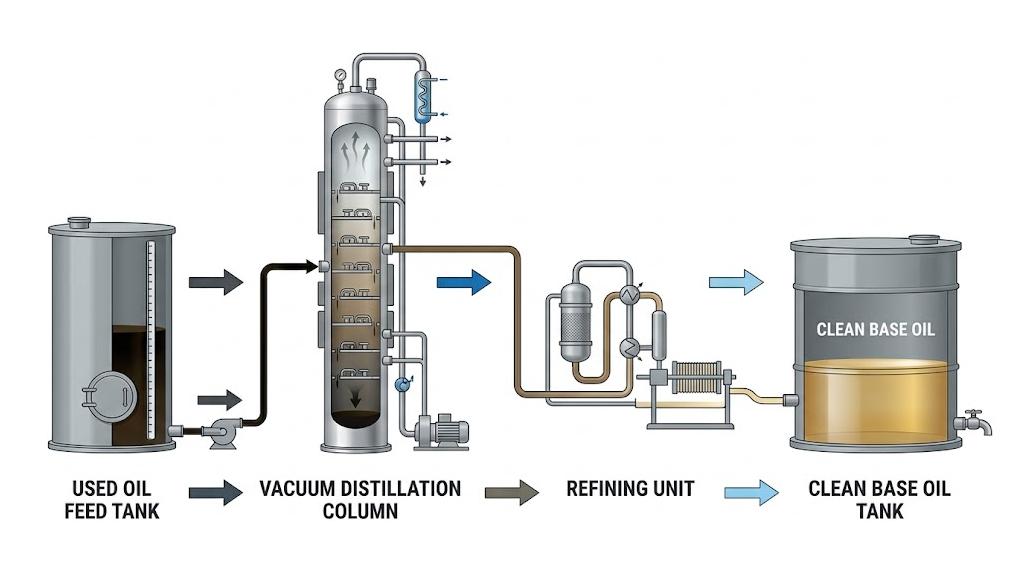
A reasonable waste oil regeneration refining process usually consists of multiple stages rather than relying on a single processing step.
Step 1: Pre-treatment
First, remove water, oil sludge, suspended solids, and other large particle contaminants.
Effective pre-treatment can reduce the load on subsequent equipment and improve the overall separation effect.
Step 2: Vacuum Distillation
Vacuum distillation utilizes the difference in boiling points of different components to separate waste oil into different fractions.
The vacuum conditions can lower the boiling point, making the light components easier to separate, while recovering the base oil fraction and reducing the risk of thermal cracking.
However, distillation alone is often insufficient to produce high-quality base oil with extremely low odor.
Step 3: Deep Refining
Depending on the characteristics of the raw materials and product requirements, subsequent processes such as solvent extraction, adsorption, hydrogenation treatment, or hydrogenation refining can be adopted.
These treatments can further remove the sulfur, nitrogen, oxidation products, color-forming substances, and other impurities remaining after distillation.
Step 4: Final Refining
Some applications require further refining to improve the color, stability, and odor of the product.
For products with a requirement for clearer appearance and lower residual odor, adsorption or other refining processes can be used.
The specific process should be determined based on the characteristics of the raw materials and the final specifications of the base oil.
Does Bad Odor Mean Re-Refined Base Oil Is Low Quality?
Not necessarily.
The smell is only one indicator for judging the condition of the product. When assessing the quality of the base oil, the following parameters should also be taken into consideration:
- Viscosity
- Viscosity index
- Flash point
- Sulfur content
- Moisture content
- Color
- Distillation range
- Oxidation stability
However, if the odor is strong and persistent, it may indicate that volatile impurities or other unwanted compounds have not been adequately removed.
Therefore, the quality of the base oil should be judged comprehensively based on both the odor and the results of laboratory tests, rather than making a conclusion solely based on the odor.
How to Produce Low-Odor Re-Refined Base Oil?
The key lies in selecting the appropriate refining process based on the characteristics of the raw materials and the requirements of the product.
Before choosing the equipment, the following information should be clarified:
- Types of available waste oil
- Water and pollutant content
- Sulfur and other impurity levels
- Required production capacity
- Target base oil specifications
For some raw materials, vacuum distillation can serve as the main separation step. If higher product quality is required, processes such as solvent extraction, adsorption, hydrogenation treatment, or hydrogenation refining may need to be combined.
In other words, low-odor regenerated base oil relies on effective pollutant removal and reasonable process control, rather than just deodorizing the finished product.
Final
The unpleasant smell is not an inevitable characteristic of recycled base oil. This smell usually indicates that volatile compounds, sulfur or nitrogen impurities are remaining in the product, or that an improper refining process was used.
By properly combining pretreatment, vacuum distillation and deep refining processes, waste oil can be transformed into high-quality, low-smell base oil.
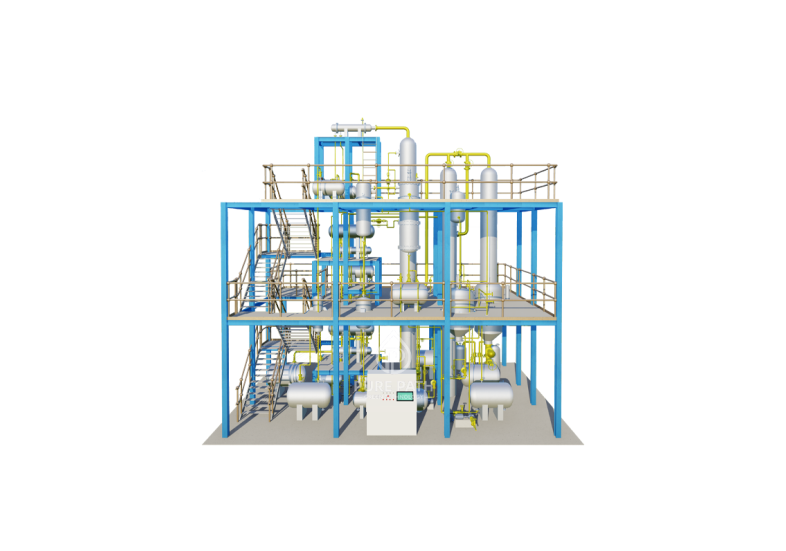
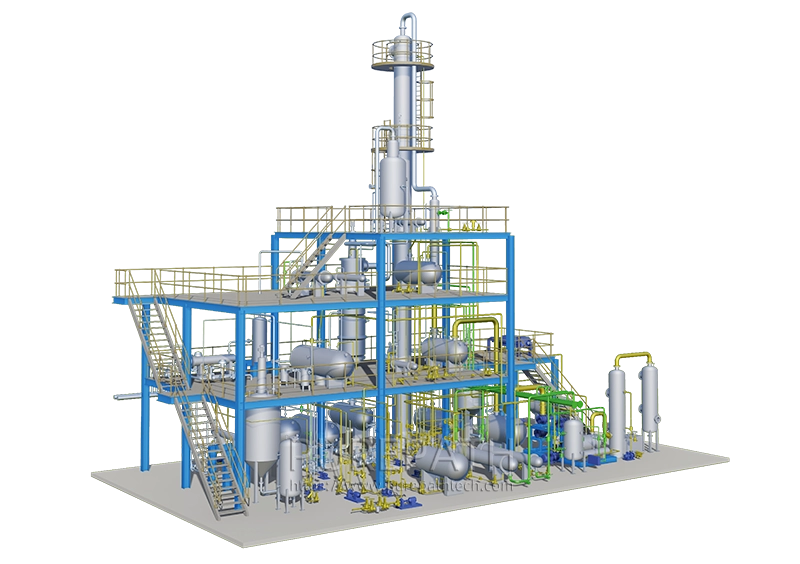
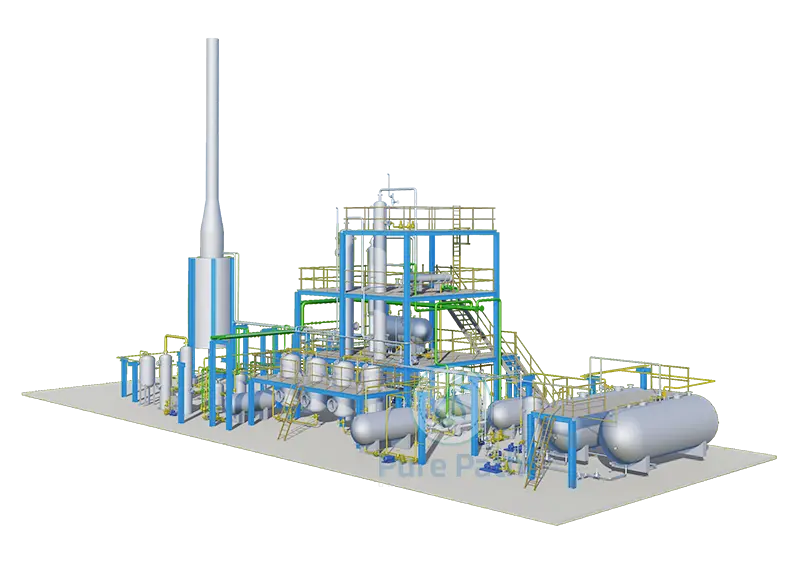
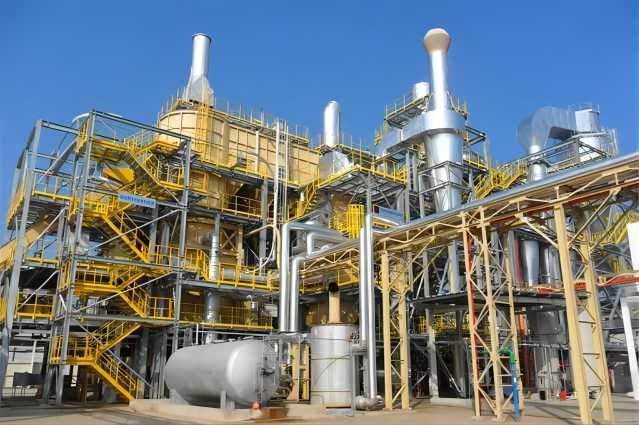
PurePath offers waste oil regeneration plant solutions, covering process design, refining equipment and full plant construction, and customizing them according to your raw material characteristics, processing capacity and target product quality requirements.
Are you planning to build a waste oil regeneration base oil project? Please contact PurePath to discuss your needs.