
How Does Coolant Contamination Affect Waste Oil Recycling?
Written By: Mr.Ran
Senior Petrochemical & Waste Oil Recycling Engineer
Deeply involved in the design, manufacturing, and optimization of various waste oil recycling and petrochemical equipment, delivering practical and efficient solutions for clients worldwide.
When coolant enters waste lubricating oil, it will change the composition of the raw materials and the subsequent processing requirements. Unlike pure water pollution, coolant usually also contains ethylene glycol or propylene glycol, corrosion inhibitors, salts, and other additives.
This does not mean that waste oil cannot be recycled. The actual processing difficulty mainly depends on the type and content of the coolant, the level of other pollutants, and the proportion of recyclable oil in the waste oil.
What Is Actually Added to Waste Oil When Coolant Gets In?
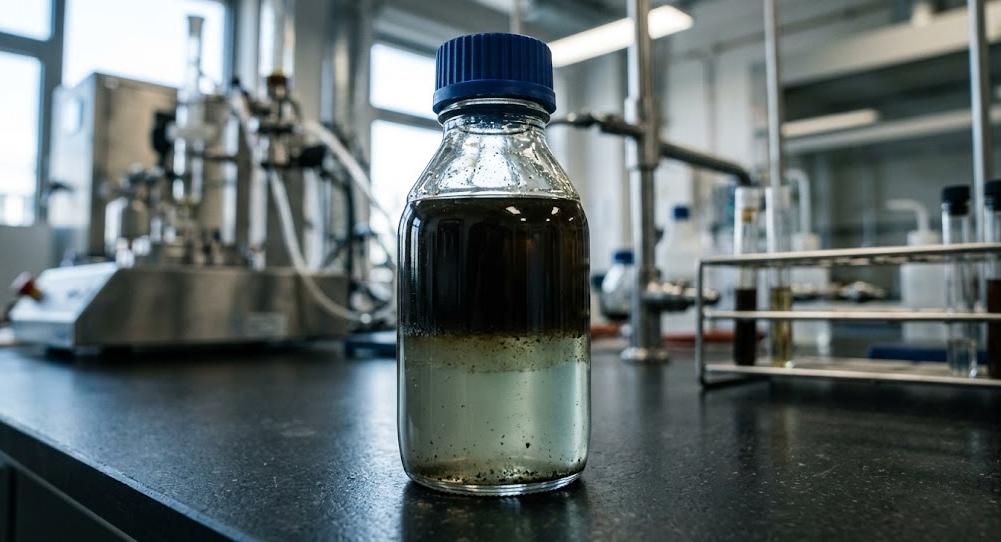
Coolant is not just water. Depending on the formula, it usually contains water, ethylene glycol or propylene glycol, corrosion inhibitors, salts, and other additives.
When coolant mixes with waste lubricating oil, these components will all enter the raw materials to be processed. Some waste oil may also contain metal particles, corrosion products, and suspended solids, especially from engines, industrial equipment, and cooling systems.
Among them, water is usually relatively easy to identify and handle, but the presence of ethylene glycol and other additives will increase the difficulty of separation.
Therefore, when evaluating such waste oil, one cannot only look at the coolant content but also need to understand which other components the coolant has brought in.
Why Is Glycol More Difficult Than Water in Waste Oil Recycling?
Water and glycol create different processing challenges.
Free water can often be separated through controlled heating, settling, or dehydration. Glycol contamination is more complicated because glycol has different physical and thermal behavior from water and hydrocarbons.
A simplified comparison looks like this:
| Contaminant | Main Recycling Concern |
| Free water | Increases dehydration load |
| Dissolved water | Requires controlled dehydration |
| Glycol | More difficult separation and thermal behavior |
| Corrosion inhibitors | May introduce additional chemical contaminants |
| Dissolved salts | Can increase corrosion and fouling concerns |
| Suspended solids | May require filtration or separation |
This distinction matters when selecting a recycling process.
A waste oil stream containing a small amount of free water may require relatively straightforward dehydration. A similar volume of coolant-containing oil may require additional evaluation because the feed contains glycol and other non-hydrocarbon components.
Read more: Waste Oil Pre-treatment Technologies for Re-refining into Base Oil
What Happens If Coolant-Contaminated Oil Enters the Refining Unit?
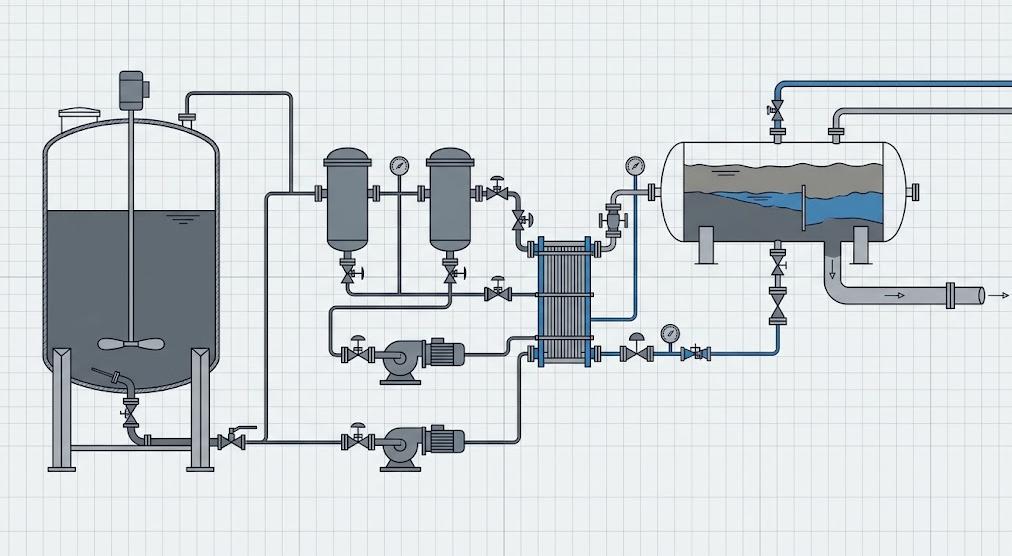
Higher moisture content will increase the dehydration load and may cause fluctuations in operating conditions. Depending on the composition and concentration of the pollutants, problems such as foaming, corrosion, scaling, and decreased heat exchange efficiency may also occur.
After the ethylene glycol and other additives are introduced, the load of subsequent treatment equipment will also increase.
For industrial waste oil recovery devices, fluctuations in raw materials also need to be paid attention to. If the proportion of coolant in different batches of waste oil varies significantly, the processing load and operating conditions will also change accordingly.
Therefore, before entering the main treatment unit, necessary raw material testing and pre-treatment should be carried out to make the feed composition more stable.
How Should Coolant-Contaminated Waste Oil Be Tested Before Recycling?
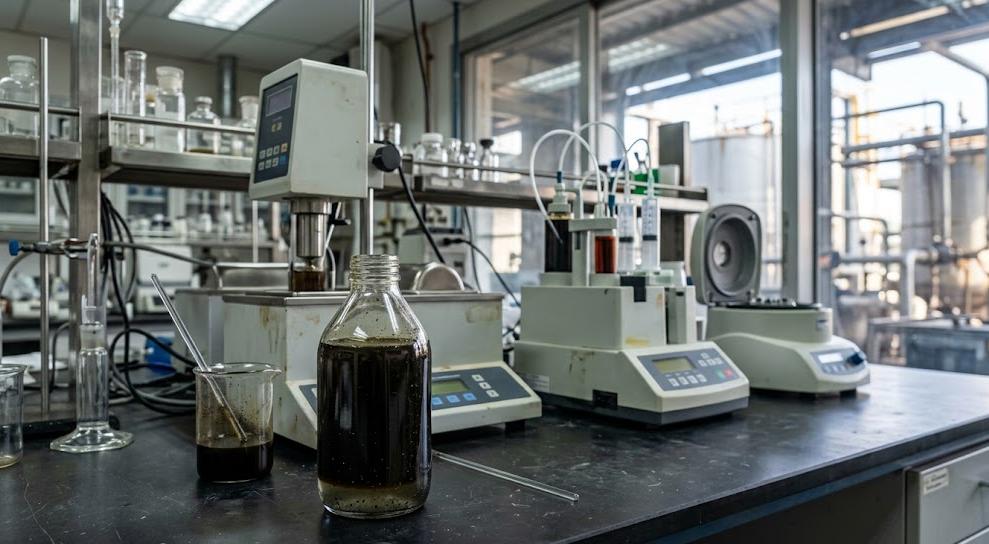
When the waste oil is contaminated by coolant and the degree of contamination is unclear, laboratory testing should serve as the basis for the treatment plan.
Key testing items include:
- Water content: to determine the dehydration load.
- Ethylene glycol content: to assess the degree of coolant contamination.
- Deposits and suspended solids: to determine whether filtration or solid-liquid separation is necessary.
- Ash and metal content: to identify inorganic pollutants.
- Viscosity: to understand the basic properties and deterioration degree of the waste oil.
- Distillation characteristics: to determine the recoverable hydrocarbon components.
- Recoverable oil ratio: to evaluate the technical and economic feasibility.
If coolant contamination is accompanied by metals, sludge or high ash content, a single indicator cannot determine whether the waste oil is suitable for recycling.
Therefore, the composition of pollutants and the recoverable oil ratio are equally important as the coolant content.
Read more: How to Test Waste Engine Oil Before Recycling?
Can Coolant-Contaminated Waste Oil Be Recycled Without Overcomplicating the Process?
In many cases, it is possible, but the specific handling requirements depend on the condition of the raw materials.
- Low concentration coolant contamination: Usually, the focus is on increasing separation and dehydration treatment.
- Moderate coolant contamination: May require more thorough pre-treatment and controlled dehydration.
- High ethylene glycol and additive content: Requires more detailed raw material analysis to determine the appropriate treatment method.
- Contaminated with coolant, metal, solid and sludge: Usually requires stronger pre-treatment capabilities.
- Severe contamination and low proportion of recoverable oil: Even if technically feasible to handle, further assessment of the recovery cost and product value is necessary.
For waste oil regeneration projects, the criteria should not only be “can it be recycled”. What is more important is to confirm the proportion of recoverable oil, the quality of the target product, and whether the required processing configuration matches.
Fianl
Coolant contamination will increase the difficulty of waste oil recycling because it not only brings in water, but also may include ethylene glycol, corrosion inhibitors, salts, and other additives.
Before determining the recycling plan, it is necessary to focus on detecting moisture, ethylene glycol, solids, metals, ash content, and other key indicators. Based on the composition of the raw materials, the corresponding separation, dehydration, and subsequent refining plans should be determined.
For waste oil aimed at producing recycled base oil, raw material testing is an important first step in determining the treatment route.