
What Contaminants Does Used Oil Re-refining Remove?
Written By: Mr.Ran
Senior Petrochemical & Waste Oil Recycling Engineer
Deeply involved in the design, manufacturing, and optimization of various waste oil recycling and petrochemical equipment, delivering practical and efficient solutions for clients worldwide.
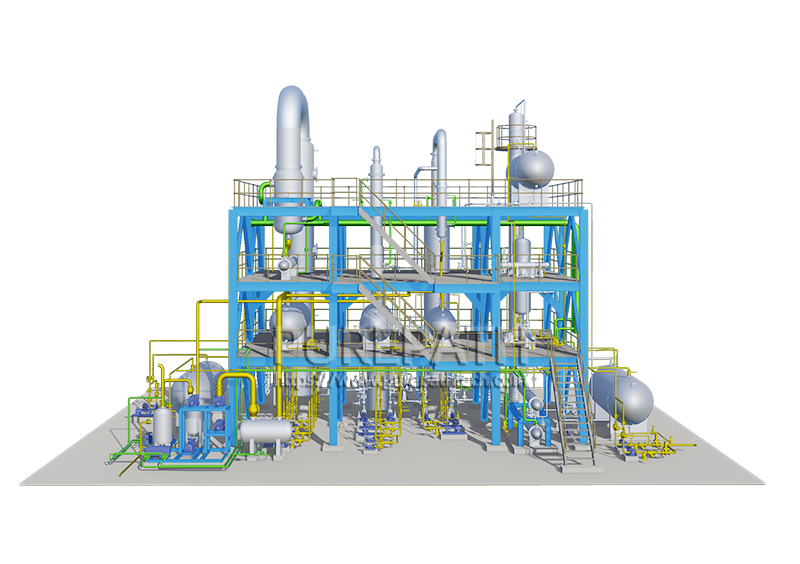
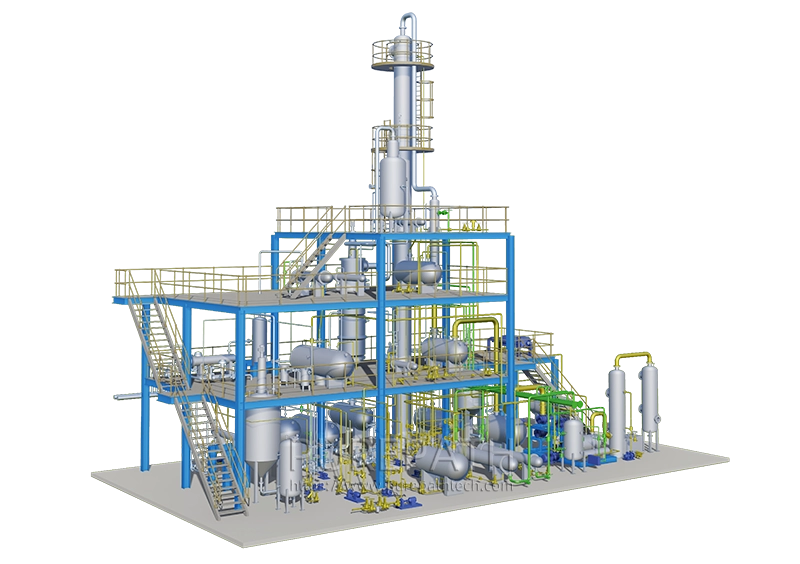
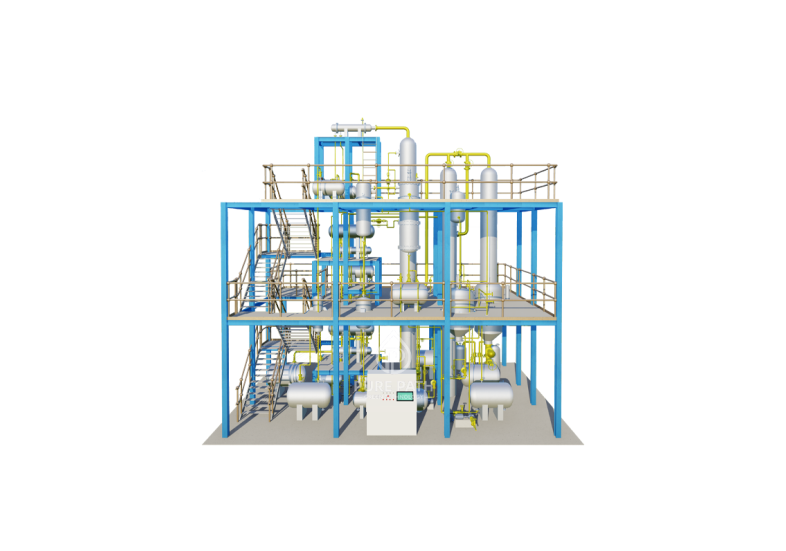
Used oil re-refining is an industrial recycling process that transforms degraded and contaminated lubricating oils into high-quality base oils that meet or exceed virgin base oil specifications. This process is distinct from rudimentary filtering or burning for energy recovery; it involves complex chemical and thermal engineering designed to separate precise molecular structures. The primary purpose of used oil re-refining is the absolute removal of physical, chemical, and environmental contaminants accumulated during mechanical service and collection.
The used oil re-refining process systematically removes water, light hydrocarbons, fuel dilution, solid particulates, carbon soot, oxidation products, degraded polymeric additives, heavy metals, and heteroatom compounds containing sulfur, nitrogen, and chlorine.
What Are the Common Contaminants in Used Oil and Their Origins?
To understand the efficacy of modern removal techniques, the physical and chemical alterations that occur within lubricating oil during industrial and mechanical applications must be established. Lubricating oils operate under conditions of extreme temperature, high mechanical pressure, and continuous frictional stress. These operational parameters degrade the hydrocarbon chains and deplete the functional additives formulated within the original oil.
The contaminants present in waste oil originate from two primary pathways: external ingress and internal chemical generation.
External Ingress: This pathway includes the infiltration of atmospheric moisture, environmental dust, silica particles, and unburnt fuel via blow-by gases or system leaks.
Internal Chemical Generation: This pathway is generated from the ongoing chemical breakdown of the lubricant itself. When hydrocarbon molecules are subjected to thermal stress and oxygen, they react with oxygen to form organic acids, gums and heavy sludge by oxidation, polymerization and condensation reactions. In addition, mechanical friction leads to physical wear and tear of the components, releasing microscopic metallic particles directly into the fluid matrix.
The 7 Core Contaminants Removed During Used Oil Re-Refining
1. Water and Condensates
The presence of water induces the emulsification of the lubricating oil, which drastically reduces the structural strength of the lubricating oil film. This reduction leads to increased boundary friction, accelerated mechanical wear, and the promotion of chemical rust and corrosion on internal component surfaces.
Removal Mechanism: Water is removed during the initial phase of used oil re-refining via atmospheric distillation flash technology. The waste oil is heated under atmospheric or near-atmospheric pressure to vaporize the water and light fractions, separating them from the heavier hydrocarbon stream based on boiling point differentials.
2. Light Hydrocarbons and Diluted Fuels
Lowering the flash point of the lubricant due to fuel dilution represents a significant danger for operational safety and fire hazard. Also, the light hydrocarbons reduce the oil viscosity below the design limits required, making the fluid unable to sustain hydrodynamic lubrication.
Removal Mechanism: These are separated by fuel stripping or from the front-end fractions of a sequential vacuum distillation column, where low-boiling-point hydrocarbons are volatilized and separated from the core lubricant base oil fractions.
3. Mechanical Wear Debris and Solid Particulates
Carbon soot, atmospheric dust, and metallic micro-particles act as abrasive agents within mechanical assemblies. If left unremoved, they accelerate the abrasive wear of gears, bearings, and cylinder walls.
Removal Mechanism: Large solids are removed via mechanical coarse filtration and high-speed centrifugal separation during pre-treatment. Sub-micron particulates that elude mechanical separation are isolated through sedimentation at the bottom of high-temperature distillation columns.
4. Oxidation By-Products, Gums, and Sludge
Oxidation products restrict fluid flow through narrow oil galleries, increase the accumulation of carbonaceous deposits, darken the physical color of the oil, and increase the Total Acid Number (TAN), which promotes chemical corrosion.
Removal Mechanism: These complex polymers and degraded heavy compounds are removed via advanced vacuum distillation. Due to their high molecular weight and high boiling points, they do not vaporize and are left behind as a heavy, non-volatile bottom fraction.
5. Degradation Products of Spent Additives
Performance-enhancing additives (e.g., zinc dialkyldithiophosphates, detergents, and dispersants) gradually lose their chemical functionality. Their degradation products remain suspended in the oil, interfering with new additive formulations and compromising the stability of the oil.
Removal Mechanism: These are removed through a combination of vacuum distillation and downstream chemical or solvent refining. This separates the active base oil hydrocarbons from the deactivated polar additive fragments.
6. Hazardous heavy metals (e.g. lead, chromium, cadmium)
Heavy metals are highly toxic to ecological systems as well as human biota. Hence, used motor oils containing these elements are heavily regulated under national hazardous waste regulations.
Removal Mechanism: Due to the extremely high boiling points of heavy metals, they are non-volatile under normal operational temperatures. These metals do not vaporize with the base oil fractions by high-vacuum distillation and are concentrated entirely within the non-distillable asphalt residue at the bottom of the column.
7. Dangerous Heteroatom Compounds (Sulfur, Nitrogen, Chlorine)
When oil containing sulfur, nitrogen or chlorine compounds is subjected to high thermal zones or combustion, acidic gases are formed, such as sulfur oxides (SOx), nitrogen oxides (NOx) and hydrogen chloride (HCl). These gases cause corrosion of the mechanical assets and pollute the air.
Removal Mechanism: Hydrotreating technology is certainly capable of removing these tightly bound heteroatoms. The distilled oil streams are catalytically treated with hydrogen at elevated pressure and temperature to convert sulphur to hydrogen sulphide, nitrogen to ammonia, and chlorine to hydrogen chloride, which are safely scrubbed out.
The Standard Process Flow of Modern Used Oil Re-Refining
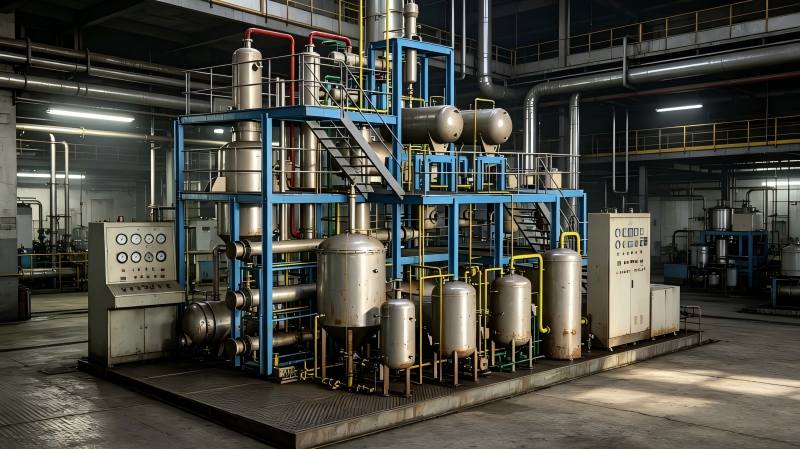
The modern industrial architecture of used oil re-refining consists of three sequential operational phases:
Pre-treatment Phase: The raw feedstock undergoes dehydration and light-end defueling. This phase utilizes atmospheric heating and flash separation to strip out volatile water and fuel fractions, stabilizing the fluid for high-vacuum processing.
Vacuum Distillation Phase: This is the main technology step. The dehydrated oil is introduced into a high vacuum distillation column at low pressure to lower the boiling points of the hydrocarbons. The system permits thus to fractionate the oil into a plurality of base oil fractions of different viscosities (e.g. light, medium and heavy cuts) and at the same time to remove heavy metals, spent additives, and sludge as a non-volatile bottom asphalt residue.
Refining Phase: To obtain commercial purity, the distilled base oil fractions are further treated. This is obtained by hydrotreating or solvent decolorization. This process removes residual heteroatoms, saturates aromatic rings, improves thermal stability, and determines if the output is an API Group II or API Group III base oil.
Where Do the Contaminants Go?
To satisfy environmental circular economy standards and achieve zero-waste production targets, the sub-products generated during used oil re-refining are captured and repurposed:
- Light Fractions: The recovered light hydrocarbons and recovered fuels are diverted into the plant’s thermal systems to be utilized as process fuel, reducing external energy consumption.
- Distillation Residue (Asphalt Flux): The heavy bottom residue containing the concentrated heavy metals, sludge, and spent additives is integrated into industrial asphalt formulations for road construction or building waterproofing material, ensuring complete containment without environmental discharge.
What Is the Difference Between Used Oil Re-refining and Traditional Burning or Simple Filtration?
| Item | Traditional Burning or Simple Filtration | Modern Hydrotreating Re-refining |
| Pollutant removal efficiency | Only large particles are removed; heavy metals and sulfur remain | More than 99% removal of key contaminants, including heavy metals and heteroatoms |
| Product quality | Low-grade fuel oil only; high risk of secondary pollution | Base oil that can reach or exceed virgin base oil standards |
| Environmental compliance | Restricted or prohibited in many countries | Supported as a circular economy and waste recovery model |
The difference is clear. Traditional burning or simple filtration does not solve the contamination problem. It only changes the physical state of the waste oil. Used oil re-refining removes pollutants at the molecular and process level and produces a new industrial raw material.
Frequently Asked Questions (FAQ)
Q1: Is the re-refined base oil of lower quality than the base oil from crude oil?
A1: No. Scientific analysis has demonstrated that the unstable components in used oil have already decomposed due to the hydrocarbon molecules having been subjected to severe thermal and mechanical stresses in the engine. When re-refined with modern hydrotreating processes, the resulting base oil often has oxidation stability and molecular purity that is superior to some virgin base oils that are directly extracted from crude oil.
Q2: What prevents the heavy metals from migrating to the newly refined base oil during the distillation stage?
A2: The heavy metals (lead, zinc, cadmium etc.) volatilize at temperatures much higher than those of the hydrocarbons of lubricating oil. These metallic elements cannot be converted into the gaseous state at the controlled operational temperatures of industrial vacuum distillation. Then they are completely contained in the asphalt residue concentrated in the non-distillable bottom stream.