
How Catalytic Cracking Works in Oil Refinery?
Written By: Mr.Ran
Senior Petrochemical & Waste Oil Recycling Engineer
Deeply involved in the design, manufacturing, and optimization of various waste oil recycling and petrochemical equipment, delivering practical and efficient solutions for clients worldwide.
Here’s the key to success in the petroleum industry: get the maximum possible yield from every barrel of crude oil. One of the essential stages of the refining process is distillation. During this process, crude oil is separated into basic components. However, the real engines of profit in a petroleum refinery today are the catalytic cracking units. These units are crucial to breaking down cheaper, heavy oils to produce higher-value products such as petrol and other light fuels.
Next, I will outline the principles, components, and most important aspects of efficiently operating a catalytic cracking unit in a petroleum refinery.
The Core Principle: What is Catalytic Cracking in Petroleum Refineries?
Catalytic cracking is optimised and streamlined through chemistry using reaction catalysts. In a refinery, catalytic cracking focuses on low-valued and heavy vacuum gas oil streams and targets and breaks large hydrocarbons. Synthetic zeolites powder catalysts aid in achieving higher-valued products. Under controlled conditions, reaction sites promote and ease carbon bond scissions using carbocation intermediates.
Unlike in thermal cracking, reaction pathways choose differently when catalysts are involved. In thermal cracking, catalysts promote more desirable reactions such as beta scissions in the formation of olefin compounds beneficial in high octane petrol, while in gas thermal cracking, excess gas and carbon are formed. Both products are relatively useless or worthless. Selectivity of catalysts in fluid catalytic cracking is essential and is the primary focus in fluid catalytic cracking to enable refineries to adjust for higher propylene or petrol yields in catalysts to meet the needs of the market.
Surplus heavy oil is catalytically cracked and is an essential part of refining as heavy oil is converted to high octane petrol and other valuable fuels and petrochemical byproducts. From catalytic cracking, the economic output of refining a barrel of crude is increased and maximised.
Key Components of a Catalytic Cracking Unit in an Oil Refinery
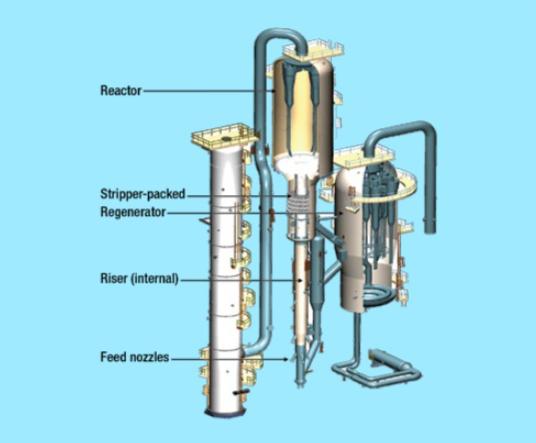
A catalytic cracking unit is crucial in modern petroleum refining, where it breaks down heavier hydrocarbons like vacuum gas oil into lighter, more valuable products like petrol, olefins, and diesel. Knowing the unit’s key components, operators can unlock better performance, higher product output, and safety in operations.
Feedstock Injection and Reaction Zone
With the typical feedstock for the catalytic cracking unit being vacuum gas oil or heavy distillates, the feed is injected into the reactor and, along with a finely ground catalyst, is exposed to high temperatures. The cracking catalyst will initiate several reactions, and hydrocarbons will begin to break down into smaller, more profitable fragments. Good design of the reactor and feed brings about uniform contact and maximum conversion.
Catalyst Regeneration
Catalysts are slowly covered with coked materials, which diminishes their effectiveness. The regeneration system eliminates part of this coke problem. This controlled system can restore the effectiveness of the catalyst so it can be operational again. Appropriate regeneration of the catalyst system guarantees long catalyst life, stable performance from the unit, and a consistent yield.
Product Separation and Fractionation
The reactor represents a coexistence of solid catalyst fragments, gaseous and liquid products. Once the catalyst is separated, the liquid products are fractionated; this means they are separated into the different products of interest, which are petrol, diesel, light gases and other fractions, by use of fractionation towers. Separated products is an indicator of the effectiveness of the distillation system, with direct impact on thresholds of products and profitability of the refinery.
In modern refineries, the core part of most operations is a catalytic cracking unit. The unit can transform heavier feedstocks into economically useful products.
The Role of Catalysts in Refinery Cracking: Types, Function, and Selectivity
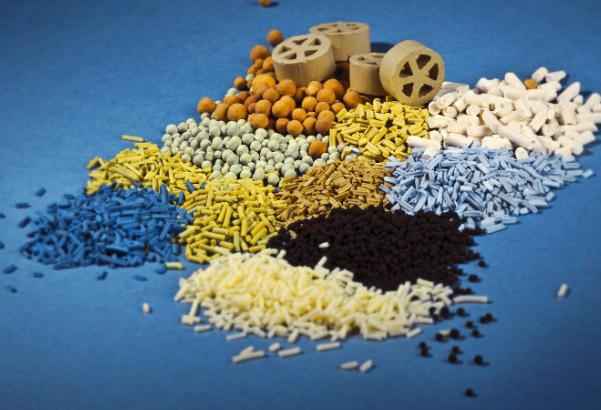
The heart of the hydrocracking and catalytic cracking units of the refinery are the catalysts. They control the efficiency, selectivity and quality of the products and enable the upgrading of heavy feedstocks into valuable fuels and chemicals. For refining, knowing the function and type of catalysts and their selectivity is vital for optimal performance of the refinery.
Types of Catalysts
The cracking of catalysts in the refinery predominantly utilise two groups of catalysts:
- Bifunctional Catalysts: Used for hydrocracking, these are the ones that possess both acidic sites which are used for cracking and metallic sites such as nickel, palladium and molybdenum for hydrogenation. This combination allows simultaneous hydrogenation and cracking improving the quality of the product.
- Acidic Solid Catalysts: These are zeolites which have active sites that allow for the breaking of large hydrocarbon molecules. Catalysts based on zeolites are commonly used for the production of petrol through catalytic cracking.
The Role of Catalysts
Catalysts can speed up the cracking reactions without being consumed, allowing for the possibility of greater conversion rates at lower temperatures. In hydrocracking, they assist in the hydrogenation reactions that stabilise the molecules, helping to reduce coke formation. For optimum performance, regular catalyst regeneration or replacement is crucial for the efficiency of the refinery.
Catalysts’ Selectivity
It is the selectivity of the catalyst that helps determine the distribution of the end products. By altering the catalyst composition and pore sizes, and the amount of metals in the catalyst structure, the refineries can decide if they want to favour the production of diesel, jet fuel, naphtha, or base oil. The right catalyst has to be selected to optimise the operation and maximise the yield for the required products.
In short, the importance of catalysts in refinery cracking is to help determine how refined the products are, how efficiently they were produced, and how high the profit would be. Because of this, the best hydrocracker unit or catalytic cracking unit catalysts are required to optimise the value produced from more complex feedstocks.
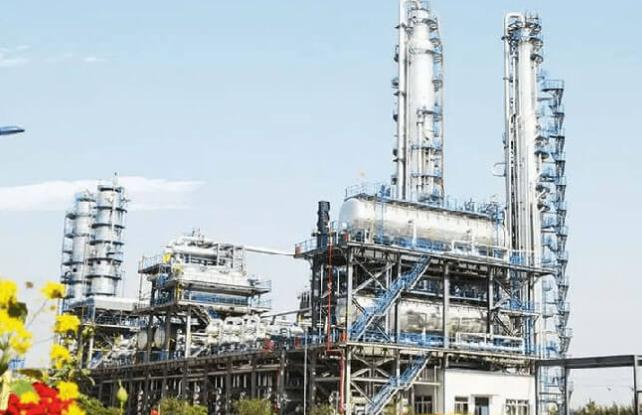
Choosing Reliable Equipment for Petroleum Refinery Cracking Processes
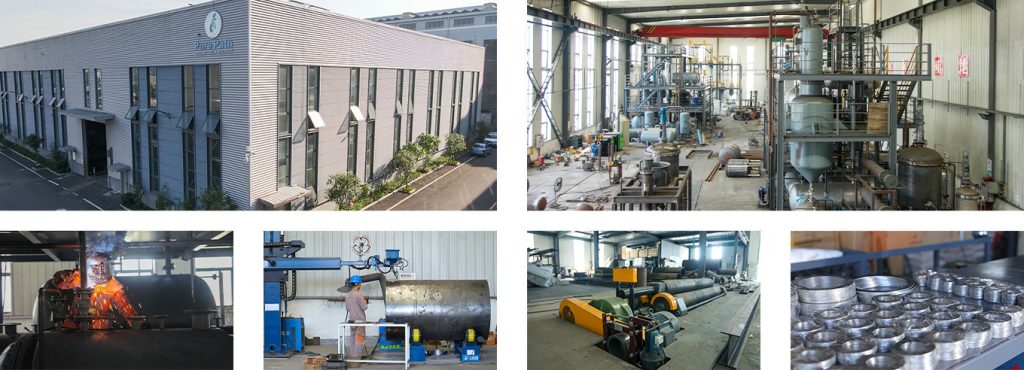
Equipment selection for a catalytic cracking unit represents one of the most important decisions because it directly affects operational continuity, maintenance costs, and overall profitability.
The extreme environment created within an catalytic cracking unit unit—of abrasive catalyst flow, high-temperature thermal cycling, and corrosive atmospheres—requires components engineered for durability, rather than ones that can simply function at installation. When evaluating equipment suppliers, focus on these pillars of reliability:
- Advanced Material Specification: The critical wear parts-feed injection nozzles, riser internals, and cyclone systems-must be made of proprietary alloys, special refractory linings, and erosion-resistant coatings that can withstand decades of the most severe service.
- Precision Performance Engineering: Equipment has to be designed to optimise process outcomes. This means perfect feed atomization for efficient cracking, sharp catalyst-gas separation to minimise losses, and precision control over the catalyst circulation.
- Fabrication Integrity and Quality Assurance: Robustness of the final component depends on strict adherence to ASME codes, advanced welding procedures, and comprehensive NDT protocols during manufacturing.
The true cost of equipment is measured over its entire service life, where reliability prevents costly unscheduled shutdowns. Investing in properly engineered components from a knowledgeable partner is an investment in plant stability and margin protection.
To receive a technical evaluation of your critical catalytic cracking unit components and discuss engineered solutions tailored to your specific feedstock and operating goals, contact our process engineering team today !