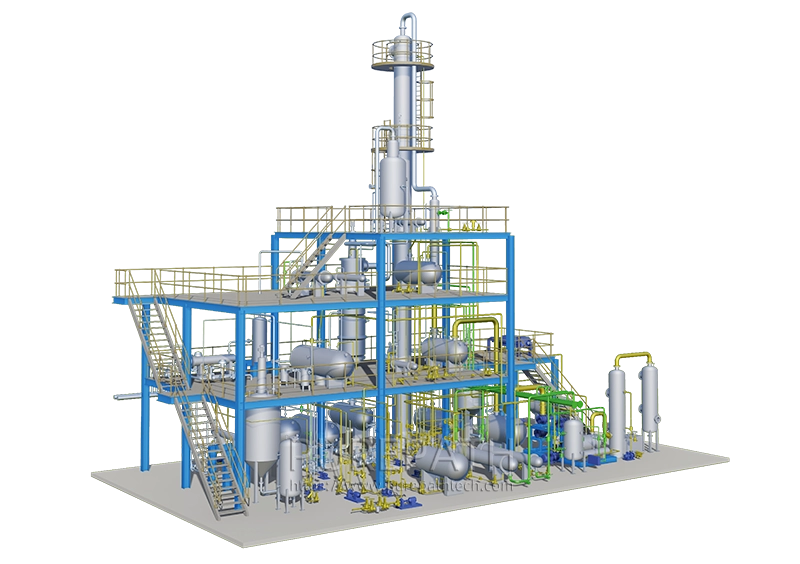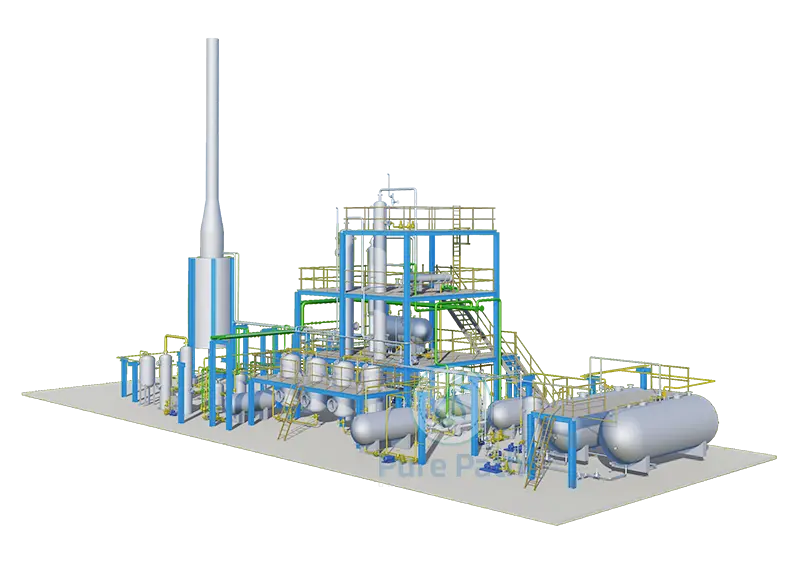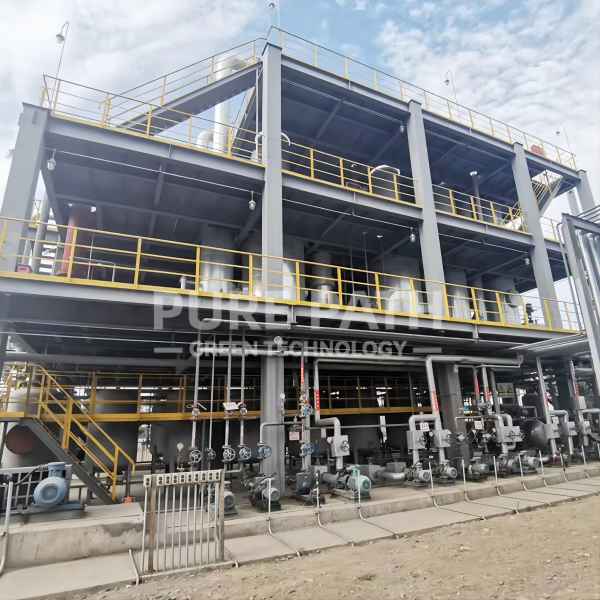

How to Choose Used Oil Refining Machine Capacity for Your Waste Oil Volume?
Written By: Mr.Ran
Senior Petrochemical & Waste Oil Recycling Engineer
Deeply involved in the design, manufacturing, and optimization of various waste oil recycling and petrochemical equipment, delivering practical and efficient solutions for clients worldwide.
Usually, when the topic of how to pick used oil refining equipment comes up, technology or product quality is the first thing suppliers mention.
However, the choice of capacity is the one that determines if the project will be profitable or if it will become a nuisance.
A good machine will not work properly if the capacity is incorrect, no matter how good it is.
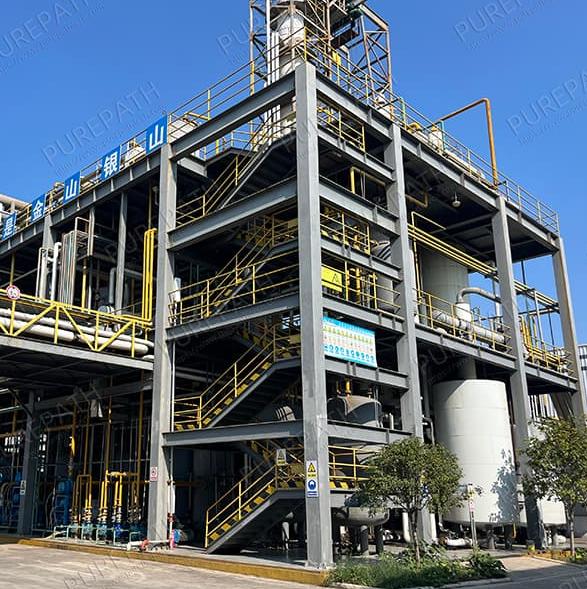
Why Capacity Selection Is Critical?
Capacity is a key factor that determines the daily operations of your machine.
- In the case where the capacity is much larger than what is needed, the machine will operate with underutilized space. You are still incurring costs for power, labor, and maintenance, but the amount of oil processed does not even cover these costs.
- On the other hand, if the capacity is too small, the machine will always be running at its utmost. The operators will be rushing in the feeding, the temperatures will be fluctuating, and the small problems will be turning into shutdowns.
The issue is not with the machine in either situation, but it is the decision of incorrect capacity.
An accurately sized used oil refining machine operates most of the time under a stable load, and without having to push the production. This is what makes it possible to have predictable operating costs and steady profits.
Step 1: Define Your Real Waste Oil Supply
The decision about the capacity for processing waste oil must be grounded on the consistent supply of waste oil you can secure, and not occasional peak volumes. Your reference should be the long-term average supply and not any theoretical or best-case estimates.
Before the equipment size is determined, the following things should be clarified:
- The average daily and monthly volume of waste oil
- The stability of the supply (continuous vs. intermittent)
- Fluctuations due to seasonality or region
- Proportion of supply based on contracts
Capacity choices made relying on best-case scenarios often lead to the situation of equipment being underloaded and, hence, incurring increased operating costs. A dependable refining system ought to be designed considering the minimum stable supply level, allowing for a reasonable buffer to guarantee uninterrupted operation.
Step 2: Understand What “Machine Capacity” Actually Means
A used oil refining machine vendor’s reported “capacity” represents a nominal or rated figure, not a warranty of actual throughput in the real world. Usually, it is computed under strict conditions, using fairly clean waste oil and continuous, uninterrupted operation.
In everyday use, the actual processing capacity is always less than the rated figure. The majority of plants are only able to realize 70–85% of their nameplate capacity because of factors that cannot be controlled, one of which is the following:
- The quality of the waste oil varies
- There is water and sludge present in different percentages
- The feedstock is mixed (light and heavy oils processed together)
- Limits of operation are determined by vacuum stability and environmental control systems
Another typical confusion is to mistake capacity for the size or heating power of the reactor. Actually, the entire process is limited to the speed of the slowest part of the system, which is often vacuum distillation, condensation efficiency or dehydration performance—not by the size of the main reactor.
Thus, the final selection of capacity should always be done on the basis of effective operating capacity and not of catalog values. One practical way to do this is to select a machine with a rated capacity that is 20–30% higher than the target daily throughput, thus allowing the system to operate within a stable and controllable operating range rather than at its maximum limit.
Step 3: Match Capacity with Feedstock Characteristics
The real operating capacity of a used oil refining machine is directly affected by waste oil characteristics. Capacity should always be selected based on actual feedstock difficulty, not nominal oil volume.
Waste oils with higher viscosity, heavier fractions, or higher contamination require lower feeding rates to maintain vacuum stability and separation efficiency. If feedstock quality varies, the system must be operated conservatively, which further reduces effective throughput.
Impact of Feedstock Characteristics on Capacity Selection
| Feedstock Type | Key Characteristics | Capacity Impact |
| Used engine oil | Standard viscosity, mixed additives | Near rated capacity |
| Hydraulic oil | Low viscosity, light fractions | Higher throughput |
| Gear oil | High viscosity, heavy components | Reduced capacity |
| High-water-content oil | Difficult dehydration, unstable vacuum | Significant derating |
| Mixed waste oils | Variable composition | Conservative sizing |
When feedstock is uncertain or mixed, capacity selection should be based on the most difficult oil type, not average conditions.
Step 4: Choose Batch vs Continuous Capacity Logic
Batch and continuous used oil refining machines have different definitions of capacity, and this has implications for the evaluation of throughput.
- In batch systems, capacity is measured in tons per batch, along with the number of batches per day. In fact, the output is limited by the times of heating, reaction, cooling, and cleaning. They work best for small-scale projects with variable feedstock, but daily capacity is less predictable.
- As for continuous systems, they measure capacity as tons processed in 24 hours. They manage to have a stable and higher throughput provided that the supply and quality of feedstock are both consistent. However, they have to operate continuously to reach the rated capacity.
In capacity selection, batch systems opt for flexibility while continuous systems go for stable, long-term efficiency. The selected capacity should not only consider oil volume but also the stability of feedstock and mode of operation.
Step 5: Match Capacity with Investment Stage and Expansion Plan
Capacity selection should be made in such a way that it matches the current investment situation with the future expectations as well. Slight misunderstanding at different project stages regarding the capacity decision could result in reflecting very different monetary outcomes.
In the capacity definition area, during the initial investment stage, the aim is to have a stable operation and a quick recovery of the invested capital. The capacity that is chosen should enable the plant to be productive with the current waste oil supply, instead of waiting for an uncertain volume.
Some of the very important aspects at the early stage are:
- Choose a capacity to operate at 70–90% utilization right away
- Do not size based on future feedstock that has not verified yet
- Give priority to operational stability instead of to maximum throughput
- Make sure that cash flow can support an uninterrupted operation
For those projects that have a clear and realistic expansion plan, capacity should rather be linked with system flexibility instead of oversizing the plant right from the start. Modular or staged expansion enables capacity to increase according to feedstock supply, market demand, and the progress of regulations.
A well-aligned capacity strategy transforms investment into productive output right from the first day, and at the same time, it does not restrict future controlled and low-risk expansion.
Common Capacity Selection Mistakes to Avoid
A great number of waste oil recycling initiatives do not achieve the desired performance, which is not due to the quality of the technical components but due to the fact that the capacity was based on wrong assumptions. The following errors are among the most frequent ones.
- The capacity was determined based on the peak or theoretical waste oil volume rather than on the long-term, sustainable supply.
- Rated capacity was assumed to be the same as the actual operating capacity, ignoring the quality of the feedstock and the limits of the process.
- The content of water, sludge, and impurities, which leads to a direct reduction in effective throughput, was overlooked.
- Overdimensioned equipment was selected to bring down the unit cost, while real utilization is still very low.
- Reactor size or heating power was mistaken for actual system capacity.
- Future expansion was planned without considering modular or staged investment alternatives.
Avoiding these mistakes guarantees that the chosen capacity can be realized in everyday operation and not only in design calculations, thereby resulting in more stable performance and predictable returns.
To Summarize
Considering all the topics discussed previously, capacity selection is a decision that links technical feasibility, operational stability, and investment return. It is not a separate equipment choice, but rather a fundamental part of project planning in the first place.
Should you be planning or assessing a used oil refining project and wish to steer clear of capacity-related risks, a precise capacity evaluation at the start stage is necessary. After disclosing your waste oil type, daily available volume, and perhaps expansion plans, a capacity proposal customized for your particular situation will be ready for you.
Don’t hesitate to reach out to us!