
Comparing Recovered Oil Quality with Virgin Base Oil
Written By: Mr.Ran
Senior Petrochemical & Waste Oil Recycling Engineer
Deeply involved in the design, manufacturing, and optimization of various waste oil recycling and petrochemical equipment, delivering practical and efficient solutions for clients worldwide.
With the aim of minimizing waste and cutting down on operating costs, recovery of waste oil has turned out to be a feasible solution instead of a trial-and-error approach.
Nevertheless, the main query for the majority of industry users is not the issue of reclamation of waste oil, but the issue of the quality of the reclaimed oil in comparison to that of new base oil. Grasping this difference is crucial for the assessment of system design, operational risk, and the genuine worth of a waste oil recovery project.
Why Oil Quality Matters in Waste Oil Recovery Projects
Once the recovery of waste oil is initially deemed feasible, the focus progressively moves to oil quality. The industrial sectors do not regard the recovered oil as an abstract product but rather as a material that needs to be safely and reliably integrated into the existing systems. The quality of the recovered oil directly affects storage, handling, and ultimately the usage of oil in the plant.
The quality of the recovered oil, in practice, has an impact on several critical operational areas:
- Reliability of equipment – The presence of water, solids, or unstable components leads to a reactor, pipeline, and downstream equipment in a state of corrosion, fouling, and wear.
- Stability of the process – Changeable oil characteristics may result in combustion, blending ratios, or thermal performance fluctuations.
- Maintenance needs – Dim quality of the recovered oil is often a cause of higher cleaning frequency, unplanned shutdowns, and increased operating costs.
- Flexibility of usage – The industrial applications for higher-quality recovered oils can be quite vast, thus cutting down the use of virgin base oil.
Because of these various aspects, the oil quality is the main factor for determining the actual worth of waste oil recovery projects. A plant giving stable and reliable oil indicates to the operators the period when the usage can be done confidently. When quality changes often, the recovery rate is not beneficial alone. Thus, for experienced engineers and decision-makers, the quality of recovered oil is the basis on which the technical performance and economic returns are built.
Overview of Virgin Base Oil Quality Standards
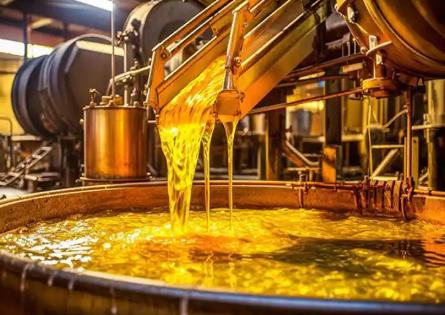
The reference benchmark for assessing the quality of recovered oil is usually virgin base oil. Its characteristics are uniform, foreseeable, and adapted to the needs of industrial performance. The main features can be outlined as follows:
| Quality Parameter | Typical Requirement / Characteristic | Why It Matters |
| Viscosity & Viscosity Index | Consistent across batches; specific to application | Ensures reliable lubrication and flow behavior |
| Water Content | Minimal, usually <0.05% | Prevents corrosion and reduces lubricity issues |
| Impurities (Sulfur, Ash, Metals) | Strictly limited | Protects equipment and downstream process |
| Thermal & Oxidation Stability | High resistance to thermal degradation | Ensures long-term operational reliability |
| Batch-to-Batch Consistency | Uniform quality from batch to batch | Provides predictable performance in all processes |
Note: The aforementioned parameters create the standard for evaluating the oil that has been recovered from waste oil recovery systems. If there is a major difference in the quality of the recovered oil, then it will be unsuitable for industrial use.
How Waste Oil Recovery Processes Affect Recovered Oil Quality
After knowing the consistency of virgin base oil, the next question to ask is how the recovery process affects the quality of the recovered oil.
In plain and simple words, the system and process behind the oil determine its quality. Waste oil is not uniform—some streams are contaminated with water, sludge, additives, or degraded hydrocarbons to a large extent. If these are not treated properly, they will remain in the recovered oil, and its quality will be reduced.
Among the few important factors, here are some that bring significant change:
- Feedstock pretreatment: Getting rid of free water and solids from the beginning of the process helps to avoid problems later on.
- Separation efficiency: Separating brilliantly, no matter whether it is done through heating, settling, or distillation, is of utmost importance.
- Temperature and pressure control: Heating too much or variable pressure can cause hydrocarbon breakdown, resulting in unstable oil that is being recovered.
- Residence time: With the oil under heat or vacuum for a long time, the quality can deteriorate; too short, and impurities are left behind.
To sum up, a proper laboratory-created waste oil recovering system not only takes oil but controls the process so that the recovered oil is stable, pure, and close to virgin base oil in quality. Bad process control, conversely, may change what ought to be a resource of value back into a waste problem.
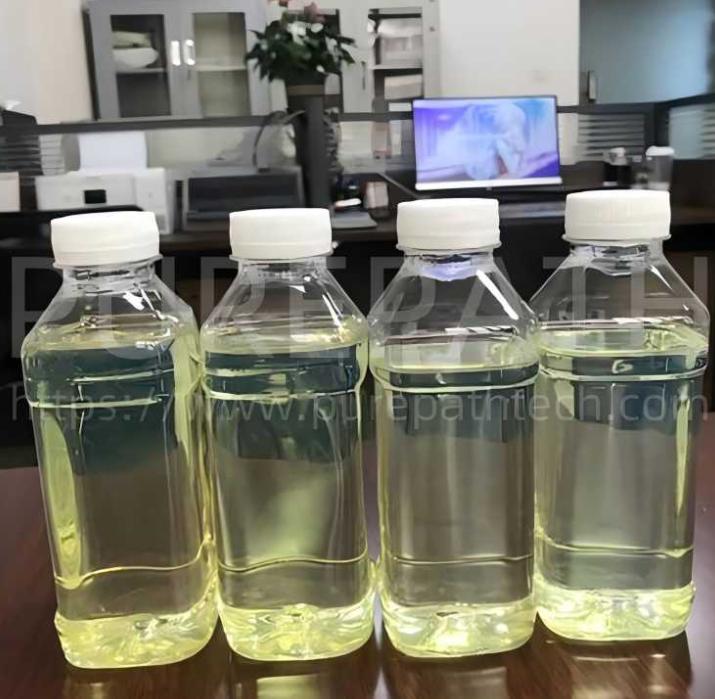
Key Quality Parameters When Comparing Recovered Oil and Virgin Base Oil
When evaluating waste oil recovery results, comparing recovered oil quality with virgin base oil requires measurable parameters. The table below highlights the key factors industrial users typically assess:
| Quality Parameter | Virgin Base Oil | Recovered Oil from Waste Oil Recovery | Notes |
| Viscosity & Viscosity Index | Consistent and stable | Approaches virgin levels if process is controlled | Feedstock variability may affect stability; precise distillation helps |
| Water Content | Minimal (typically <0.01%) | Reduced to industrially acceptable levels after dehydration | Residual water can affect lubricity and cause corrosion |
| Sulfur & Impurities | Low, standardized | Significantly reduced, but trace amounts may remain | High-quality recovery systems can remove most contaminants |
| Ash & Solids | Near zero | Dependent on separation efficiency | Effective filtration and phase separation are critical |
| Thermal & Oxidation Stability | High, predictable | Comparable if thermal degradation is minimized | Overheating during recovery lowers stability |
| Color & Odor | Clear, neutral | Slight variation possible | Not typically critical for industrial fuel or blending applications |
The above table illustrates that using waste oil recovery systems which are properly designed and operated, the quality of the recovered oil can get to the quality parameters of the virgin base oil for a number of industrial applications. The differences are mainly due to variations in feedstock and control of the process, thus stressing the significance of the sophisticated waste oil recovery machine.
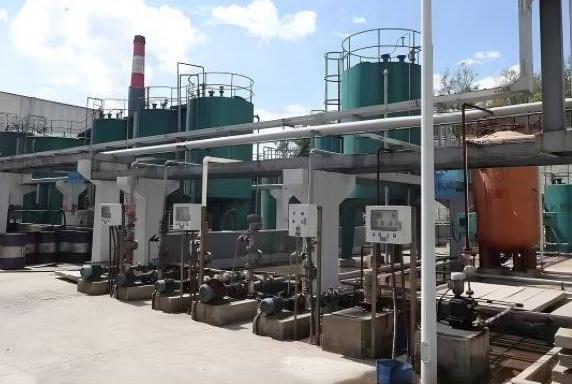
Performance Comparison Between Recovered Oil and Virgin Base Oil
In actual industrial applications, it isn’t necessary for the reclaimed oil to exactly mimic the virgin base oil to be of value. The appropriateness of the performance is determined by the use intended for it.
In the cases of industrial fuels, process oils, or blending components, high-quality reclaimed oil often has similar performance to that of virgin base oil. In lubrication systems with less strict specifications, with proper quality control, reclaimed oil can meet operational requirements.
Virgin base oil is still required in high-precision or critical applications where the specification tolerance is tight. Nevertheless, many plants realize that reclaimed oil can take over a part of the virgin base oil consumption without allowing any decline in system performance, particularly when the quality of waste oil recovery output is stable.
How Advanced Waste Oil Recovery Systems Improve Recovered Oil Quality
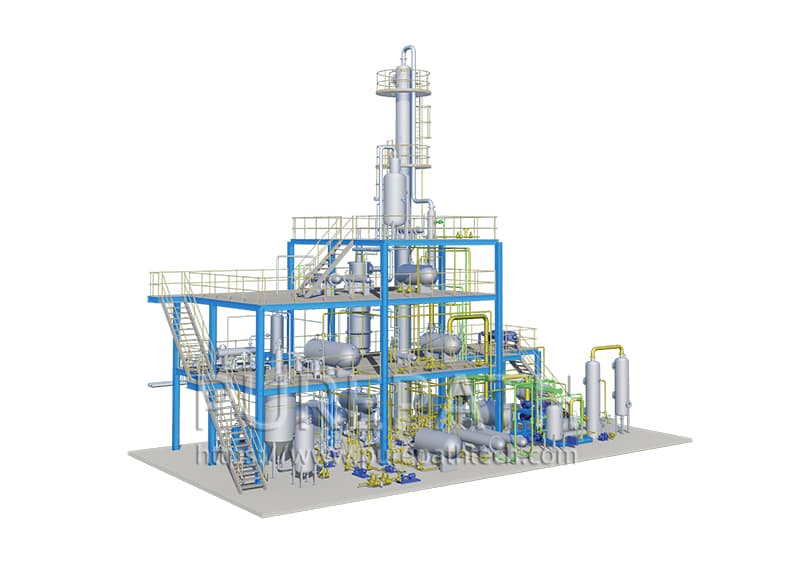
In the aforementioned advanced waste oil recovery systems, maximum throughput is not the priority but rather the stability of the process and the precision of the separation. A technology that is one of such and mentioned here is vacuum distillation, which allows recovery at a lower temperature, which means that thermal degradation will be less and oil stability will be better.
The system properties that guarantee high-quality oil include:
- Temperature and pressure control with high precision
- Separation and fractionation are done with high efficiency
- Operation in a continuous mode to minimize quality fluctuations
- Monitoring is done by automated means to ensure stable output
When these elements are correctly integrated, an anticipated quality of the recovered oil that is suitable for certain industrial applications is reached. In these scenarios, waste oil recovery turns from a waste management function into a regulated resource recovery process.
To put it simply, the oil regeneration process is not to be seen as a direct for virgin base oil in every situation. Its worth will rather depend on the compatibility of the recovered oil quality with the particular industrial standards. With a suitable waste oil recovery system design and operation, recovered oil is capable of offering dependable performance, cutting down on raw material expenses, and contributing to better overall resource use.
Should you require a dependable waste oil recovery system for your enterprise, do not hesitate to contact us! Purepath is offering professional advice and tailored solutions.