
Industrial Waste Oil vs. Automotive Crankcase Oil: Tailoring the Refining Process
Written By: Mr.Ran
Senior Petrochemical & Waste Oil Recycling Engineer
Deeply involved in the design, manufacturing, and optimization of various waste oil recycling and petrochemical equipment, delivering practical and efficient solutions for clients worldwide.
Why One Re-Refining Process Can’t Handle All Waste Oils
In the waste oil refining industry, using a single standardized design is a typical engineering error. Within the industry, it is commonly believed that “all waste oils are the same”, but the raw materials of waste oil produced by auto repair shops and heavy industrial facilities have fundamental differences in chemical properties.
Treating waste crankcase oil (or vice versa) with an industrial lubricating oil system will directly lead to operational bottlenecks such as coking of heating tubes, equipment corrosion, oil overflow in distillation towers, and substandard base oil indicators. To stabilize the production of high-quality API Class I or II base oil, customized distillation and refining processes must be developed based on the specific characteristics of the raw materials.
Feedstock Comparison: Used Engine Oil vs. Industrial Waste Oil
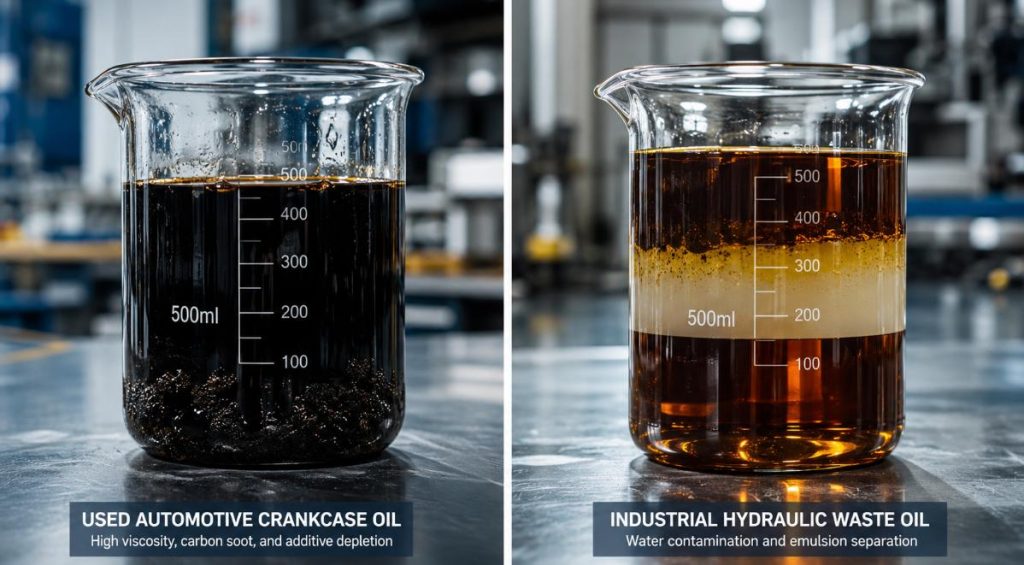
To design an efficient re-refining plant, engineers must first evaluate the physical and chemical profiles of the incoming waste stream.
| Parameter / Feature | Used Automotive Crankcase Oil (UFO) | Industrial Waste Lubricants |
| Primary Sources | Passenger cars, commercial trucks, diesel fleets | Hydraulic systems, gearboxes, turbines, metalworking |
| Additives & Contaminants | Detergents, dispersants, ZDDP, soot, heavy metals | EP additives (sulfur/chlorine/phosphorus), emulsifiers |
| Viscosity Profile | Narrow, predictable range (e.g., 10W-30 to 15W-40) | Extremely broad (ISO VG 32 to ISO VG 460+) |
| Water Content | Low to moderate (1%–3% fuel/condensation water) | Highly variable (5%–30%+ free and emulsified water) |
Additive Packages & Chemical Contaminants
- Used automotive crankcase oil: Contains high concentrations of engine-specific additives, including metal cleaners (sulfuric calcium, sulfuric magnesium), dispersants, ash particles, unburned fuel residues, and anti-wear agent ZDDP (di-alkyl dithiophosphate zinc). The operation of the engine causes these compounds to break down into fine carbonaceous oil sludge and suspended heavy metal particles (lead, copper, zinc, iron).
- Industrial waste oil: Such as waste hydraulic oil, turbine oil, gear oil and metal processing fluid, their chemical compositions are quite different. It does not contain engine cleaners, but contains extreme pressure (EP) additives rich in active sulfur, phosphorus or chlorine compounds, as well as thickeners and rust inhibitors. Although there is no heavy soot, its chemical additives are prone to thermal decomposition during processing.
Viscosity Variations & Moisture Content
- Viscosity characteristics: Automotive lubricants follow standardized multi-grade viscosity grades, while the viscosity of used crankcase oil remains relatively stable; industrial lubricants have a wide viscosity range (from light ISO VG 32 hydraulic oil to heavy ISO VG 460 gear oil). When dealing with mixed industrial oils, one needs to cope with significant viscosity fluctuations while maintaining stable system vacuum and yield.
- Water content dynamics: The water content in automotive waste oil is typically 1% to 3% (derived from combustion by-products and atmospheric condensation); the water content in industrial waste oil (especially in metal processing or cleaning waste oil) often reaches 5% to 30% or even higher, and is mostly a dense chemical emulsion that cannot be separated through simple gravity sedimentation.
Tailoring Distillation & Refining: Coking vs. Acid Corrosion
Due to the different failure modes of automotive oil and industrial oil, differentiated designs are required in the core heat separation stage.
Handling Automotive Crankcase Oil: WFE to Prevent Wall Coking
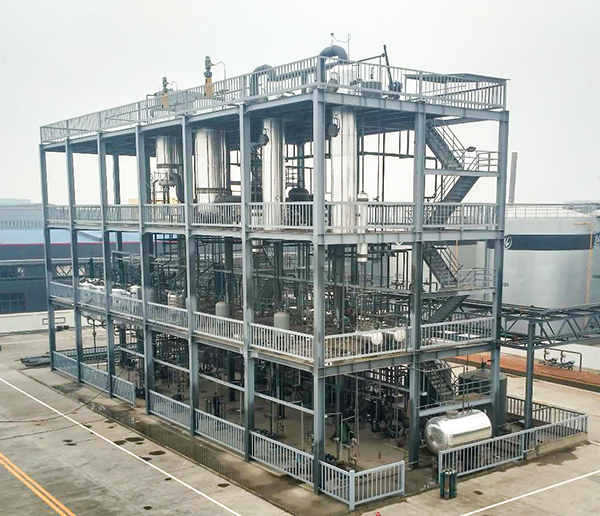
When traditional tubular heaters or batch evaporators are used to treat waste automotive oil, when the temperature exceeds 280°C, it will cause the suspension of ash, degradation products and metal salts to undergo cracking and polymerization, forming a carbonaceous char insulation layer on the heating surface, which significantly reduces the heat transfer efficiency and blocks the flow channels.
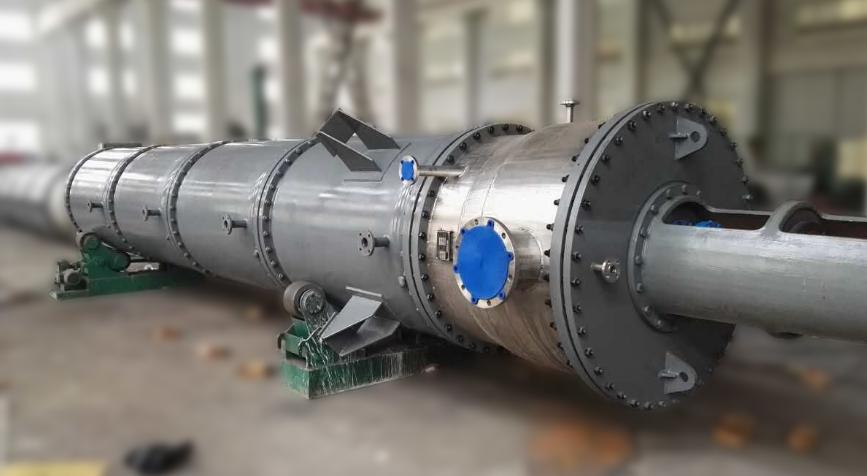
The waste crankcase oil should be treated using a scraped-film evaporator (WFE) or a thin-film evaporator (TFE). The WFE utilizes rotating mechanical blades to spread the oil onto the heated inner wall in the form of an ultra-thin turbulent film, achieving efficient heat transfer within a short period of several seconds. Ash, heavy polymers and soot are continuously scraped off and discharged as a liquid asphalt modifier, fundamentally preventing coking on the heating surface.
Processing Industrial Oil: Fractional Columns & Acid-Resistant Alloys
When dealing with industrial waste oil, the main risk lies in the acidic corrosion caused by thermal cracking. The extreme pressure (EP) additives containing chlorinated paraffins or active sulfur undergo thermal decomposition at temperatures above 230°C, releasing volatile hydrogen chloride (HCl) and hydrogen sulfide (H2S) gases. The acidic vapor, combined with trace moisture at the top of the tower, will cause severe pitting and stress corrosion cracking in carbon steel equipment.
The device specially designed for industrial waste oil must have the following key configurations:
- Metallurgical anti-corrosion upgrade: The top of the evaporator tower, steam pipelines, internals of the fractionating tower, and the top condenser must be made of 316L stainless steel, duplex stainless steel, or titanium-coated composite materials.
- High-precision distillation: A multi-stage high-vacuum distillation tower with structured packing is configured. Through precise boiling point cutting, different viscosity grades of base oils such as SN150, SN300, and SN500 can be separated and processed in a single operation.
Pre-Treatment & Demulsification for High-Water Industrial Waste
Industrial waste oil with a moisture content of 10% to 30% will cause instantaneous flash boiling and surging when introduced directly into a high-vacuum distillation system. This will result in severe pressure fluctuations, foam entrainment and flooding of the distillation tower. Special pre-treatment modules must be configured for handling high-moisture-content raw materials:
- Chemical demulsification: Add an efficient demulsifier at a temperature range of 60°C to 80°C to break the emulsified state of oil and water.
- Mechanical separation: The free water content is reduced to below 3% through a centrifugal separator or a coalescence separator.
- Multi-stage flash distillation: Residual moisture and light industrial solvents are removed under low vacuum conditions. The dried oil is then sent to the main high-vacuum distillation section.
Customizing Your Waste Oil Recycling Plant Strategy
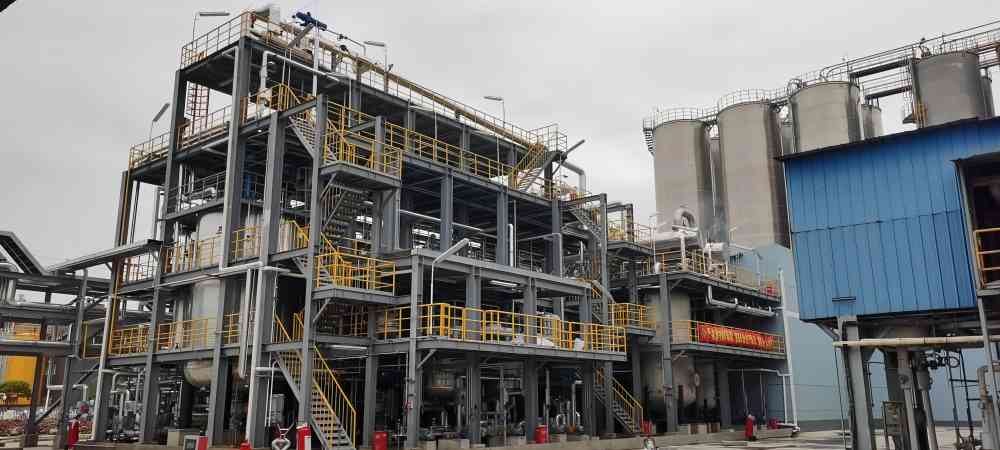
There is no universal template for reprocessing waste oil. To build a highly profitable and low-maintenance waste oil recycling plant, the key lies in the precise matching of the engineering framework with the characteristics of the regional raw materials.
Before the equipment is manufactured and designed, a comprehensive analysis of the raw material characteristics must be conducted and targeted designs must be adopted:
- The main component of the vehicle crankcase waste oil is: The key configuration includes a scraped film evaporator (WFE) first-level process and a continuous emission system for asphalt residues, which completely eliminates the risk of coking caused by heavy metals and soot.
- Mainly industrial waste oil: Prioritize the configuration of multi-stage chemical demulsification pre-treatment, and upgrade the high-temperature steam contact zone to 316L stainless steel or titanium-coated alloy to resist acid corrosion caused by extreme pressure (EP) additives.
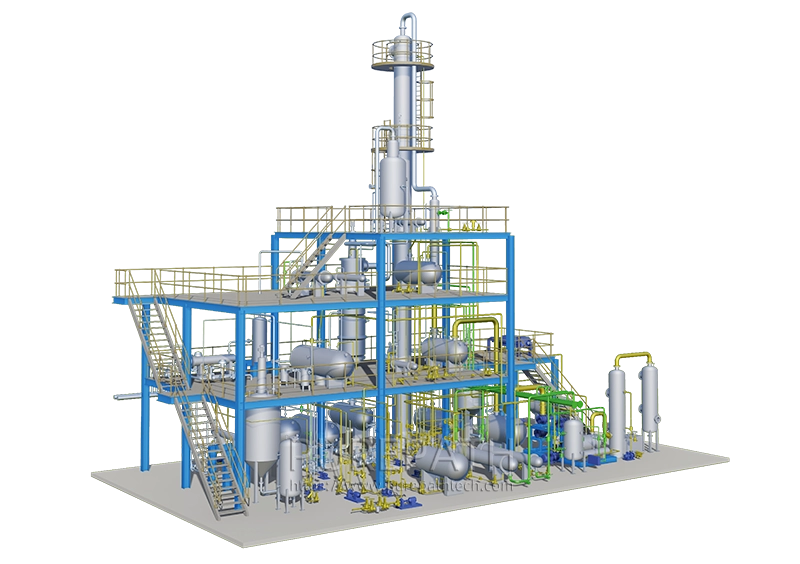
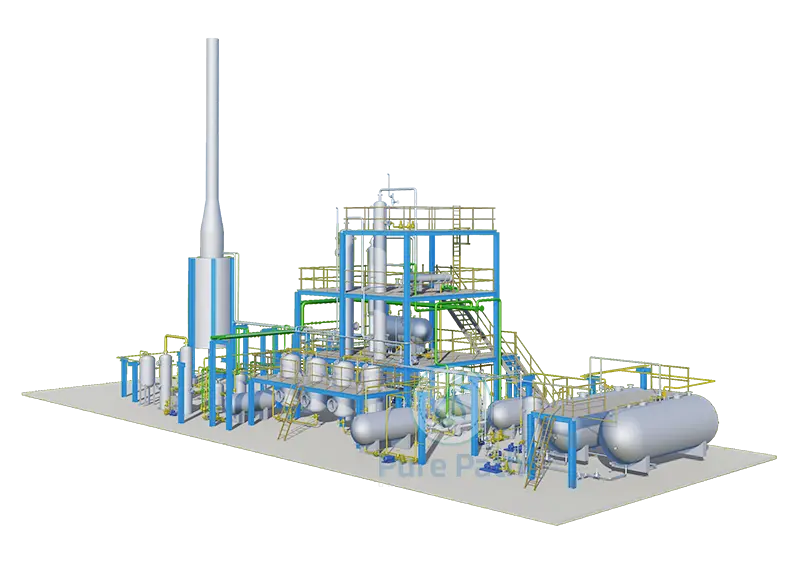
- Mixed raw material processing: A modular mixing configuration is adopted (two-stage pretreatment skid + first-stage WFE + side-stream extracted high vacuum distillation tower), which enhances operational flexibility, addresses component fluctuations, and eliminates the risk of unqualified shutdowns.
Selecting a professional EPC contractor with a deep understanding of the chemical differences between automotive and industrial waste oils is crucial for ensuring the yield of base oil and the long-term profitability of the project.
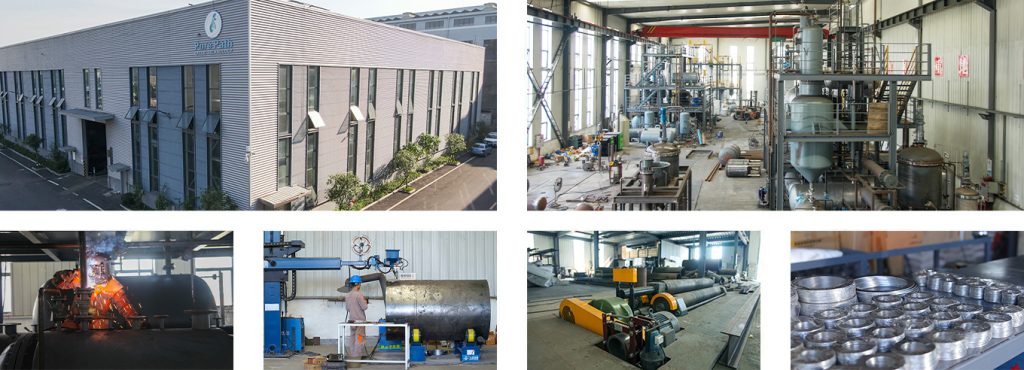
Are you planning to carry out the project of re-refining waste oil? Please contact our engineering team immediately to arrange for raw material analysis. We will customize the factory plan for you based on the local oil supply situation in your area.