
Why Oil Carryover Occurs in Vacuum Distillation Equipment
Written By: Mr.Ran
Senior Petrochemical & Waste Oil Recycling Engineer
Deeply involved in the design, manufacturing, and optimization of various waste oil recycling and petrochemical equipment, delivering practical and efficient solutions for clients worldwide.
Oil carryover is an operational issue in the vacuum distillation of waste oil re-refining. It is characterised by the exit of liquid oil droplets or foam along with the rising vapour from the distillation column to downstream equipment. It can lead to greasy deposits in vapour lines, increased loading on condensers, and contamination of collected fractions, causing unstable operation.
However, oil carryover is not normal vapour condensation. More often, it indicates that the vapor-liquid separation system is not operating properly. Knowing the causes is a first step to minimising product losses and protecting downstream equipment. This guide explains why oil carryover happens, how to recognise it, and what operators can do to prevent it.
What Is Oil Carryover in Vacuum Distillation?
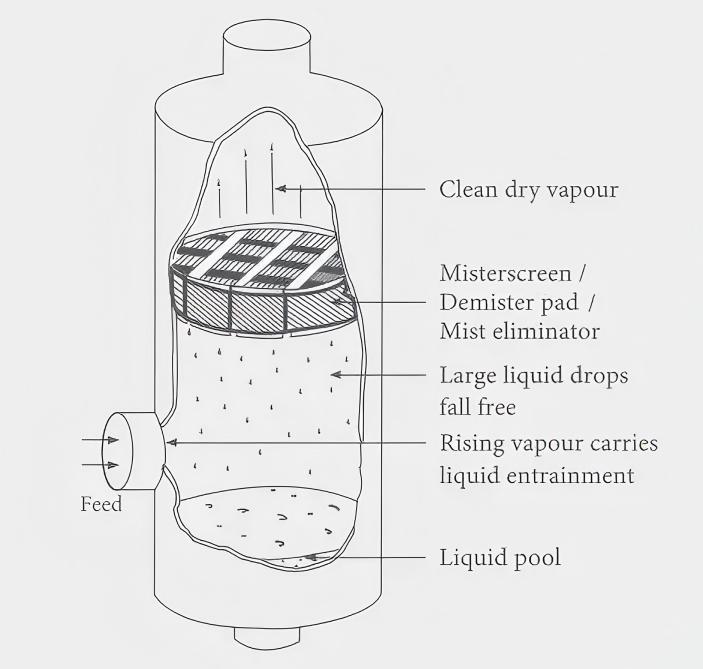
In vacuum distillation, heated oil generates vapor under reduced pressure. The vapor rises through the separation vessel and moves toward the condenser, where it is cooled and collected as liquid. Oil carryover occurs when liquid droplets or entrained oil mist travel with the vapor instead of remaining in the liquid phase.
These droplets can also contain heavier oil components, suspended solids, and other contaminants. As they enter the vapour outlet, they can deposit in downstream piping and equipment.
It is important to differentiate between two conditions:
- Normal vapour condensation: Oil vapour is condensed into liquid by cooling in the condenser.
- Liquid entrainment: When liquid oil droplets are physically dragged out of the vessel before being properly separated.
Some condensation of vapour is to be expected. But large liquid entrainment means a problem with vapour velocity, liquid level, or any other problem in the separation space or settlement of internals.
Six Common Causes of Oil Carryover in Vacuum Distillation
1. Excessive Vapor Velocity
High vapor velocity is one of the most common causes of oil carryover. When vapor moves too quickly through the separation vessel, liquid droplets may not have enough time to fall back into the liquid phase. Instead, they are pulled toward the vapor outlet.
This can happen when:
- The feed rate exceeds the equipment’s design capacity.
- The heating rate is too high.
- Vapor generation increases suddenly.
- The separator is undersized for the actual operating load.
How to reduce the risk:
Look at the relationship of feed rate, heating duty, vapour production, and vessel capacity. Make sure the operating conditions are such that the vapour velocity is within the design limits of the equipment. Increase in production without regard for vapour handling capacity will aggravate carryover.
2. Insufficient Vapor-Liquid Separation Space
Having this space is helpful for good separation of vapour from liquid. If the space is small, droplets dispersed in the vapour stream are carried over to the outlet. The droplets have no time to settle before exiting the vessel.
This problem may occur when:
- The vessel has insufficient disengagement height.
- The operating liquid level is too high.
- The vapor outlet is positioned too close to the liquid surface.
- Internal equipment reduces the available separation space.
How to reduce the risk:
Review the vessel’s internal layout and available disengagement space. Check whether the normal operating liquid level leaves enough room for vapor-liquid separation. For existing equipment, lowering the operating liquid level may help, provided it remains within the equipment’s safe operating range.
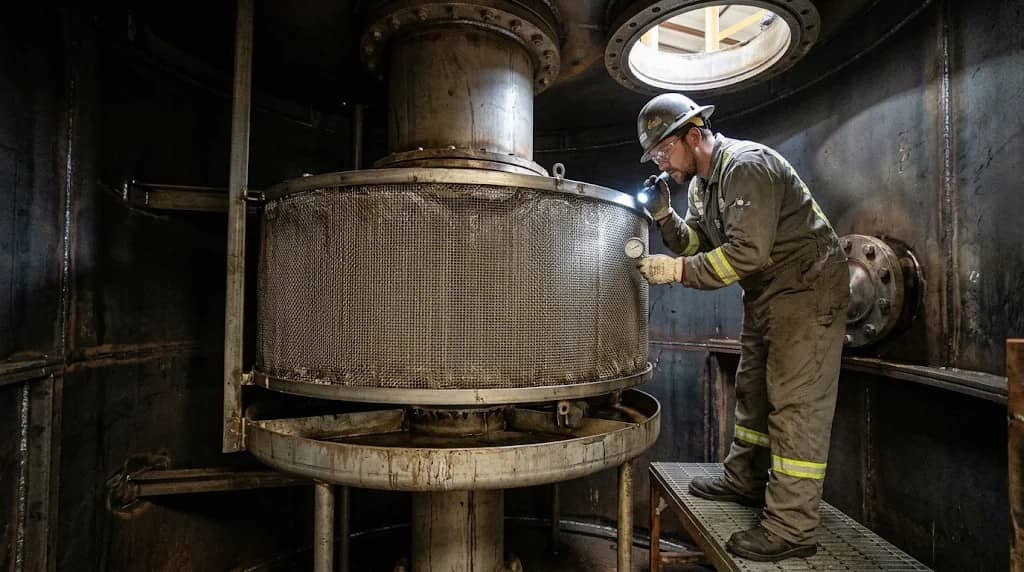
3. Damaged or Improperly Installed Demister
A demister removes entrained liquid droplets from vapor before the vapor leaves the separation vessel. Common types include wire mesh mist eliminators and vane-type mist eliminators.
When vapor passes through a demister, small droplets collide with the internal surfaces, combine into larger droplets, and drain back into the vessel. However, a demister cannot work effectively if it is damaged, incorrectly installed, or unsuitable for the operating conditions.
Typical problems include:
- Damaged or deformed mesh.
- Incorrect installation or poor sealing around the demister.
- Blockage caused by sludge or deposits.
- Inadequate drainage of collected liquid.
- Incorrect demister selection for the actual vapor and liquid load.
How to reduce the risk:
Inspect the demister regularly. Check for deformation, fouling, gaps around the edges, and blocked drainage paths. If the existing demister cannot handle the actual operating conditions, consider selecting a more suitable design rather than simply increasing its thickness.
4. Excessive Liquid Level or Unstable Feed Rate
An excessively high liquid level reduces the available separation space inside the vessel. At the same time, unstable feed can cause sudden changes in liquid level and vapor generation. These changes may create turbulence, splashing, and additional droplet formation.
Common operating causes include:
- Incorrect level control settings.
- Malfunctioning level instruments.
- Sudden feed rate changes.
- Poor coordination between feed and heating systems.
- Excessive liquid accumulation inside the vessel.
How to reduce the risk:
Maintain a stable liquid level within the equipment’s specified operating range. Check level transmitters, control valves, and feed pumps. Feed rate and heating duty should also be adjusted together. A sudden increase in feed or heat input can disturb the separation process.
5. Foaming and Liquid Splashing
Foaming can increase the amount of liquid carried into the vapor space. Waste oil may contain water, detergents, oxidation products, fine solids, and other contaminants. Depending on the feedstock composition and operating conditions, these substances may contribute to foaming.
Excessive heating, unstable pressure, or turbulent liquid movement can make the problem worse. When foam reaches the vapor outlet or demister, it may cause significant liquid entrainment.
How to reduce the risk:
Review feedstock preparation, heating conditions, and liquid-level stability. Check whether foaming is associated with a particular batch of feedstock or a change in operating conditions. If foaming is suspected, investigate the cause before applying antifoam chemicals. Any chemical treatment should be evaluated for compatibility with the process and final product requirements.
6. Poor Separator Design or Incorrect Equipment Sizing
Sometimes, oil carryover is not caused by a single operating problem. The separator itself may be unsuitable for the actual process conditions. For example, a vessel designed for a lower vapor load may struggle after production capacity is increased.
Other design limitations may include:
- Insufficient vessel diameter.
- Inadequate vapor disengagement height.
- Poor vapor inlet or outlet positioning.
- Unsuitable demister configuration.
- Inadequate liquid drainage arrangements.
How to reduce the risk:
Review the separator against the actual operating conditions, including vapor flow, liquid load, operating pressure, temperature, and feed characteristics. If the equipment consistently experiences carryover despite stable operation and proper maintenance, a design review may be necessary.
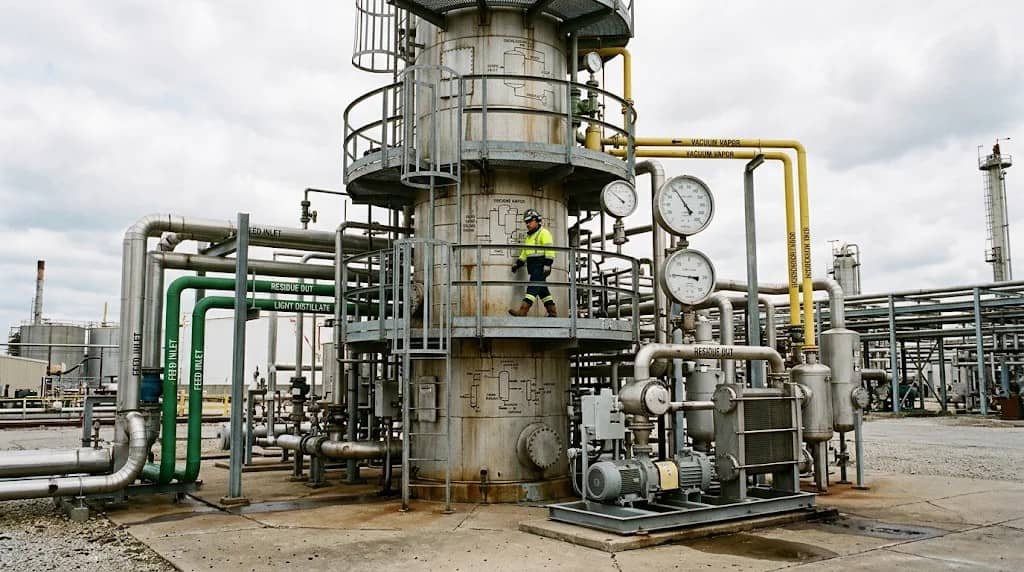
How to Identify Oil Carryover in a Vacuum Distillation System
Oil carryover is not always easy to identify from one operating symptom. Operators should compare several observations across the vapor line, condenser, and downstream equipment.
| Observed symptom | Possible indication |
| Oily deposits in vapor lines | Liquid droplets may be entering the vapor outlet |
| Unusual liquid accumulation before the condenser | Possible entrainment or poor drainage |
| Unexpected contamination in collected fractions | Possible carryover of heavier liquid components |
| Frequent demister fouling | Possible excessive liquid or solids loading |
| Unstable downstream separation | Possible changes in vapor or liquid loading |
Important: Liquid collected in a condenser does not automatically indicate oil carryover. Normal oil vapor also condenses during cooling. Operators should examine the material’s characteristics, process conditions, and equipment inspection results before identifying the root cause.
A practical troubleshooting process should include:
- Check the vessel’s operating liquid level.
- Review feed rate and heating conditions.
- Inspect vapor lines for unusual liquid accumulation.
- Examine the demister for fouling or damage.
- Compare downstream product samples with normal operating results.
- Review recent changes in feedstock or production conditions.
This approach helps distinguish liquid entrainment from normal condensation and other process problems.
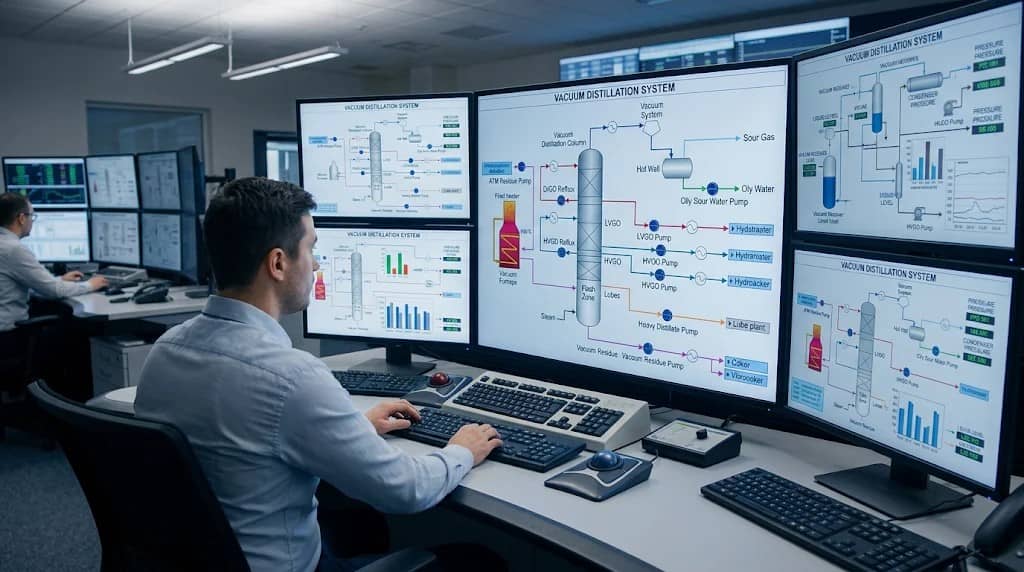
How to Prevent Oil Carryover
Preventing oil carryover requires coordination between process control, equipment design, and routine maintenance.
1. Control Vapor Velocity
Avoid operating the system beyond its intended vapor handling capacity. Check whether increased feed rate or heating duty is generating more vapor than the separator can handle.
If production capacity needs to increase, review the vessel and internal separation components first.
2. Maintain a Stable Liquid Level
Keep the liquid level within the manufacturer’s recommended operating range.
Regularly inspect level instruments, control valves, and related equipment. A stable liquid level helps maintain sufficient vapor disengagement space.
3. Select the Right Demister
The demister should match the actual operating conditions. Wire mesh demisters are commonly used for collecting fine liquid droplets, while vane-type designs may be suitable for certain higher-load or fouling-prone applications.
The selection should consider:
- Vapor flow rate.
- Droplet size distribution.
- Liquid loading.
- Operating temperature and pressure.
- Fouling characteristics.
- Drainage requirements.
There is no single demister design that works for every waste oil distillation system.
4. Stabilize Feed and Heating Conditions
Sudden changes in feed rate or heating duty can disturb vapor-liquid separation. Operators should coordinate feed and heating adjustments instead of increasing them independently.
Stable operation also makes it easier to identify whether carryover is caused by equipment limitations or process disturbances.
- Inspect Internal Components Regularly
Inspection should cover the demister, support structure, vapor outlet, liquid drainage paths, and other internal components.
Look for:
- Mesh deformation or displacement.
- Sludge and carbon deposits.
- Blocked drainage paths.
- Damaged supports.
- Corrosion or mechanical deterioration.
Maintenance intervals should reflect actual operating conditions and the characteristics of the feedstock.
Key Design Factors for a Vacuum Distillation Separator
When designing or upgrading a separator, several factors should be evaluated together.
| Design factor | Why it matters |
| Vessel diameter | Influences vapor velocity and available separation area |
| Disengagement height | Provides space for droplets to separate from rising vapor |
| Demister configuration | Helps capture entrained droplets before vapor discharge |
| Vapor outlet position | Reduces the risk of direct liquid entry into the vapor line |
| Liquid-level control | Maintains sufficient separation space |
| Drainage arrangement | Allows collected liquid to return to the vessel |
The sizing of the separator should be based on process data, not the volume of the vessel. Some background on general gas-liquid separator engineering is available in API RP 12J, Process Design of Oil and Gas Separators and Scrubbers. Its applicability should be carefully reviewed prior to application of its recommendations to a specific service involving vacuum distillation.
For pressure-containing equipment, the design and construction requirements also should be considered. For example, pressure vessels should be designed, constructed, inspected, and certified in accordance with the ASME Boiler and Pressure Vessel Code.
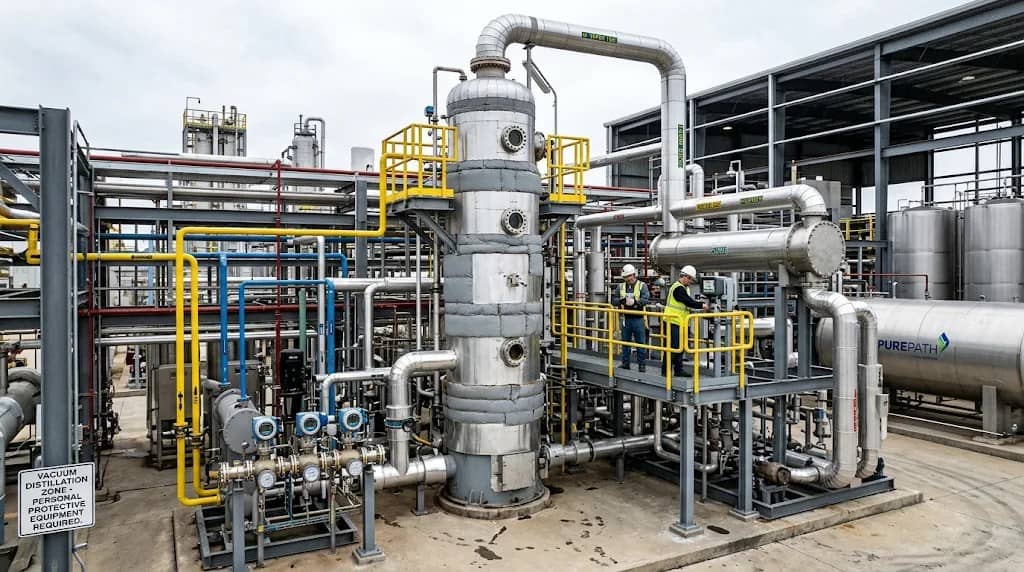
When Should You Upgrade the Vacuum Distillation System?
Not every carryover problem requires equipment replacement. In many cases, correcting the operating conditions or repairing the demister is sufficient.
However, an engineering review or system upgrade may be necessary when:
- Carryover continues after operating adjustments and maintenance.
- The separator frequently operates near or beyond its design capacity.
- Production increases have exceeded the original equipment design.
- The existing demister cannot handle the actual vapor and liquid load.
- Downstream equipment requires frequent cleaning because of liquid contamination.
- The vessel lacks sufficient space for effective vapor-liquid separation.
For projects involving used lubricating oil re-refining, the configuration of the distillation unit and downstream equipment should be evaluated as one integrated process.
PurePath’s Waste Oil to Base Oil Plant combines vacuum distillation with other refining stages. The appropriate configuration depends on feedstock characteristics, target products, and required processing capacity. For a broader overview of waste oil processing options, see the Waste Oil Recycling Plant solutions.
The selection of vacuum distillation and downstream refining technologies also affects the overall plant configuration. This related guide explains the differences between the two key refining stages: Waste Oil to Base Oil Plant: Distillation vs Extraction for Group I Production.
Frequently Asked Questions
Q1: What is the main cause of oil carryover in vacuum distillation?
Excessive vapor velocity, insufficient separation space, and demister problems are common causes. High liquid levels and unstable feed conditions can also contribute.
Q2: Can a damaged demister cause oil carryover?
Yes. A damaged, blocked, or incorrectly installed demister may allow liquid droplets to pass into the vapor outlet.
Q3: Does oil carryover always mean the vacuum pump is malfunctioning?
No. Oil carryover is primarily a vapor-liquid separation problem. However, pressure instability may affect vapor generation and operating conditions, so the vacuum system should also be checked when relevant.
Q4: How can operators distinguish oil carryover from normal condensation?
Normal condensation occurs when oil vapor cools and changes back into liquid. Oil carryover involves liquid droplets being physically transported out of the vessel. Inspection of vapor lines, demisters, and collected materials can help identify the difference.
Q5: Can increasing the demister size solve oil carryover?
Not necessarily. The demister must match the actual vapor velocity, liquid load, droplet characteristics, and drainage conditions. Increasing its size without checking the overall separator design may not solve the problem.