

Solvent Extraction vs. Hydrotreating for Re-Refined Base Oil
Written By: Mr.Ran
Senior Petrochemical & Waste Oil Recycling Engineer
Deeply involved in the design, manufacturing, and optimization of various waste oil recycling and petrochemical equipment, delivering practical and efficient solutions for clients worldwide.
Selection of the appropriate refining technique is very critical for any used oil re-refining plant. It has a great influence on the quality of the product, operational cost, equipment needed and profitability.
Two possible technologies are solvent extraction and hydrotreating. They both offer potential for improving the quality of re-refined base oil, although by different mechanisms. Solvent extraction takes advantage of differences in solubility of various components. Hydrotreating employs hydrogen and catalysts to alter the chemical structure of some of the impurities.
So what is the better process for your plant? The answer is dependent on your feedstock, the specs of your target product, available utilities and budget.
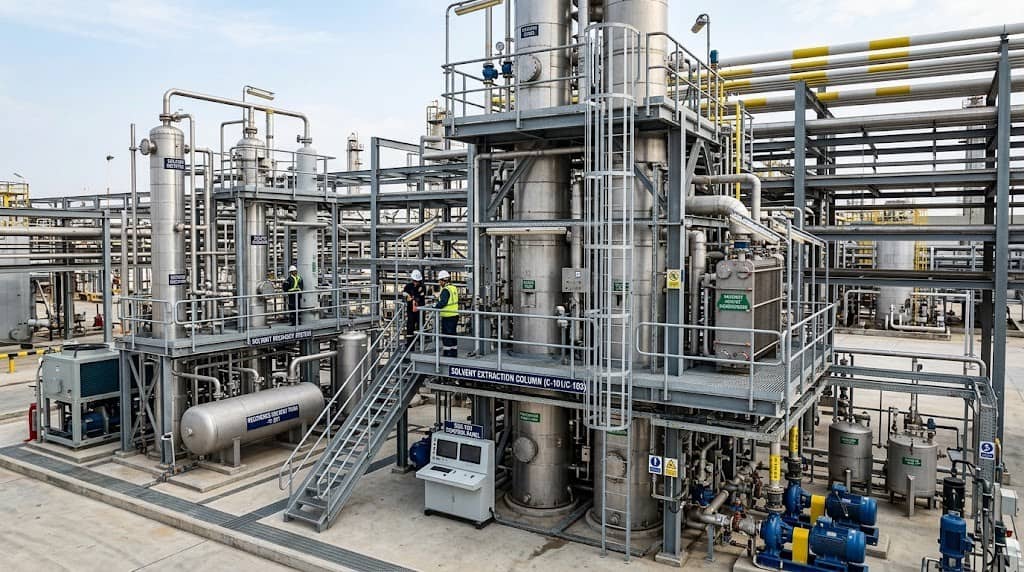
Solvent Extraction vs. Hydrotreating: Key Differences
The main difference is how each technology removes or treats undesirable compounds.
- Solvent extraction uses a selected solvent to separate certain aromatic, polar, and other unwanted components from the oil. Its performance depends on solvent selectivity, operating conditions, and the composition of the feedstock.
- Hydrotreating uses hydrogen and a catalyst under controlled temperature and pressure. Depending on the process design, it can reduce sulfur- and nitrogen-containing compounds and improve other base oil properties.
Here is a quick comparison.
| Comparison factor | Solvent Extraction | Hydrotreating |
| Main principle | Selective separation | Catalytic chemical reactions |
| Key materials | Extraction solvent | Hydrogen and catalyst |
| Main equipment | Extraction and solvent recovery systems | High-pressure reactor and hydrogen system |
| Key operating factors | Solvent selectivity, temperature, solvent-to-oil ratio | Temperature, hydrogen partial pressure, space velocity |
| Main cost drivers | Solvent losses, recovery, utilities | Hydrogen, catalyst, compression, utilities |
| Main engineering concerns | Solvent handling and waste management | High-pressure safety and catalyst management |
Both technologies are not suitable for all applications. The best technology is the one that will meet the requirements of the product specifications in realistic operating conditions.
How Does Solvent Extraction Work?
Solvent extraction is a method of separating the components of oil from one another based on their relative solubilities in a given solvent. The oil so prepared is brought into contact with the solvent under controlled conditions. The solvent-rich phase preferentially takes up undesirable compounds. The two phases are then separated and the desired oil stream further treated as required. Finally, the solvent is usually recovered for reuse.
Several factors affect performance:
- Solvent selection: Solvents have different selectivities and separation characteristics.
- Solvent to oil ratio: This ratio affects separation performance and solvent circulation needs.
- Operating temperature: Temperature influences solubility, viscosity and phase separation.
- Solvent recovery: Effective recovery helps control operating costs and product contamination.
- Extract handling: The separated stream requires suitable treatment or disposal.
Solvent extraction can be employed when a plant needs to selectively separate out specific undesirable components. But it doesn’t get rid of every contaminant. Additional refining may be necessary to achieve the final product specification. For projects requiring broader process integration, PurePath’s waste oil to base oil plant solutions provide a starting point for evaluating the overall refining configuration.
How Does Hydrotreating Work?
Hydrotreating uses hydrogen and a catalyst to promote chemical reactions within the oil. At the right temperature and pressure, the prepared feed is fed to a reactor. Hydrogen reacts with some unwanted compounds depending on the catalyst and operating conditions. The treated stream is then passed to separation and any finishing steps required.
Hydrotreating may help reduce sulfur and nitrogen compounds. It can also improve color and other product properties when the process is properly designed.
However, the reactor is only one part of the system. A complete installation may require:
- Hydrogen supply and compression
- High-pressure reactors and piping
- Heat exchangers and temperature controls
- Gas-liquid separation equipment
- Catalyst handling and replacement provisions
- Pressure protection and process safety systems
These requirements add complexity to investment and operations. Hydrotreating is worth considering if the target product specifications justify the additional hydrogen, catalyst and high-pressure infrastructure. Actual feedstock should be validated against expected improvement.
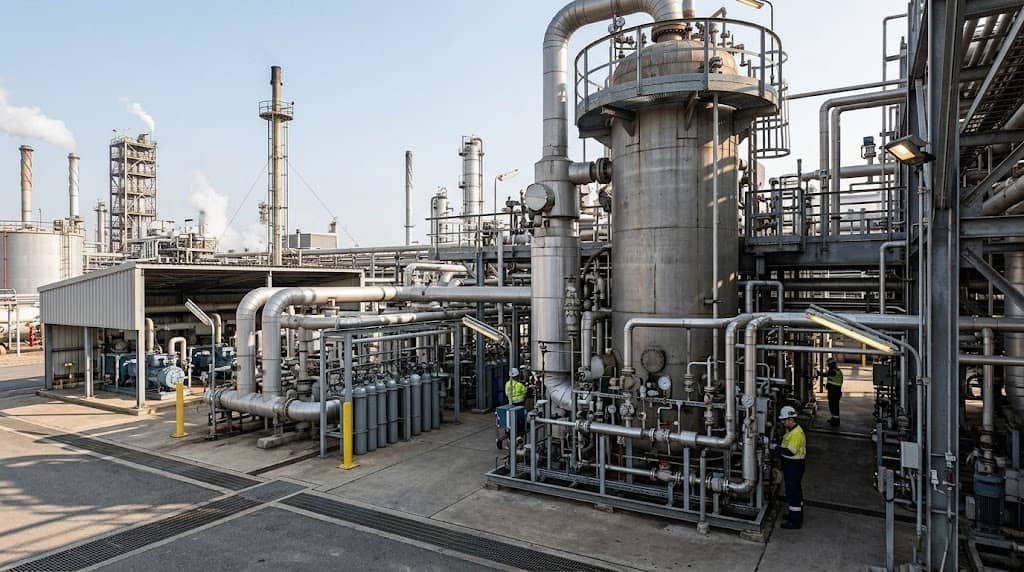
How Feedstock Affects Process Selection
The refining process will have different effects on different types of used oil. Used engine oil, used hydraulic oil and mixed industrial lubricants contain varying degrees of water, metals, additives, sulfur compounds and oxidation products. These differences impact the need for pretreatment and downstream performance.
When choosing a refining process, take into account the following:
- Water and suspended solids. Excess water and solids may interfere with downstream operations and increase the load on separation equipment.
- Metals and additive residues: Some contaminants may cause deposits or degrade catalyst performance. The effects vary with the type and concentration of the contaminant.
- Sulfur and nitrogen compounds: These are important if the final base oil has to meet strict chemical specifications.
- Oxidation products: Polar and unstable compounds can affect product appearance, stability and refining performance.
- Variability of feedstock: Frequent changes in the composition of oil can make the process control difficult.
Pretreatment is important for both technologies, but the requirements are not identical. Hydrotreating may need tighter control of catalyst poisons. Solvent extraction requires suitable feed conditions for effective separation and solvent recovery.
For a detailed discussion of incoming oil quality, see PurePath’s Used Oil Feedstock Specification for Re-Refining. This article complements the present guide by focusing on feedstock evaluation rather than comparing refining technologies.
Which Process Produces Better Base Oil?
There is no universal winner. The result depends on the feedstock, process configuration, and required product specifications.
1. Sulfur and Nitrogen Content
When the major objective is the chemical conversion or removal of sulfur and nitrogen compounds, hydrotreating is usually preferred.
Solvent extraction can remove some unwanted compounds, but the efficiency is dependent on the chemical forms of the compounds and the solvent used. It should not be assumed to give the same sulfur reduction as hydrotreating.
2. Color and Oxidation Stability
Both technologies can help to improve the appearance of the product. But color alone does not guaranty the quality requirements of a base oil are being met. Even a lighter oil may have poor oxidation stability, or sulfur content, or other undesirable properties.
Finished oil should be tested against the relevant product specification.
3. Viscosity and Viscosity Index
The viscosity depends on the original oil and on the composition of the fractions recovered. The finishing process can also influence the final properties. Hydrotreatment and solvent extraction do not necessarily give a predetermined viscosity index. The values required have to be verified by process evaluation and laboratory testing.
The answer to the buyer is simple: Specify your goals, then look for the right technology. Then ask the supplier how the proposed process will make this happen.

Solvent Extraction vs. Hydrotreating: CAPEX and OPEX
Initial equipment cost is only part of the investment decision. Operating expenses and maintenance requirements can have a significant impact on long-term performance.
1. Solvent Extraction Costs
The major cost elements are solvent inventory, solvent makeup, heating, cooling, pumping and recovery. Operating expenses may increase because of solvent losses. Insufficient recovery may also impact product quality. Depending on the solvent, the plant may have to have additional controls for fire safety, worker exposure, emissions, and waste management.
2. Hydrotreating Costs
Hydrotreating typically requires high-pressure equipment, hydrogen supply, compression, heat exchange, and gas separation. Operating costs may include hydrogen consumption, energy, catalyst replacement, and maintenance. Catalyst life and performance also influence plant economics.
The actual cost difference depends on plant capacity, feedstock quality, local utility prices, product requirements, and process integration.
A useful comparison should include:
- Total installed equipment cost
- Operating cost per tonne of feedstock
- Hydrogen or solvent consumption
- Energy and utility requirements
- Maintenance and replacement costs
- Waste handling and environmental controls
- Expected product quality and selling value
Do not compare the two technologies using equipment prices alone. Evaluate the complete process against the same feedstock and finished-product requirements.
For project-level investment considerations, PurePath’s waste oil recycling plant cost and ROI guide offers related background on capital expenditure, operating expenses, and project economics.
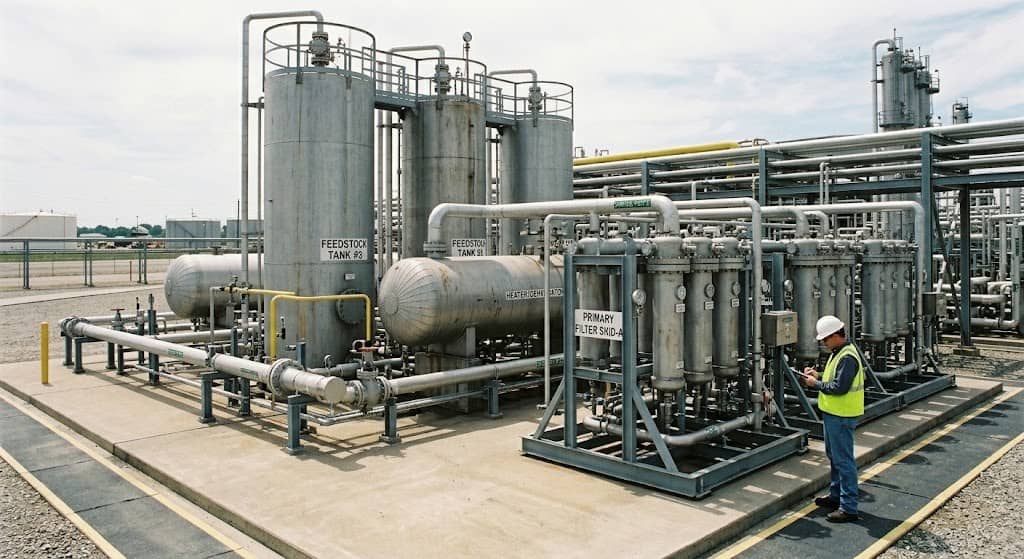
Can Solvent Extraction and Hydrotreating Be Combined?
Yes. Some re-refining plants use both technologies when one process alone cannot meet the required product specifications economically.
Solvent extraction can separate selected undesirable compounds. Hydrotreating can provide additional chemical treatment. Vacuum distillation and fractionation may also be required to recover suitable base oil fractions. A combined process could follow this general sequence:
Feedstock assessment → Pretreatment → Distillation and fractionation → Solvent extraction and/or hydrotreating → Product finishing and testing
The exact order is dependent on the feedstock and process design. Some plants don’t need both technologies. The addition of another refining stage increases equipment cost, utility usage and complexity of operation. The additional investment should therefore be justified by a clear improvement in the quality or commercial value of the product.
Before finalizing the configuration, review material balance, expected product recovery, energy demand, waste streams and product test results. Laboratory testing or pilot trials may be appropriate in cases of uncertainty about feedstock behavior.
How to Choose the Right Refining Technology
Before selecting a process, ask these six questions.
| Decision factor | Questions to ask |
| Feedstock | What are the main contaminants and their concentrations? |
| Product requirements | Which quality specifications must the finished base oil meet? |
| Utilities | Are hydrogen, power, steam, and cooling water available? |
| Safety and compliance | What controls are required for solvents, hydrogen, emissions, and waste? |
| Operating capability | Can the plant support the required maintenance and process controls? |
| Project economics | Will the expected product value justify the additional investment? |
Request potential suppliers to supply a clear process flow diagram, design assumptions, expected material balance, utility requirements and performance guarantees. Also check what conditions are attached to those guarantees. The composition of the feedstock, the operating conditions and the testing methods are to be clearly defined.
If you are evaluating a complete waste oil to base oil plant, these details can help you compare proposals on a consistent technical and commercial basis.
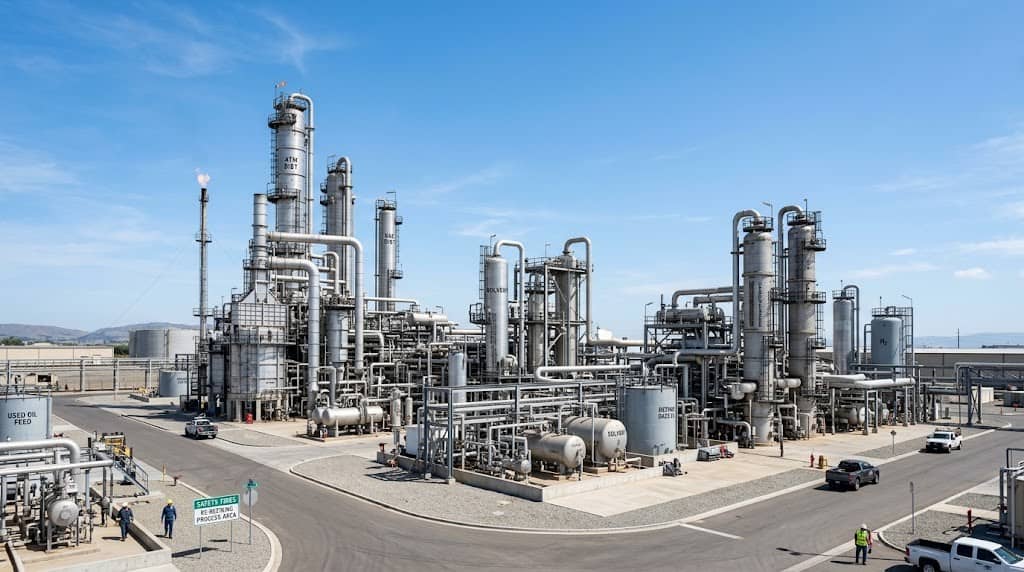
Frequently Asked Questions
Q1: Is hydrotreating always better than solvent extraction?
No. Hydrotreating is useful for targeted chemical treatment, while solvent extraction separates selected compounds. The right choice depends on feedstock chemistry, product specifications, available utilities, and project economics.
Q2: Can solvent extraction remove sulfur from used oil?
It may remove certain sulfur-containing compounds, depending on their chemical forms and the solvent system. The actual reduction must be verified through testing.
Q3: Does hydrotreating improve the viscosity index of base oil?
It can affect base oil properties, but the outcome depends on the feedstock and process conditions. A specific viscosity index cannot be guaranteed without technical evaluation and testing.
Q4: Which process has lower operating costs?
Neither process is always cheaper. Solvent extraction involves solvent circulation and recovery. Hydrotreating requires hydrogen, catalysts, and high-pressure equipment. Compare both using the same design basis.
Q5: Can both processes be used in one plant?
Yes. They can be combined when the required product quality justifies the additional investment. The final configuration should be supported by process evaluation and economic analysis.
Conclusion
Solvent extraction and hydrotreating are two different ways to improve the quality of re-refined base oil. Solvent extraction is a process of selective separation. Hydrotreating is a process with hydrogen and catalysts to change the chemical composition of some impurities.
The right choice depends on the feedstock, the desired product specifications, the available utilities, the capabilities of the operation and the total cost of ownership. Begin with the product requirements, assess the feedstock, and choose the simplest process configuration that will reliably meet the target specifications.
Planning a used oil re-refining project? Contact PurePath to discuss your feedstock, product requirements, and potential refining configuration.