

Used Oil Recycling Plant Cost: CAPEX, OPEX, and ROI Optimization Guide
Written By: Mr.Ran
Senior Petrochemical & Waste Oil Recycling Engineer
Deeply involved in the design, manufacturing, and optimization of various waste oil recycling and petrochemical equipment, delivering practical and efficient solutions for clients worldwide.
The tendency of making the mistake by concentrating on the sticker price alone when evaluating the total cost of purchasing an old oil recycling plant is prevalent among potential investors. The acquisition of equipment is but a portion of the financial aspect of a much bigger picture in large and medium-sized industrial used oil refinery plants. What really matters for assessing its profitability is determining the Total Cost of Ownership by comparing CAPEX with OPEX.
A poorly designed plant with a relatively cheap starting cost in continuously operating refining plants is bound to yield huge maintenance costs, unpredictable and frequent downtime, and lower product output. Here is a step-by-step guide to determining the real engineering reasons behind the actual cost of installation and operation.
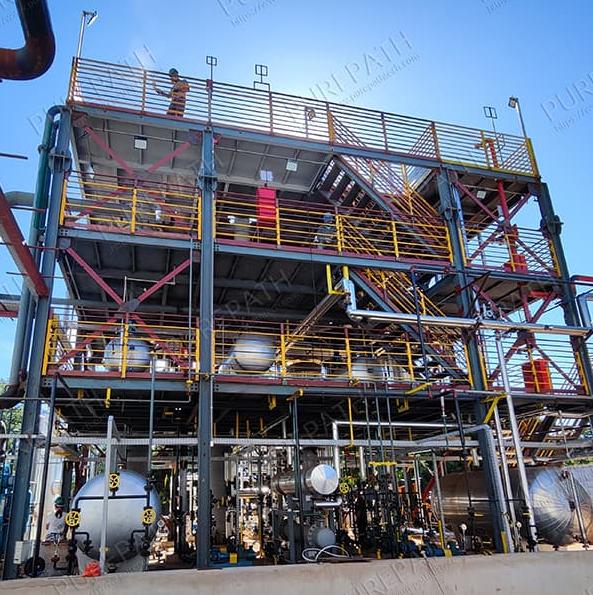
CAPEX: Initial Investment for Large-to-Medium Scale Plants
CAPEX becomes the basis of the project budget. In industries meant for continuous processing and not batch manufacturing, CAPEX needs to be assessed from the point of view of structure and longevity and systems integration.
Processing Capacity and Size
Large-scale industries processing 10 to over 100 tons of liquid per day cannot follow the same engineering principles used by workshops. There is no linear increase in costs when scaling up capacity. Big capacities require continuous distillation processes and fractionation towers, huge tank storage areas, and large amounts of structural steel for the foundations. Engineering must provide a solution for large-scale continuous fluid mechanics and maintain temperature balance at the same time. Hence, there is considerable CAPEX allocation in structural engineering and huge piping systems to handle high-throughput operations without systemic fatigue.
Material Selection & Metallurgy
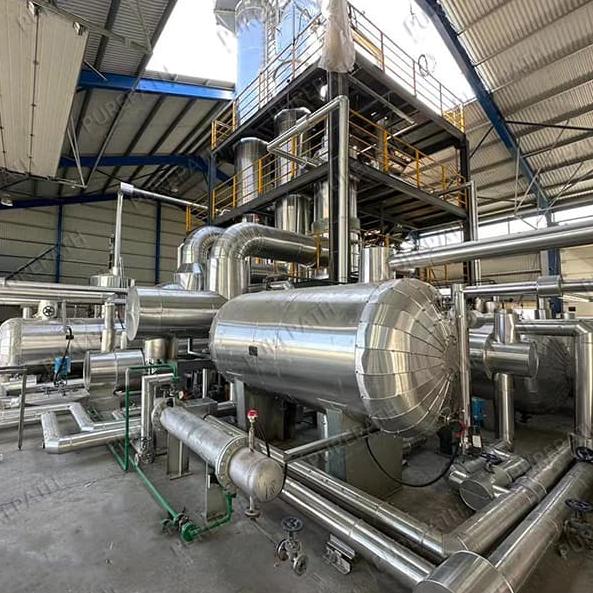
The waste oil distillation process involves severe conditions where high temperatures are attained, usually ranging between 300°C and 400°C under high vacuum conditions. In such conditions, the organic acids, sulphur compounds, and chlorinated hydrocarbons found in the feedstock react corrosively.
Standard carbon steel for critical zones would fail to meet these conditions and cause failure of the system. Such plants require precise metallurgy:
- Thermal Critical Zones: The main distillation column, reboilers, and prime vapor lines have to use high-quality, heat-resistant alloys such as SUS316L or high-strength stainless steel alloys.
- Non-Thermal Critical Zones: Low-grade alloys like standard carbon steel shall be used only for the purpose of structural supports or as utilities for holding at low temperatures without any corrosive chemical reactions occurring within.
Although using high-quality alloys increases the cost of capital (CAPEX), but they reduce the chance of structural thinning and vacuum leaks.
Full-Scale EPC Delivery vs. Component Sourcing
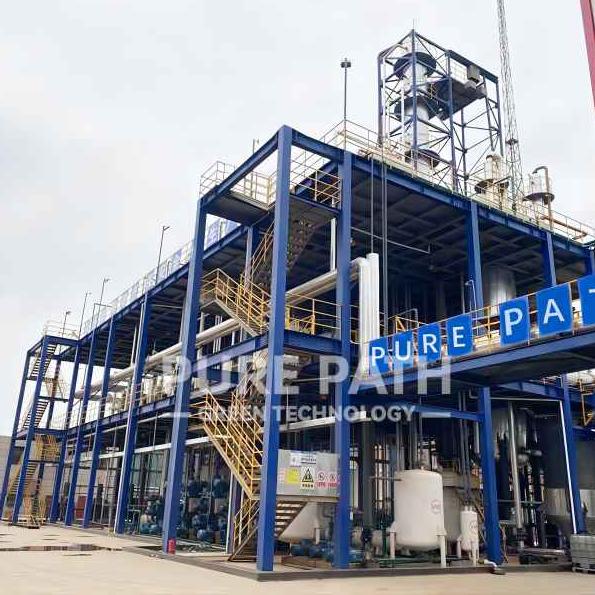
Sometimes, investors make attempts at reducing CAPEX by sourcing parts like pumps, boilers, and columns separately from different suppliers and putting together their plant independently. This kind of method poses great risks for large- to medium-scale installations.
The Engineering, Procurement, and Construction model ensures that all the systems are integrated according to the unique mass and energy balances of the oil refining process. If the parts are purchased separately, there are going to be inconsistencies in the pipes, pressure levels, inadequate vacuum seals, and huge problems with the commissioning process. The hidden cost of resolving issues within the system installation becomes too high compared to the initial cost savings.
OPEX: Strategic Control of Running & Maintenance Costs
Operational expenditures affect the profitability of industrial operations daily.
Controlling the cost incurred in the long term necessitates limiting the use of utilities and unnecessary downtime from the fouling of the equipment.
Advanced Anti-Coking Technology
This technology reduces efficiency and flow lines due to thermal cracking and carbon formation within the distillation unit.
- High Vacuum: The deep vacuum helps reduce the temperature needed for the heavy hydrocarbons’ boiling point, which helps avoid thermal decomposition.
- Short Residence: This technology entails the integration of highly efficient thin-wire and film evaporators, which ensures that the material is exposed to hot surfaces for only a few seconds.
PLC Automation and Intelligent Control Systems
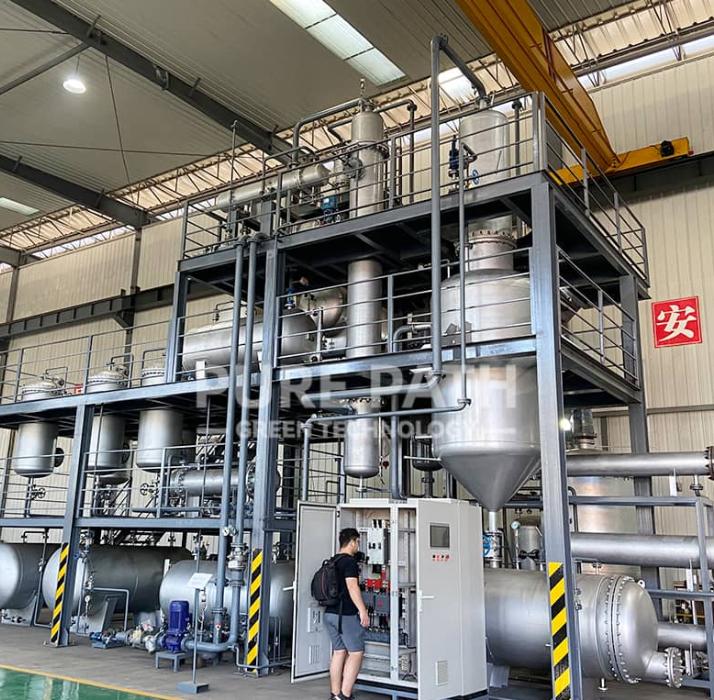
Large plants require continuous, steady-state production processes that manual control cannot provide.
- Control of Process Equilibrium: Centralized Programmable Logic Controller (PLC) systems continually measure the vacuum depth, pressure differences in columns, and temperature gradients.
- Risk Elimination: Automated process controls adapt immediately to feedstock changes. Such automatic equilibrium ensures protection from thermal shock and protects the vacuum equipment by eliminating operator error.
Recovery Systems for Thermal Energy
The utility costs associated with heating make up the highest recurring cost during oil distillation.
- Heat Exchanger Systems: Multi-stage shell-and-tube heat exchangers are used in industries to capture the sensible heat present in outgoing process streams at very high temperatures.
- Process Feedstock Heating: The thermal energy thus captured is used to preheat the feedstock that goes into the reboiler. Thermal energy integration thus saves up to 30% on fuel costs.
Regulatory Compliance & ESG Risk Mitigation

Treatment of industrial waste oils is subject to close environmental monitoring. Modern plants need to view regulatory compliance as a critical part of their engineering process.
Gaseous Emission Control: The distillation process produces off-gases that contain VOCs and sulfur-containing products. Proper off-gas handling systems, such as thermal oxidation and chemical scrubbing, have to be included in plant design.
Residue Management: It is important that the high-density bottom residue left after the distillation process, which can contain a lot of asphalt flux, heavy metals, and carbon, must constantly be removed and stored properly. Efficient companies have systems in place that will allow them to recycle their residues in other industries such as waterproofing or asphalt blending.
Calculating and Maximizing ROI

The ROI of a used oil industrial recycling plant is primarily based on the difference in price of raw materials versus finished products. Optimizing this gap is accomplished by using two fundamental engineering practices: maximizing the production of liquid products and creating top-quality products.
Whereas conventional atmospheric cracking generates low-grade fuel oil and limited profit, sophisticated fractional vacuum distillation results in the production of Group I or Group II base oils. This is done through the combination of deep vacuum and heating technologies with a process-controlled automatic system, leading to minimal unusable by-products and faster ROI.
| Technical Parameter | Strategic Impact on ROI | Financial Outcome |
| High Recovery Yield (80%–85%) | Minimizes asphalt bottoms and process waste during distillation. | Maximizes marketable liquid volume per ton of feedstock. |
| Fractional Separation | Upgrades output quality from low-grade fuel to premium base oils. | Secures higher market pricing and premium B2B contract terms. |
| Thermal Energy Integration | Recycles process heat to reduce burner fuel consumption by up to 40%. | Permanently lowers monthly OPEX, widening net profit margins. |
Profitability in used oil recycling isn’t just about finding the cheapest equipment. True cost control starts by investing in high-grade metallurgy and integrated EPC engineering to prevent early failures. From there, cutting daily OPEX relies on smart heat recovery and automation to stop coking and drop fuel bills. That is how plant operators protect their margins and actually accelerate their payback period.
To see how used oil recycling plant engineering is executed: