
Transforming Black Oil into Profit with High-Quality Waste Oil Refining Products
Written By: Mr.Ran
Senior Petrochemical & Waste Oil Recycling Engineer
Deeply involved in the design, manufacturing, and optimization of various waste oil recycling and petrochemical equipment, delivering practical and efficient solutions for clients worldwide.
The global problem of accumulating used motor oil and lubricants becomes a burden for the environment and a huge opportunity for economics at the same time. Waste oil that was considered to be a dangerous burden because of heavy metals and oxidation becomes a valuable resource when it undergoes professional refining of the oil and becomes diesel oil or base oil.
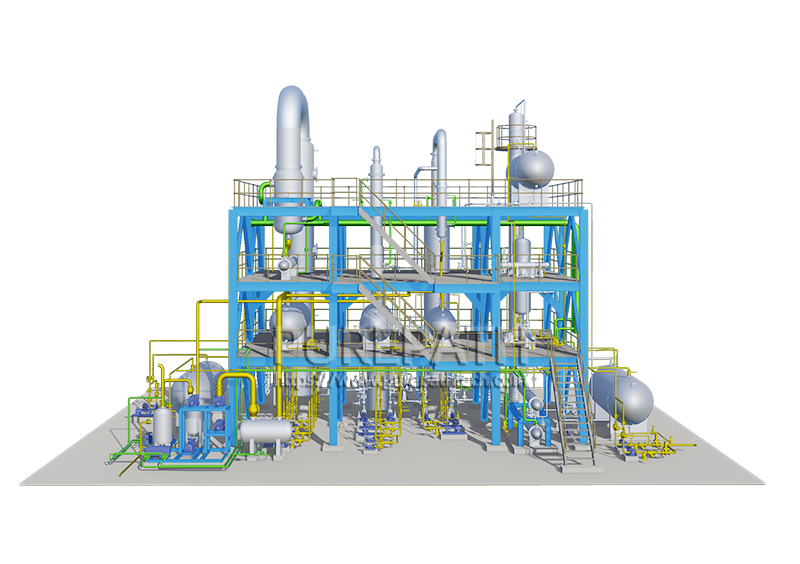
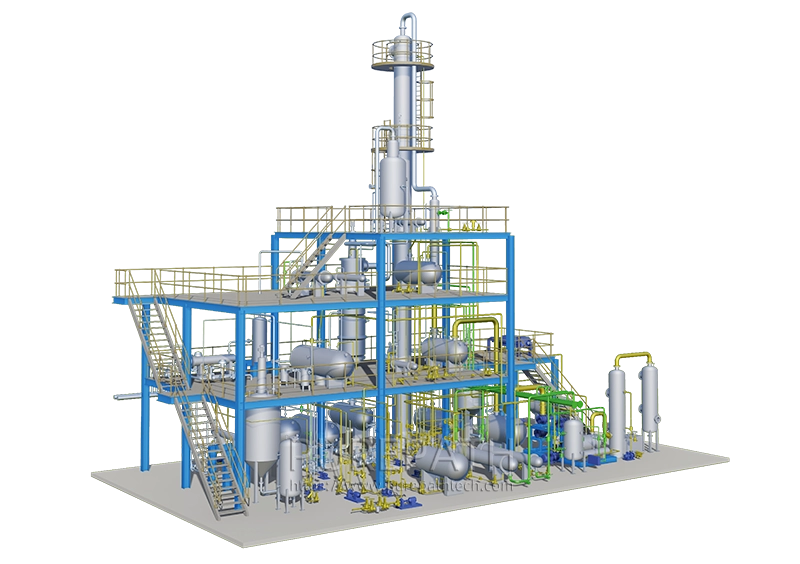
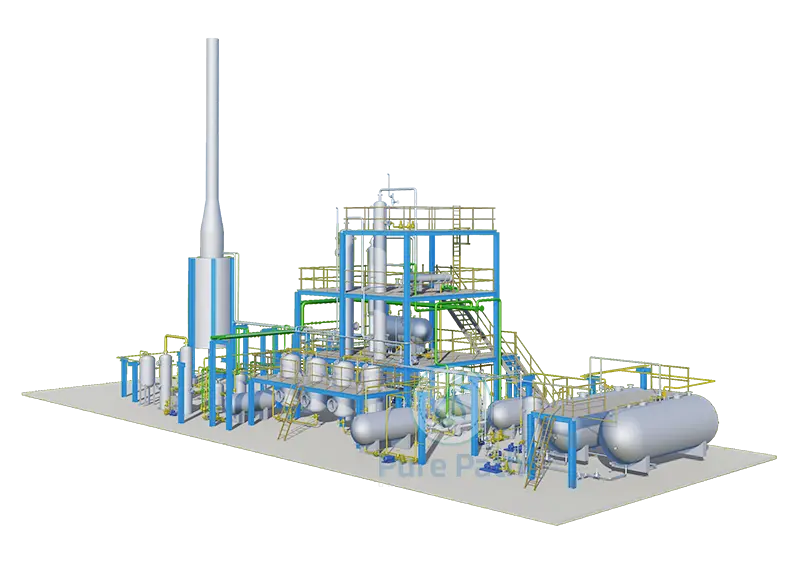
In this blog, we examine the process of transforming “black oil” into a useful product by means of a powerful plant for waste oil refining.
The Economic Value of High-Quality Output from Waste Oil Refining
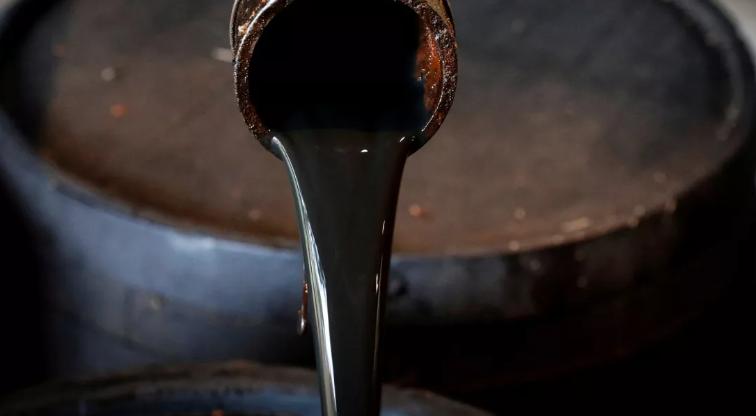
The financial feasibility of waste oil refining depends not on the amount of raw materials treated but rather on the quality of the end product obtained. In its unrefined form, waste motor oil is contaminated with heavy metals, carbon soot, and acids, making it poisonous and low-value.
Ordinary filtering is able to remove only floating particles from the liquid, resulting in its dark and pungent color. Modern waste oil refining relies on vacuum distillation and cracking technologies to decompose large hydrocarbon molecules. The objective is to obtain a high-quality output that has similar characteristics to virgin diesel fuel. A premium product sells at prices 30-50% higher than the cost of untreated black oil.
Industrial Applications of Refined Diesel Produced by Our Plants
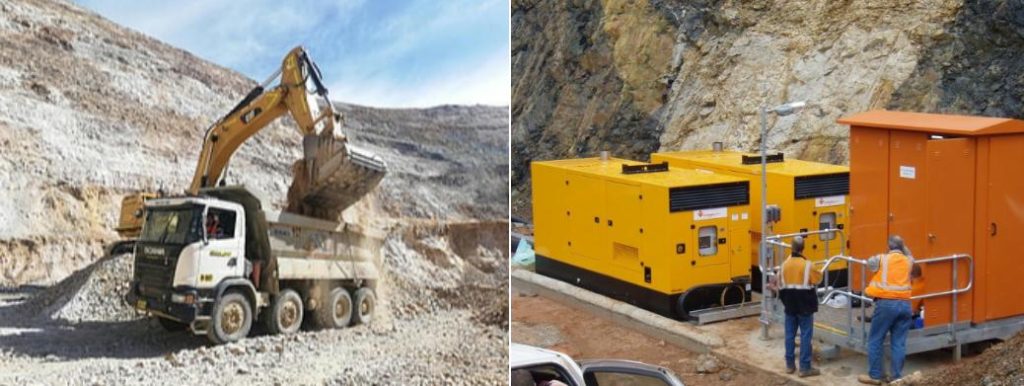
The end product from a professional waste oil refining plant is an efficient source of power. The process of removing carbon particles and the stabilization of the molecular structure make diesel fuel an appropriate substitute for commercial fuels in various industrial sectors, such as:
Heavy Construction Machinery
Excavators, loaders, and bulldozers are high-consumption assets. Refined diesel produced through precise waste oil refining matches the viscosity requirements of heavy-duty engines. When processed to remove carbon particulates and metal debris, this fuel provides the necessary torque for construction operations while significantly lowering the fuel procurement costs for fleet operators.
Power Generation for Industries
Mine locations, isolated production facilities, and large factories usually have diesel generators in use for power generation purposes. Refined oil is cheap to use in these generators. The use of refined oil makes sure that there is no dirt in the injectors, and efficient combustion takes place without any interruption that occurs with the use of low-grade recycled oil.
Thermal Power for Boilers & Kilns
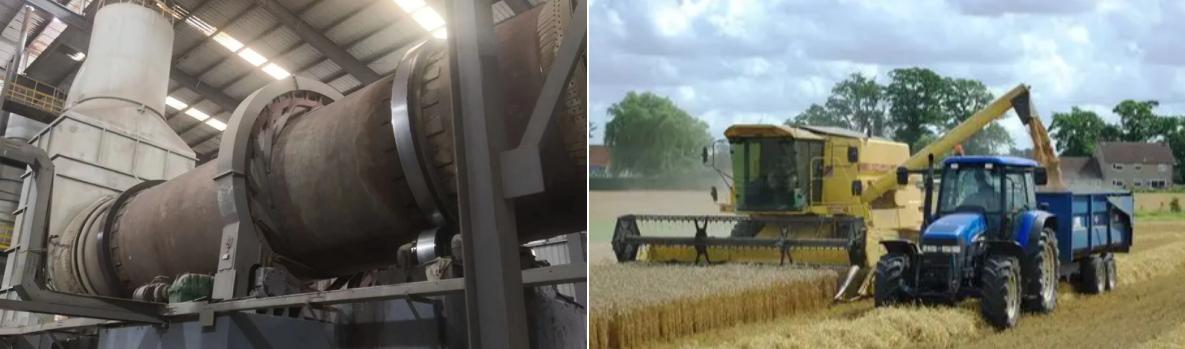
Various industrial processes, such as iron smelting, brick firing, and cement kilns, require continuous energy in large amounts at high temperatures. Refined oil can easily be utilized in such processes as it has a high heat capacity. In addition, it produces less pollution because of its cleaner burning due to the distillation process.
Promoting Farm Machinery
As far as the farm industry goes, the need for cheap fuel persists in the use of pumps, tractors, and harvesters. With refined oil, the farm industry can rely on an alternative source to help in its production process. By converting local waste lubricants back into usable fuel, agricultural companies can develop a closed-loop economy independent from the ups and downs of the fuel market.
How Waste Oil Refining Products Meet International Quality Standards

In order to achieve commercial value, the end products of the plant processing waste oil should satisfy certain technical criteria. The current refining technologies emphasize three crucial indicators:
- Viscosity and Flash Point: Through precise temperature control in vacuum distillation, the plant ensures the oil is stable and safe for transport and combustion.
- Color and Odor: The plant can eliminate the “burnt” smell and the intense black color through silica gel or solvent extraction stages, producing a transparent yellowish liquid.
- Sulfur: The catalytic stage can lower the sulfur content of the oil, thus satisfying the emission standards of burning processes.
| Parameter | Raw Waste Oil | Refined Product (Typical) |
| Color | Black/Opaque | Light Yellow/Transparent |
| Water Content | 5% – 10% | < 0.1% |
| Ash Content | High (Metal debris) | Trace amounts |
| Flash Point | Unstable | 55°C – 65°C |
Environmental Compliance and Waste Management Benefits
Running a plant for refining used oil shifts the status of a business from being a “producer of waste” to becoming a “producer of resources.” Typically, the disposal of unrefined waste oil attracts hefty penalties and rigorous tracking.
Refinement becomes a solution since it transforms the hazardous waste (Class 9) into a resource. With the use of a closed-loop technology, there is reduced pollution as well. The new technologies make use of a tail gas scrubbing system to neutralize the acidic fumes and recycle the water so that there is no water discharged, meeting the ESG requirements.
Maximizing ROI: Why Product Quality is the Key to Success
One mistake that investors may make is to select cheap and small-scale skid plants with capabilities limited to simple heating processes. The product obtained from such a process is usually “cracked oil” that easily oxidizes, becomes black in color, and blocks up engines.
What will help to achieve high ROI is high-quality fraction production. With the efficient refinery, the share of diesel fuel produced will rise to over 85%. By making a product that could be marketed at the premium level, the investor receives regular income independent of crude oil price dynamics.
Take An Action
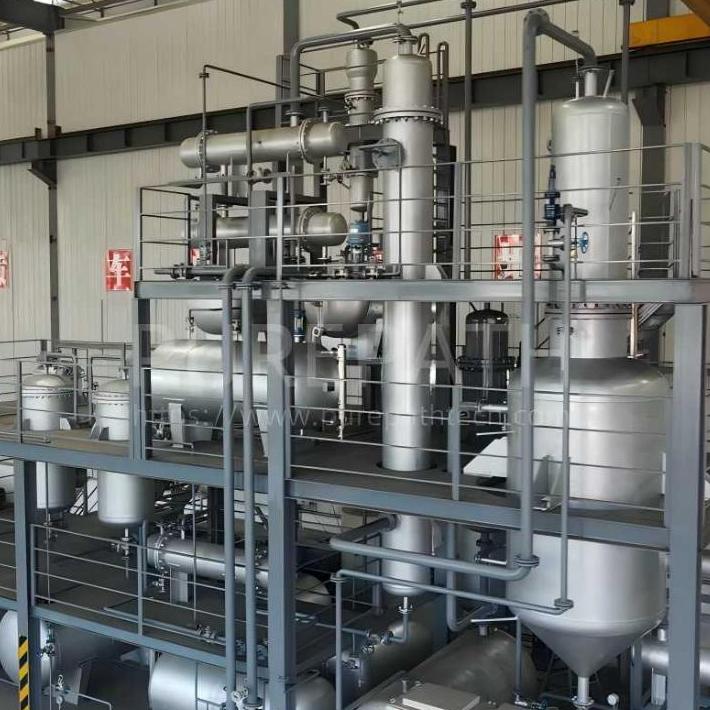
With tightening global energy regulations in 2026, it becomes critical to transition from the process of waste treatment to resource recovery. An efficient refinery of waste oil is essential to preserve industrial competitive advantages within the tight ESG regulations.
At PurePath, we provide more than conventional distillation technology. Using a combination of advanced thin-film evaporation along with vacuum multi-distillation, we can achieve over 85% efficiency in recovering valuable materials without resorting to the toxic procedure of acid-clay treatment. This results in a stable and clear high-quality fuel fetching higher market prices and ensuring a fast return on investment.
Are you ready to turn your industrial waste into gold? We invite you to contact us for an individualized proposal and ROI analysis based on your market specifics.