
Types and Techniques of Lube Oil Blending Plants
Written By: Mr.Ran
Senior Petrochemical & Waste Oil Recycling Engineer
Deeply involved in the design, manufacturing, and optimization of various waste oil recycling and petrochemical equipment, delivering practical and efficient solutions for clients worldwide.
Lubricant oil blending plants are of utmost importance in the manufacture of different lubricants that are needed to decrease friction and wear in machines. The entire process of lube oil blending dictates the quality of the final product that is offered; hence, selecting blending equipment and methods is critical. Different kinds of lube oil blending equipment, their pros and cons, and the ways through which product quality can possibly be ensured are examined in this article.
Types of Lubricant Oil Blending Equipment
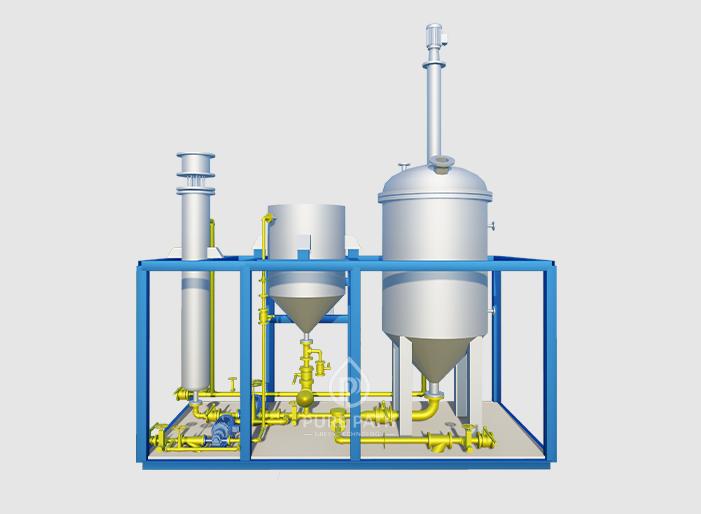
According to different production needs and technical characteristics, lubricating oil blending plants can be divided into the following types:
1. Tank Blending Systems
Tank blending systems are the most reliable and traditional method that is still widely used in lubricant oil blending plants. These systems consist of one or more blending tanks in which the base oils and additives are fed directly according to the predetermined proportions. The blending mixture is then stirred to get the final product of the lubricant. A tank blending system would typically consist of several parts:
- Blending Tanks: That is where mixing of base oils and additives is done.
- Mixing Devices: Such as agitators or stirrers to mix the components thoroughly.
- Heating Systems: To blend the materials at the right temperature.
- Additive Injection Systems: For exact dosing of additives.
- Metering Equipment: To measure the base oils and additives.
- Pumps and Piping: For the movement of the mixture through the system.
The Tank Blending Systems have the following advantages:
- Simplicity: Very user-friendly and requires no special training for maintenance.
- Cost-Effective: A fraction of the cost that would have been expended if more technology-intensive systems were used.
- Flexibility: Suitable for either small or large-scale batch production.
The negatives of the Tank Blending Systems are as follows:
- Lower Efficiency: The time taken to process each batch can be quite long.
- Inconsistent Quality: There is always the possibility of the operator making a mistake in measuring and mixing.
- Energy-Intensive: A large amount of energy is used just to keep the blending conditions at the level where they are optimal.
2. Inline Blending Systems
Inline blending systems are a более sophisticated and continuous method of lube oil blending process. Automated control instruments are used for these systems to manage the flow rates of different components, thus ensuring their mixing in exact proportions through an inline mixer. Principal elements of inline blending systems are:
- Base Oil and Additive Pumps: For exact and controlled delivery of components.
- Flow Meters: For monitoring and as well as for regulating the flow rates of each component.
- Inline Mixers: Where the components are constantly blended.
- Control Systems: For real-time monitoring and adjustment.
Advantages of Inline Blending Systems:
- High Efficiency: Continuous blending lessens the time of the entire process.
- Precise Control: Machines operating automatically grant the precision of blending ratios.
- Consistency: The product is always of the same quality.
- Energy Efficient: Energy use is less than that of batch processing.
Disadvantages of Inline Blending Systems:
- Complexity: More advanced technology is difficult to maintain.
- High Initial Cost: a lot of money goes for the top-notch equipment and technology.
- Repair and Maintenance: only specialized people can fix it when it breaks down, and can conduct regular maintenance.
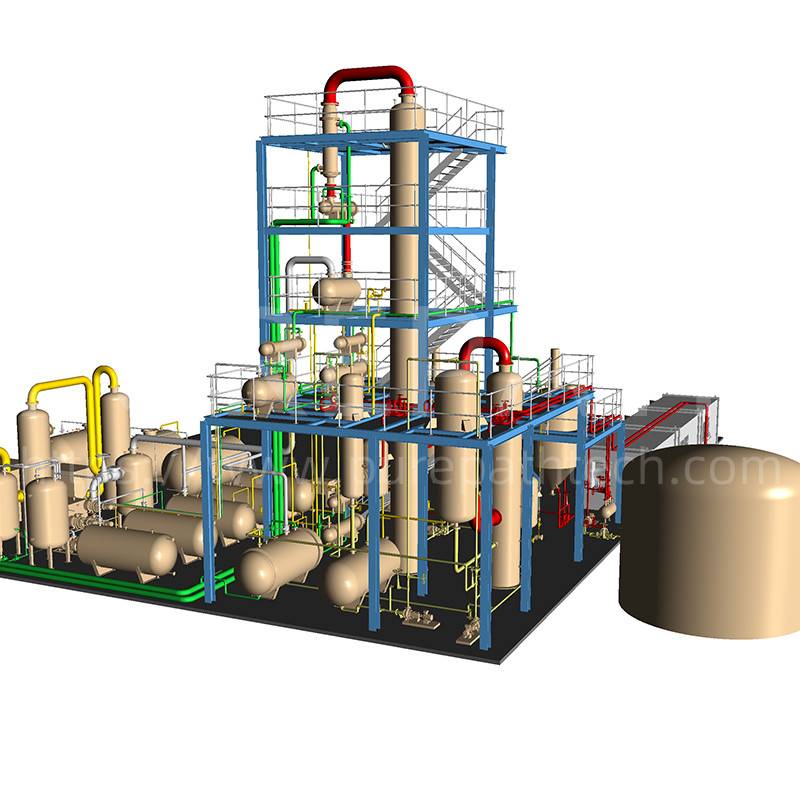
3. Automated Continuous Blending Systems
Automated continuous blending systems are meant for the huge production processes with a lot of human interference minimized to the least possible level. The whole blending of the lube oil process from material input to finished product output is done automatically by these systems that use advanced electronic technologies, sensors, and control algorithms. The different parts that make up the automated continuous blending systems are:
- Base Oil and Additive Storage Tanks: For storing huge quantities of raw materials.
- Precision Dosing Pumps: For adding exact amounts of additives.
- Automated Mixers: Performing blending continuously and thoroughly.
- Advanced Control Systems: Using real-time data to change blending parameters.
- Quality Monitoring Systems: To ensure that the final product is in accordance with the set standards..
Advantages of Automated Continuous Blending Systems:
- High Production Capacity: Ideal for huge-scale production.
- Consistency and Quality: Always delivers high product quality.
- Labor Efficiency: Humans are less needed in the operation.
- Data Integration: Open up the entire production process for monitoring and quality control.
Disadvantages of Automated Continuous Blending Systems:
- High Complexity: The most innovative and expert-driven technology is needed.
- Significant Initial Investment: Setting up and buying the equipment is quite expensive.
- Maintenance: Constantly requiring technical support and maintenance.
4. Pulsed Air Mixing Systems
Pulsed air mixing systems generate vigorous mixing in the blending tank by means of air pulses. This technique produces large air bubbles, which contribute to the fast and even blending of the lubricant components.
Advantages of Pulsed Air Mixing Systems:
- Efficient Mixing: Quick and complete blending is done.
- Energy Saving: Air pulses replace mechanical agitation.
- Reduced Shear Stress: Mixing is soft so that the additives remain intact.
Disadvantages of Pulsed Air Mixing Systems:
- Control Complexity: Air pulse control needs to be very accurate.
- Initial Setup Cost: The cost of special equipment is a drawback.
- Operational Challenges: Monitoring the air pulse settings for best performance is difficult.
How Lube Oil Blending Plants Ensure the Product Quality
Adding to the above, the lube oil blending plants play an important role in providing quality lubricants. High product quality requires a lot of mixing, and that is the reason why different blending plants apply several critical measures:
1. Accurate Measurement and Dosing
Unquestionable measurement and dosing of base oils and additives are necessary for the production of the best-quality lubricants. Today’s lube oil blending plants employ advanced metering systems along with automated dosing pumps in order to limit human errors and thus come up with perfect proportions.
2. Advanced Blending Technologies
Inline blending and automated continuous blending are some of the advanced blending technologies that have been adopted, and they are responsible for the consistency and quality enhancement of the final product. These technologies give better control over the blending process, which leads to the production of uniform products.
3. Real-Time Monitoring and Control
The deployment of digital management systems that grant real-time monitoring and control capabilities is a prerequisite for upholding product quality. These systems not only monitor the blending process parameters, e.g. temperature, flow rates, and mixture homogeneity but also promptly make any necessary adjustments so that the conditions remain within the ideal range.
4. Quality Control Measures
The application of strict quality control measures at different points in the production cycle helps to ensure the final product possesses the required quality characteristics. This comprises:
- Raw Material Testing: Quality assurance of base oils and additives prior to blending.
- Process Monitoring: Uninterrupted monitoring of the blending process to spot and rectify any variations.
- Final Product Testing: Performing exhaustive tests on the lubricant at the end of the process to ascertain it complies with all specifications.
5. Regular Maintenance and Calibration
The blending equipment should be regularly maintained and calibrated, as that will keep its accuracy and reliability. Maintenance according to a schedule keeps the equipment in good condition andensures that performance is always the same, while calibration makes sure that the measurement systems are still very accurate.
6. Operator Training
The blending plant for lubricant oils will only be successful if the operators are properly trained. Capable employees are the ones who know the blending process
Conclusion
The success of a lubricant oil blending plant largely depends on the choice and execution of the right blending equipment and methods. The equipment variants—tank blending, inline blending, automated continuous blending, or pulsed air mixing—bring in different advantages and challenges at the same time.
The lube oil blending process requires high measurement accuracy, state-of-the-art technologies, constant supervision, strict quality control measures, regular maintenance, and proficient operators to assure product quality.
If the focus is on these matters, then the lubricant oil blending plants will be capable of producing high-class lubricants, which not only satisfy the market but also help in retaining their competitive position.