
Waste Oil to Base Oil Yield: Technical Recovery Rates and Distillation Metrics
Written By: Mr.Ran
Senior Petrochemical & Waste Oil Recycling Engineer
Deeply involved in the design, manufacturing, and optimization of various waste oil recycling and petrochemical equipment, delivering practical and efficient solutions for clients worldwide.
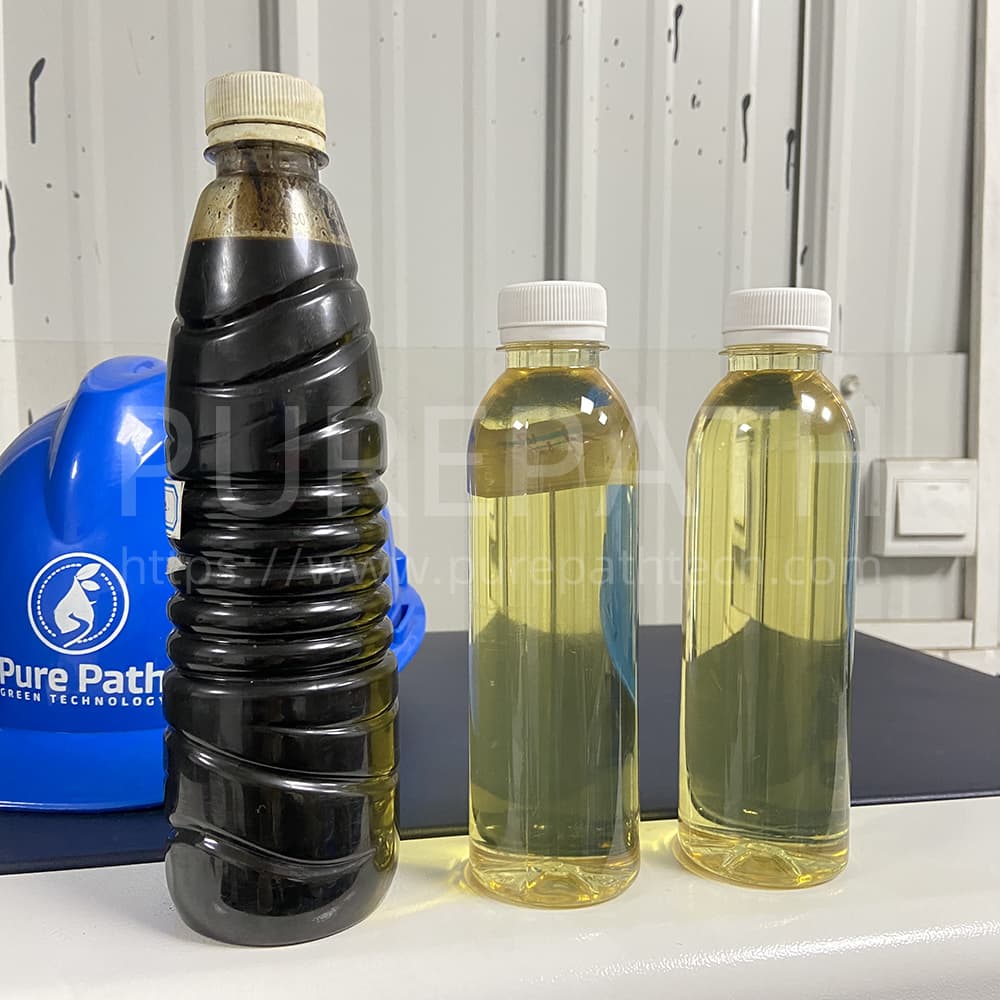
The critical metric that determines plant profitability and return on investment (ROI) in the waste oil re-refining industry is the conversion yield of waste lubricant to high-quality base oil. The total base oil recovery rate is typically in the range of 75-85% under ideal processing conditions and should be considered in evaluating a potential waste oil regeneration project. The variations in this range are not random, but are strictly determined by the quality of the feedstock, the chemical composition, and the specific distillation and purification technologies.
Managing these variables presents a significant challenge for plant operators. Low efficiency not only reduces the output of high-value API Group I or Group II base oils but also increases the volume of low-value by-products, such as asphalt residue and light fuel oil. This article provides a technical evaluation of the material balance, processing technologies, and chemical variables that dictate the efficiency of converting waste oil to base oil, incorporating standard engineering benchmarks utilized in continuous distillation systems.
Material Balance and Product Distribution of a Waste Oil Re-Refining Plant
To analyze the efficiency of a waste oil re-refining plant, engineers utilize a mass balance equation based on one metric ton (1,000 kg) of typical used motor oil (UMO). The total output is divided into distinct fractions based on boiling point ranges and chemical characteristics during high-vacuum distillation.
The table below outlines the standard material balance for a modern re-refining plant operating with advanced wiped film evaporation and solvent extraction systems:
| Output Product Fraction | Percentage Yield by Weight | Technical Specification & Industrial Application |
| Regenerated Base Oil | 75% – 85% | Separated into SN150, SN300, and SN500 grades; used for blending new lubricants. |
| Light Gas Oil / Diesel Blend | 5% – 8% | Low-viscosity hydrocarbon fraction; utilized as internal plant heating fuel for burners. |
| Water & Light Ends | 3% – 5% | Emulsified water and volatile solvents; removed during initial flash dehydration. |
| Asphalt Residue / Bottoms | 7% – 13% | Concentrated polymers, heavy metals, additive residues; sold as a bitumen modifier. |
When processing high-quality industrial hydraulic oils, the base oil recovery rate frequently reaches the upper threshold of 85%. Conversely, heavily degraded automotive crankcase oils with high soot loading shift the yields toward the lower boundary of 75%.
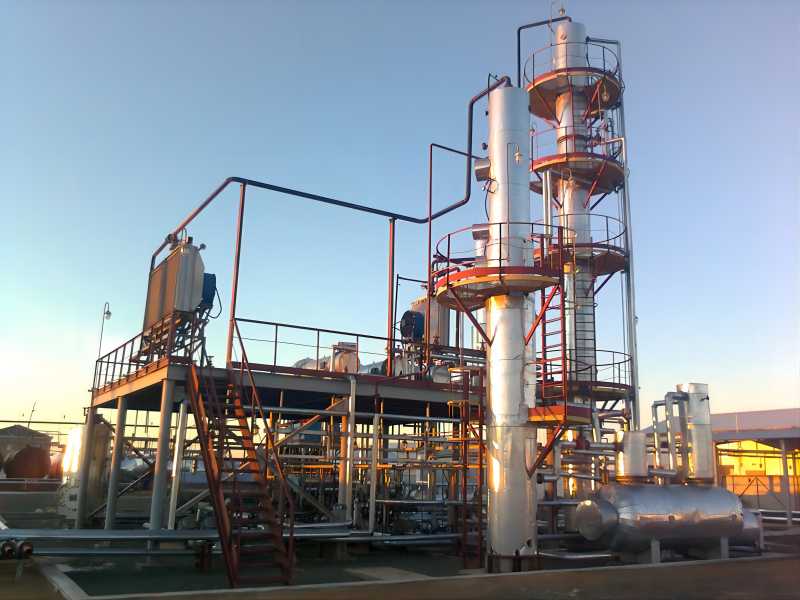
Process Technology Comparison: Impact on Conversion Efficiency
The choice of refining technology directly influences the final base oil yield and determines whether the operation complies with modern environmental regulations regarding hazardous solid waste.
1. High-Vacuum Thin-Film Distillation
Traditional atmospheric and basic vacuum distillation columns are unable to process heavy hydrocarbons without thermal cracking. When used oil is subjected to high temperature for long periods, the hydrocarbon chains break down and valuable base oil molecules are transformed to non-condensable gases and light fuel oil.
Modern systems overcome this problem by the use of a Wiped Film Evaporator (WFE) or Thin-Film Evaporator (TFE) operating under deep vacuum conditions (usually below 100Pa). In a WFE system, a mechanical wiper system spreads the waste oil as a very uniform, thin, turbulent film onto a heated cylindrical wall. This configuration has two special technical advantages:
- Minimal Residence Time: The oil contacts the heated surface for only a few seconds, avoiding thermal degradation.
- Low Boiling Temperatures: Deep vacuum reduces boiling points of heavy lubricant fractions, enabling SN150 to SN500 base oils to vaporise without cracking.
By deploying this thin-film vacuum technology, plants prevent the accidental conversion of base oil into diesel-range fuels, preserving a 75% to 85% base oil recovery rate.
2. Post-Distillation Refining: Clay Purification vs. Solvent Extraction
Distilled base oil fractions contain polar compounds, polycyclic aromatic hydrocarbons (PAHs), and sulfur contaminants that cause color instability and rapid oxidation. These impurities must be removed through a secondary refining stage to meet API Group I or Group II standards.
Historically, plants utilized acid-clay treatment, where sulfuric acid and active clay adsorbed these impurities. However, clay treatment significantly reduces overall plant yield. Spent clay cakes retain 20% to 30% of their own weight in base oil, trapping valuable product within the solid waste matrix. This process lowers the total base oil yield to a range of 65% to 75% and generates a hazardous byproduct that requires regulated disposal.
Today, clay filtration has been replaced by environmentally friendly solvent extraction plants (PPGT-BE). During the liquid-liquid extraction, the paraffinic base oil is treated with a selective solvent to separate aromatic structures and polar impurities. The solvent is recovered in a closed-loop evaporation and reused in the system with a recovery of greater than 99.5%. Because the extraction process does not retain or trap hydrocarbons like solid media, the direct loss of base oil during the extraction stage is restricted to 0.5% – 1.0%. Transitioning from clay to solvent extraction increases the net base oil output of a processing plant by 5% to 8%.
Chemical and Operational Variables Controlling Net Recovery Rates
To achieve the maximum theoretical conversion efficiency, precise regulation of feedstock chemistry and processing parameters is required. Four variables control the final mass balance:
- Feedstock Water and Volatile Contamination: Used lubricants collected from automotive repair shops often contain water from condensation, as well as traces of petrol or diesel fuel. In the first step of flash dehydration, all water and components with a boiling point below 150°C are eliminated. If a batch of waste oil contains 10% water, the maximum possible yield for all remaining hydrocarbon fractions is limited to 90% of the original yield, proportionately reducing the base oil yield per raw tonne processed.
- Additive Package Additions and Soot Loading: Modern engine oils contain chemical additives that can make up to 20% of the total composition and include viscosity index improvers, detergents, anti-wear agents, and dispersants. These organometallic compounds do not distil over. They co-concentrate with combustion soot in the evaporator bottoms to form the asphalt residue fraction. Consequently, waste oils with high concentrations of additives inherently produce higher levels of residues (up to 13%) and thus lower base oil yields.
- Vacuum Stability and Absolute Pressure: Any changes in vacuum pressure in the distillation column change the boiling points of the hydrocarbons. The loss of vacuum pressure forces the system to increase operating temperatures to maintain rates of vaporisation. The temperature rise induces thermal cracking, converting base oil cuts to light petrol oil and increasing the volume of non-condensable gases.
- Pre-Treatment and Filtration Efficiency: The waste oil must be mechanically filtered to remove large particulate matter, suspended carbon, and free water before it enters the thin-film evaporator. Pre-treatment prevents fouling on heat exchanger surfaces. Fouling reduces the heat transfer efficiency and causes nonuniform thermal zones that result in localised cracking and lower the base oil yield.
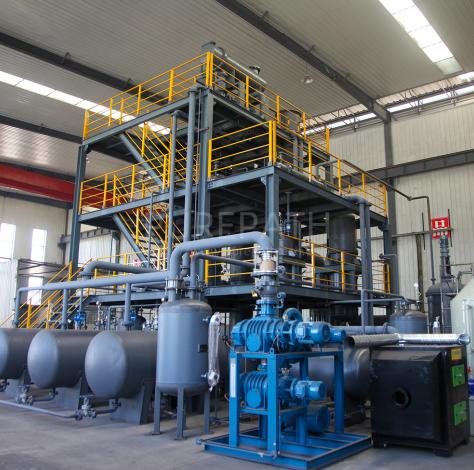
Quantitative Economic Impact of High Yield Rates on Plant ROI
The operational efficiency of a waste oil re-refining plant directly determines its financial viability. In industrial processing, minor increases in percentage yields alter the payback period of the capital investment.
Consider a commercial re-refining facility processing 20 metric tons of waste oil per day. The financial variation between a standard distillation plant yielding 70% base oil and an advanced system yielding 83% base oil is evaluated below:
- At a 70% Recovery Rate: The plant produces 14 metric tons of base oil per day.
- At an 83% Recovery Rate: The plant produces 16.6 metric tons of base oil per day.
This represents a net gain of 2.6 metric tons of premium base oil per day from identical feedstock volumes. Assuming a market value of $900 USD per metric ton for API Group I/II base oils, this yield optimization generates an additional $2,340 USD in revenue per operating day. Over a standard 300-day operational year, this efficiency improvement delivers $702,000 USD in supplementary revenue, accelerating the amortization of the equipment and reducing the plant’s capital payback period by 20% to 44%.
FAQs
Q1: What is the typical base oil recovery rate from waste oil re-refining?
A1: Modern continuous waste oil re-refining plants result in a complete base oil recovery of approximately 75-85% wt. Operators can expect to recover 750 kg to 850 kg of high-quality base oil (such as SN150, SN300, or SN500) for every 1 metric tonne of used motor oil processed. The rest is 5-8% light fuel oil, 7-13% asphalt residue and 3-5% water.
Q2: Why does modern solvent extraction deliver higher base oil yields than traditional clay purification?
A2: Modern solvent extraction systems (such as PurePath PPGT-BE technology) increase the final base oil yield by 5% to 8% compared to traditional methods. Traditional clay purification relies on solid active clay cakes that trap and waste 20% to 30% of their own weight in valuable base oil, lowering total yields to 65%–75%. In contrast, solvent extraction uses a liquid-liquid process with a reusable solvent that leaves no hazardous solid media, restricting direct base oil loss to a minimal 0.5% – 1.0%.
Q3: What chemical factors can reduce the actual base oil yield during distillation?
A3: The net recovery rate of base oil is primarily reduced by three chemical variables in the feedstock:
- High Water and Volatile Content: Any water or light solvents in the waste oil are entirely removed during the initial flash dehydration phase, reducing the volume of heavy hydrocarbons available for base oil conversion.
- Heavy Additive and Soot Loading: Used engine oils with high concentrations of additive packages and combustion carbon cannot be vaporized; they concentrate into the asphalt residue fraction, reducing base oil output.
- Thermal Cracking: If the distillation vacuum pressure is unstable, the system requires higher temperatures to vaporize the oil, causing heavy hydrocarbon chains to crack into low-value light gas oil or non-condensables.