
Hydrotreating Unit Capacity Selection for Small and Medium Refineries
Written By: Mr.Ran
Senior Petrochemical & Waste Oil Recycling Engineer
Deeply involved in the design, manufacturing, and optimization of various waste oil recycling and petrochemical equipment, delivering practical and efficient solutions for clients worldwide.
Selecting the appropriate production capacity for hydrotreating unit is one of the most critical decisions faced by small and medium-sized oil refineries. Excess capacity will consume a large amount of funds and increase operating costs, while insufficient capacity will limit processing volume, flexibility, and future upgrades.
In fact, the selection of production capacity is not just a number; it requires a balance to be struck among the actual raw material conditions, product targets, hydrogen supply, and the long-term strategy of the refinery.
This article will focus on the methods for selecting production capacity in actual projects.
Why Capacity Selection Is Different for Small and Medium Refineries?
Because the operation of small and medium-sized refineries is subject to more stringent restrictions. The quality of raw materials for these small and medium-sized refineries is usually not very stable, the hydrogen supply network is limited, and capital budgets are strictly controlled. Unlike large integrated refineries, they usually do not have the “all-inclusive” design space.
Therefore, the decision on production capacity is often determined by practical issues:
- Can the equipment cope with fluctuations in raw materials?
- When the quality of raw materials deteriorates, will the equipment still be able to meet the sulfur content target?
- Is there any potential to increase production capacity in the future without replacing the main equipment?
Capacity selection is essentially a form of risk management.
Start with Feedstock, Not Nameplate Throughput
Some of the capacity mistakes begin with considering refinery size as opposed to feedstock severity.
A hydrotreating capacity is not the same when dealing with a 20,000 BPD feedstock of a straight run diesel-oil feedstock versus a cracked gas-oil feedstock. Increasing the amount of sulfur, nitrogen, aromatics, or olefins consumed by the feedstock hydrotreating process is a significant factor.
If the feed slate is expected to change, even on occasion, then the refinery should be sized on the basis of the worst case rather than the average case. Small refineries often run opportunity crudes, and that variability should be reflected in capacity selection early, not handled later through operational compromises.
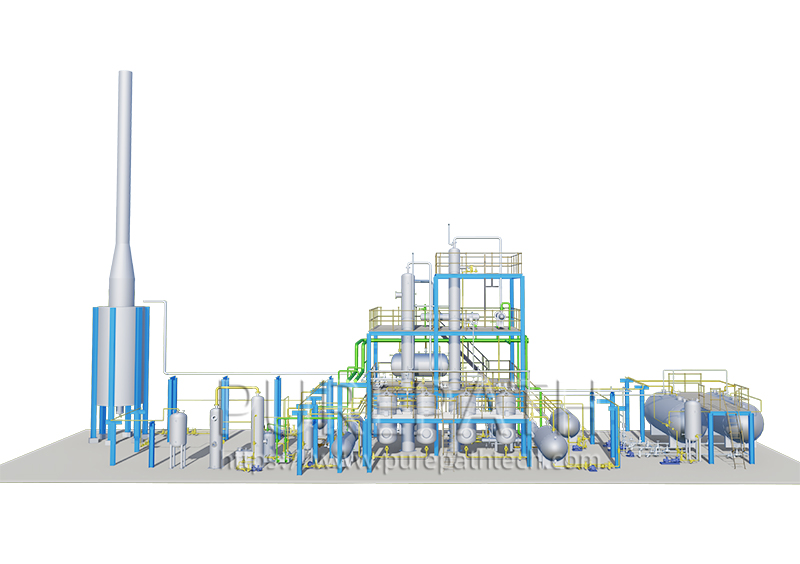
Nameplate Capacity vs. Operable Capacity
Although the nameplate capacity seems to comply, the actual operating capacity is the key factor in daily operations.
Many oil refineries, in order to ensure stable product quality and extend the lifespan of catalysts, will control the operating capacity of the hydrotreating unit within the range of 85% to 95% of the nameplate capacity. This is because if the designed capacity is too tight, any fluctuations in raw materials or insufficient hydrogen supply will immediately lead to a decrease in processing volume.
Reserving a small amount of margin in the design capacity can significantly improve operational stability.
| Design Approach | Short-Term Cost | Long-Term Flexibility |
| Tight sizing | Lower CAPEX | Limited |
| Moderate overdesign (5–15%) | Slightly higher CAPEX | Much better |
| Large overdesign | High CAPEX | Often underutilized |
For most medium-sized and small oil refineries, a moderate level of production overcapacity is often the best option.
Hydrogen Availability Can Be the Real Bottleneck
In many small and medium refineries, hydrogen supply limits capacity more than reactor size. If hydrogen production or recovery is constrained, pushing a hydrotreating unit beyond a certain rate becomes uneconomic or unstable.
Capacity selection should therefore be aligned with realistic hydrogen balance scenarios. A design of a unit that requires hydrogen, the refinery cannot consistently supply, leading to chronic rate cutting and higher operating stress.
Some refineries address this by choosing a capacity that fits existing hydrogen availability, but leaves physical space for future expansion of the hydrogen system.
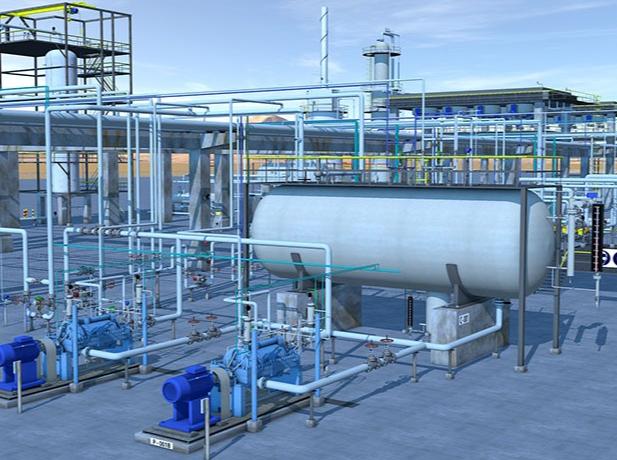
Typical Capacity Ranges Seen in Practice
Evidently, each project is unique, yet the table below provides the commonly expected capacity ranges in a hydrotreating unit for a small to medium refinery project:
| Refinery Scale | Typical Hydrotreating Unit Capacity |
| Small refinery | 200,000 – 500,000 t/y |
| Medium refinery | 500,000 – 1,500,000 t/y |
| Modular refinery | 50,000 – 300,000 t/y |
Note: Data is just for reference.
However, these are not boundaries, but rather where economics, operations, and the complexity of structures have a way of balancing out.
Allowing for Future Expansion Without Overbuilding
A sensible capacity strategy does not involve over-designing all facilities from the very beginning. Instead, many refineries take into account how they can overcome bottlenecks in the future during the design process.
For example:
- Select a reactor shell that can accommodate an increase in the amount of catalyst in the future.
- Reserve additional space for the construction of a second reactor or parallel production line.
- When designing the heater, compressor, and separator, a limited but available margin was reserved.
These methods not only allow for the control of the initial investment but also provide the option to increase effective production capacity if market or regulatory conditions change.
Capacity Selection Is Ultimately a System Decision
The capacity of a Hydrotreating Unit cannot be chosen independently; it has implications for upstream units, downstream-blending, hydrogen supply, as well as limited plot plan space.
In the case of smaller and medium-scale refineries, the optimum capacity is rarely the largest technically feasible capacity. Optimum capacity is the capacity at which refinery feed, products, and developmental needs are best matched, with operating compromises minimized.
A well-selected capacity relieves pressure to revamp, makes it reliable, and leaves room for adaptation – which is typically more important than aiming for theoretical capacity maximization.