
Oil Crisis 2026: The Strategic Role of Used Oil Regeneration & Re-refining
Written By: Mr.Ran
Senior Petrochemical & Waste Oil Recycling Engineer
Deeply involved in the design, manufacturing, and optimization of various waste oil recycling and petrochemical equipment, delivering practical and efficient solutions for clients worldwide.
March of 2026 has ushered in a new set of uncertainties to the global energy markets stemming from new geopolitical realities. With military actions in the Middle East and the operational closure of the Strait of Hormuz, Brent crude oil prices have crossed the $110 per barrel mark, the first time in 4 years. These factors have disrupted around 20% of the world’s oil supply, forcing industrialized nations to reassess their reliance on primary petrochemical feedstock. In the wake of these supply chain disruptions, used oil regeneration has become an imperative techno-economic solution. Systematic re-refining of used oil in the industrial sector, hazardous waste is transformed into recycled used oil, creating a localized and circular supply of base oils free from maritime chokepoint dependencies.
The Mechanical and Chemical Logic of Oil Circularity
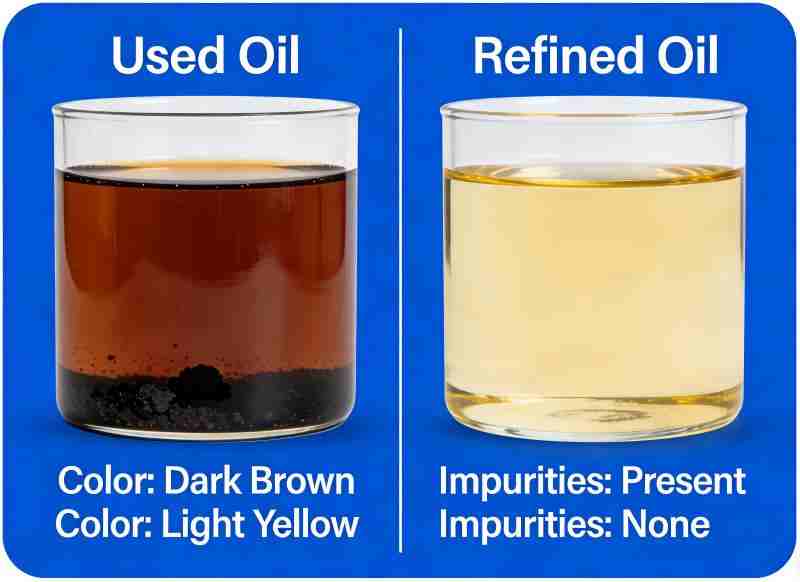
The chemical composition of lubricating oils must be analyzed to determine the strategic importance of used oil regeneration. Internal combustion engine lubricants, hydraulic system lubricants, and industrial gearbox lubricants contain 80 to 90 percent base oil and 10 to 20 percent performance additives. The oil in machinery operations gets contaminated through water and fuel diluents, metal wear particles, and carbon soot, while the additives in the oil deplete. The base oil maintains its original hydrocarbon structure because the lubrication molecules stay intact and stable.
The conventional method of waste disposal through incineration for energy recovery results in the destruction of high-value molecules, which produce energy only once. The process of used oil re-refining uses advanced chemical engineering methods to remove all contaminants and degraded additives from the oil. The process restores the oil to its original molecular state, which enables its eternal reuse. The domestic resource functions as a strategic advantage because military conflict currently limits the import of virgin crude.
Technical Processes in Used Oil Re-refining
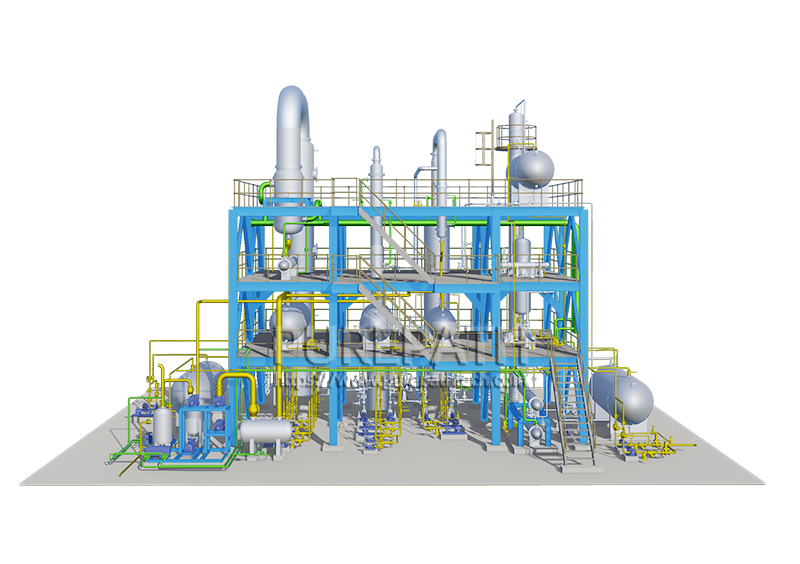
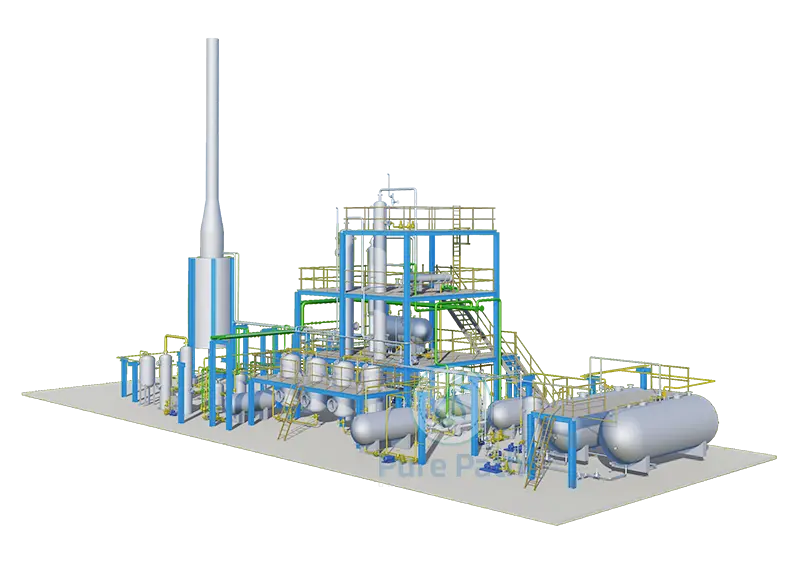
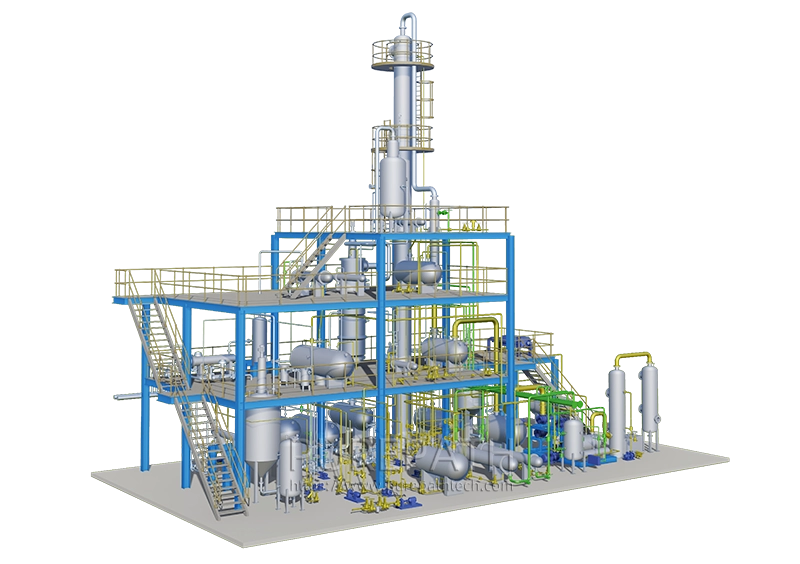
The transition from a waste product to a certified industrial lubricant requires a multi-stage technical intervention. Modern used oil regeneration facilities utilize a sequence of physical and chemical separation technologies to ensure the output meets Group II or Group III base oil standards.
1. Dehydration and Light-End Removal
The incoming recycled used oil contains varying levels of water and light fuels (gasoline or diesel). The first stage involves atmospheric or vacuum flash evaporation. Heating the oil under controlled pressure allows these volatile components to be captured and separated. The recovered light ends are often used as a fuel source to power the regeneration plant itself, reducing external energy requirements.
2. Vacuum Distillation and Fractionation
Used oil re-refining starts with a wipe film or thin film vacuum distillation process. Because a lubricant’s boiling point is so high, a deep vacuum is necessary to avoid thermal cracking. This is where molecules break down due to heat. The process then fractionates the oil into various components by viscosity. With the heaviest fractions removed as bottoms, this product also contains metals, polymers, and large carbon chains that are often removed and used for asphalt or bitumen production.
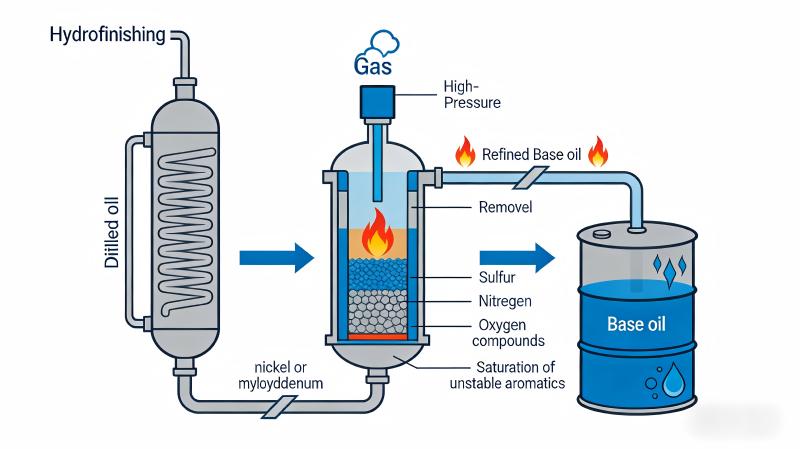
3. Hydrofinishing (Catalytic Hydrogenation)
To achieve high-tier specifications, the distilled oil undergoes hydrofinishing. The oil is reacted with hydrogen gas over a catalyst (typically nickel or molybdenum) at high pressures and temperatures. This process removes sulfur, nitrogen, and oxygen compounds while saturating any unstable aromatics. Hydrofinishing is the definitive stage that differentiates professional used oil regeneration from basic filtration. It results in a base oil with high oxidation stability and a high viscosity index, suitable for 2026-specification automotive and industrial engines.
Economic Resilience in a $100+ Crude Market
The economic viability of recycled used oil is intrinsically linked to the price of virgin crude. As of March 2026, the price of virgin base oil has tracked the upward trajectory of Brent crude, leading to significant cost pressures for manufacturing and logistics firms.
1. Cost Decoupling:
The cost structure of re-refining used oil is primarily driven by local collection logistics and energy inputs rather than international commodity trading. While the purchase price of raw used oil may rise during a crisis, it rarely scales at the same velocity as Brent or WTI futures. Consequently, the profit margin for regeneration facilities expands during high-price environments. For the end-user, recycled used oil products typically offer a price advantage of 15% to 25% compared to virgin alternatives, providing an essential hedge against inflation.
2. Resource Efficiency:
Producing base oil from crude oil requires massive energy expenditure in extraction, trans-oceanic shipping, and complex refining. In contrast, used oil regeneration requires approximately one-third of the energy to produce the same volume of finished product. In the 2026 energy landscape, where electricity and natural gas prices are also elevated, this lower energy intensity translates into a direct competitive advantage.
Security of Supply and Geopolitical Autonomy
The current blockade of the Strait of Hormuz has demonstrated that physical proximity to resources is a decisive factor in industrial survival. Used oil regeneration localized within a country’s borders creates a “closed-loop” system that does not depend on international maritime security.
- Strategic Stockpiling: Domestic used oil collection networks act as a distributed strategic reserve. Every gallon of oil currently in an engine or a storage tank is a potential gallon of future base oil.
- Mitigation of Import Dependency: For countries without significant domestic oil reserves, re-refining used oil reduces the total volume of crude that must be imported. In 2025, it was estimated that global used oil collection rates were below 50%; increasing this to 80% through regeneration would significantly lower the national “energy deficit” during times of war.
- Logistical Shorter-Circuits: Localized regeneration avoids the risks associated with global shipping lanes, insurance premiums for high-risk zones, and the volatility of international freight rates.

Environmental Governance and Carbon Policy
In addition to obtaining immediate energy security, used oil regeneration is part of the 2026 regulatory framework on carbon footprints and ESG (Environmental, Social, and Governance) compliance. Most carbon tax regimes in major economies penalize the combustion of toxic waste.
Compared to virgin oil, reclaimed used oil has a much smaller carbon footprint. Lifecycle Assessment (LCA) data reveal that each tonne of oil processed by re-refining used oil saves 1.5 -2 tonnes of CO2 emissions, not counting the CO2 emissions that would be produced by extracting and refining new crude oil. For industrial companies, the use of regenerated lubricants is among the most straightforward approaches to reducing “Scope 3” emissions in their supply chains.
In addition, when a formal recycling economy is present, the dangers of improper disposal—such as soil and groundwater contamination—are lessened. The spike in oil prices in March 2026 creates the motivation to ensure that no drop in used oil is missed.
Integration into 2026 Industrial Standards
The final barrier to the widespread adoption of used oil regeneration has historically been a perception of lower quality. However, the technological advancements in hydrofinishing achieved between 2020 and 2025 have rendered this concern obsolete. Current re-refining used oil outputs consistently meet or exceed the performance standards set by the American Petroleum Institute (API) and the European Automobile Manufacturers’ Association (ACEA).
Leading original equipment manufacturers (OEMs) in CNC machining, automotive, and marine industries have now given formal approvals for the use of lubricants based on recycled used oil. For 2026, this type of technical validation is important to market stakeholders, as it provides a justification for operators to shift to cheaper, more accessible regenerated materials, risking equipment warranties and mechanical failures.