Where Can I Drop Off My Used Motor Oil for Recycling?
most communities already have free oil recycling programs. You don’t need to drive miles away or pay extra fees
Solvents are vital to a myriad of industries, ranging from paints and coatings to chemical processing and metal cleaning. White Spirit has long been a faithful workhorse among them, valued for its economy and reliability. Clean Spirit has emerged in recent years as a marketing alternative with reduced odor and lower VOC content.
Installing a waste oil recycling system is one of the smartest ways to transform heating costs while dealing responsibly with used oil. Still, if the system is viewed merely as another piece of hardware, the result could be six-figure setbacks. As we look ahead to 2025, when energy-waste synergy is the new normal, the margin for blunders is razor-thin. Five avoidable pitfalls stand out, each a silent iceberg that could scuttle the project before it generates a dollar.
Plastic pollution is one of the world’s most serious environmental issues. As millions of tons of plastic waste are added to landfills and oceans every year, new measures are required more than ever. One of the new technologies promising to provide a solution to this crisis is waste oil refineries, capable of turning plastic trash into useful oil.
Diesel maintains its importance throughout the world as a critical component of transportation and industry. Refineries are compelled to observe ever more stringent environmental policies and diesel quality standards. They have to follow a special treatment process called diesel hydrotreating.
Crude oil is a complex mixture of hydrocarbons that vary widely in molecular weight and boiling point. In its raw form, crude oil isn’t directly usable. It requires specialized processing to be converted into commercially valuable products such as gasoline, diesel, jet fuel, and lubricants. This conversion process is called crude oil fractional distillation.
In my years working with oil refining clients, one question keeps coming up: How do you separate crude oil into useful products? The answer isn’t just “heat and separate.” It’s a controlled transformation — from an unrefined black liquid into fuels, lubricants, chemicals, and asphalt — using some of the most finely tuned industrial systems ever built.
Lubricant blending is an important process for producing high-quality lubricants for automotive, industrial and marine applications. However, there are still many problems in the lubricant blending process that can affect product quality, consistency and production efficiency.
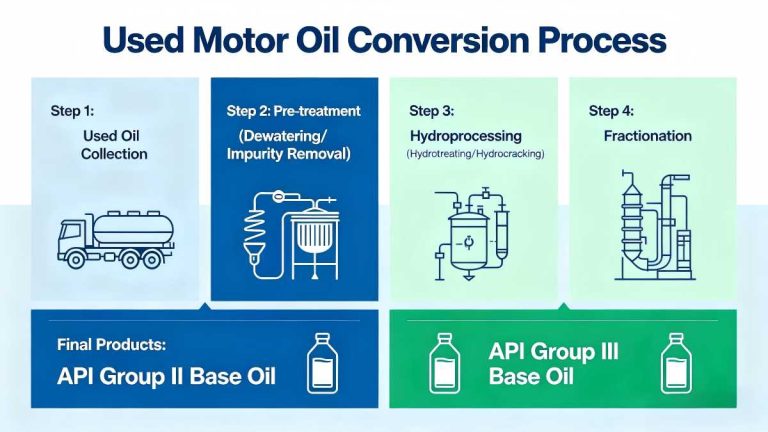
Improper disposal of waste engine oil is a critical environmental problem, causing soil contamination, water contamination, and health hazards. Fortunately, modern technologies like used oil to diesel conversion offer a sustainable and eco-friendly solution.
The process of distilling crude oil is a vital step in refining it, allowing for the separation of crude oil into various useful products. This process is key in the creation of fuels, petrochemicals, and other materials needed by advanced modern civilizations. The article examines the processes involved in crude oil distillation, including some of their major results and various uses, as well as the significance of atmospheric and vacuum distillation units.
End of content
End of content
This website uses cookies so that we can provide you with the best user experience possible. Cookie information is stored in your browser and performs functions such as recognising you when you return to our website and helping our team to understand which sections of the website you find most interesting and useful.
Strictly Necessary Cookie should be enabled at all times so that we can save your preferences for cookie settings.
If you disable this cookie, we will not be able to save your preferences. This means that every time you visit this website you will need to enable or disable cookies again.